
Published
In ancient Japan the throne often passed from elder brother to younger. One attempt to draw a line from father to son failed. The one who made it stick the second time was Empress Jitō.
Four of Emperor Kinmei's children took the throne one after another: Bidatsu, Yōmei, Sushun and Suiko. After Emperor Jomei came Empress Kōgyoku, and the throne then passed to her younger brother, Emperor Kōtoku.
In ancient times the throne did not simply descend straight from father to son. It was not unusual for it to move sideways between brothers.
One reason is thought to be what was required of a sovereign. Uniting the ministers and running the government took a certain age and experience. If the previous sovereign's son was still young, a younger brother was the more practical choice.
The one who tried to change this pattern was Emperor Tenchi.
His younger brother Prince Ōama had been regarded as his successor, but in 671 Tenchi appointed his son Prince Ōtomo Daijō-daijin (Chancellor), placing him at the top of government.
In the winter of the same year, Tenchi, on his sickbed, summoned Ōama and tried to entrust him with affairs after his death. Ōama declined, became a monk and went down to Yoshino. The usual reading is that he saw that accepting would get him killed.
Tenchi died at the end of that year. In 672 Ōama raised an army and defeated Prince Ōtomo. This was the Jinshin War (the succession war of 672).
Here the attempt to pass the throne from father to son failed for the first time. In the end, the throne went to the younger brother.

That same Ōama, Emperor Tenmu, died on the ninth day of the ninth month of 686.
Less than a month later, on the second day of the tenth month, Prince Ōtsu was arrested on a charge of treason, and the next day he was ordered to take his own life. He was 24.
Ōtsu was Tenmu's son by Princess Ōta. The mother of the other prince, Kusakabe, was Princess Uno-no-Sarara, later Empress Jitō. The two mothers were sisters, Ōta the elder.
The Nihon Shoki (Japan's oldest official chronicle, compiled in 720) describes Ōtsu as handsome, generous in spirit and widely admired. That is the verdict of a book commissioned by the side that killed him.
A poem he composed on the ducks of Iware Pond as he faced death survives in the Man'yōshū (Japan's oldest anthology of poetry).
The remaining prince, Kusakabe, had been named crown prince while Tenmu was still alive.
But in the fourth month of 689 he died at 28 without taking the throne. His son, Prince Karu, was only seven.
If they had gone back to the logic of succession between brothers, it would now have been the turn of another of Tenmu's sons. Several older princes did in fact remain, Prince Takechi among them.
Jitō did not do that.
She took the throne herself in 690, and in 697 handed it to Prince Karu, now 15. He became Emperor Monmu. After abdicating, she stayed in the background as Daijō Tennō (retired sovereign).
From grandmother to grandson: by a transfer that was neither father to son nor brother to brother, she kept the throne in Kusakabe's line.
Now let us turn to mythology.
In the myth of the descent of the heavenly grandson, the one Amaterasu (the sun goddess) first intended to rule the Central Land of Reed Plains (the earthly realm) was her son, Ame-no-Oshihomimi. But Oshihomimi did not descend; instead, her grandson Ninigi came down to earth.
One theory reads Amaterasu as Jitō, Oshihomimi as Kusakabe and Ninigi as Monmu, because the plot, in which the son does not succeed and the grandson receives the realm, matches the circumstances of Jitō's court.
The Kojiki (Japan's oldest surviving book, a chronicle of myths and early history) was completed in 712, and the Nihon Shoki in 720. Their compilation got fully under way in exactly this period.
Others, however, think the framework of the myth existed earlier and was merely applied to Jitō's court. There is nothing decisive either way.

After Monmu came his mother, Empress Genmei, and his elder sister, Empress Genshō, two female sovereigns in a row, and then the throne passed to Monmu's son, Emperor Shōmu. Shōmu's daughter was Empress Kōken. After an interval in which a grandson of Tenmu reigned, Kōken returned to the throne as Empress Shōtoku.
Emperors of Kusakabe's blood thus continued for nearly eighty years. The pattern of a female sovereign holding the throne in trust and passing it on was repeated during this time as well.
The line died out with Shōtoku, who had no children. The next to reign was Emperor Kōnin, a grandson of Tenchi.
Empress Genmei's accession edict contains the phrase Fukai no Jōten, read kawarumajiki tsune no nori: "the constant law that must not be altered." It is described as an unalterable law laid down by Emperor Tenchi.
What the law laid down is not stated. The leading theory is that it refers to the principle of succession through the direct line, but in practice there is no way to confirm it.
What is clear is that Jitō actually gave shape to what Tenchi had attempted and failed to achieve. Prince Ōtsu's death, the abdication in favour of her grandson and the position of retired sovereign all lie along that line.
The Mausoleum of Emperor Tenmu and Empress Jitō is in Noguchi, Asuka Village. The two are buried together in an octagonal tomb.
At the Asuka Palace Site, the remains of the Kiyomihara Palace, where Tenmu and Jitō governed, lie layered with those of other palaces.
RELATED SPOT
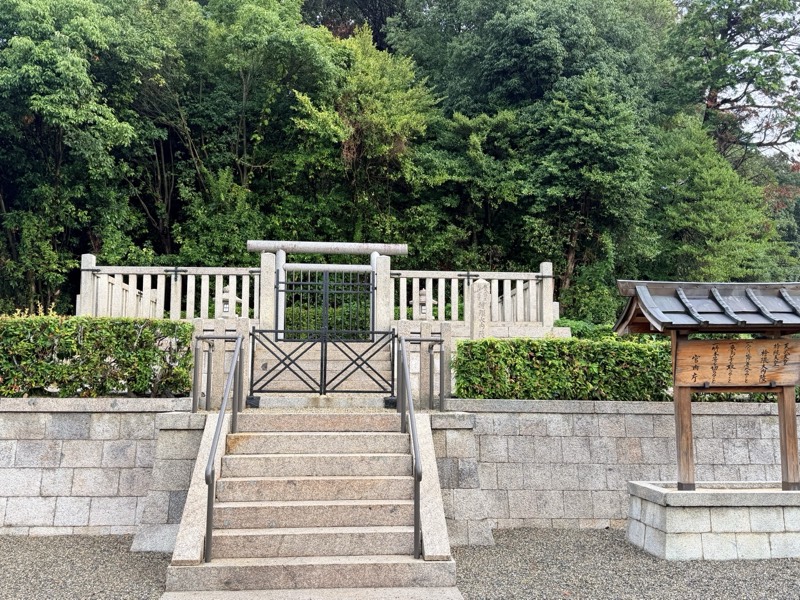
天武・持統天皇陵
One of the few octagonal imperial tombs whose occupants can be confirmed from written records.
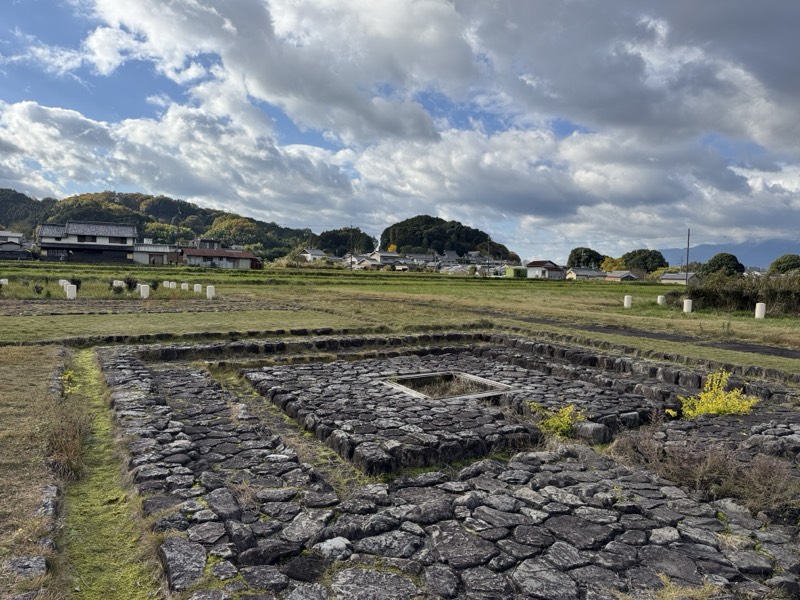
飛鳥宮跡(伝 飛鳥板蓋宮跡)
The political heart of Asuka, where several palaces were built one on top of another.
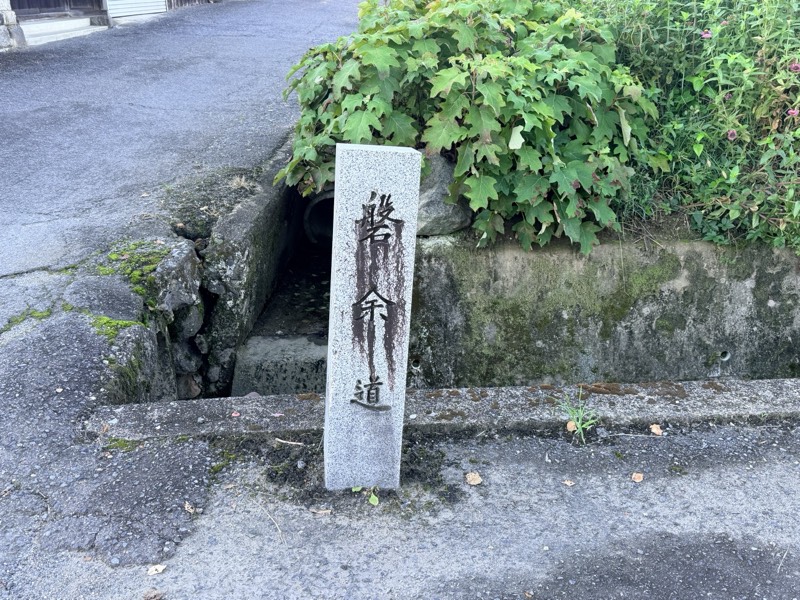
磐余道碑
A stone marker carved with the words "Iware Road," in the hand of the novelist Inoue Yasushi.
RELATED COLUMN
 Whose Successor Was Empress Jitō? Tenmu's Empress, and Tenchi's DaughterAs the empress who completed the ritsuryō state (a state governed by law codes), she is usually spoken of in…After the Oath: What Became of Emperor Tenmu's PrincesIn 679 Emperor Tenmu made six princes swear at Yoshino never to fight one another. It is well known that the…Prince Takechi: The Eldest Son Far from the Throne, Yet Called "Mikoto"The man given command of the army in the Jinshin War was a 19-year-old eldest son. Because of his mother's…