
Published
As the empress who completed the ritsuryō state (a state governed by law codes), she is usually spoken of in the same breath as her husband, Emperor Tenmu. But she was also Emperor Tenchi's daughter. This column considers whether the sense of carrying on her father's legacy may have been the stronger one.
Empress Jitō's personal name was Princess Uno-no-Sarara. She was born in 645, the year of the Isshi Incident (the coup in which Soga no Iruka was assassinated).
Her father was Prince Naka-no-Ōe, later Emperor Tenchi. Her mother was Ochi no Iratsume, a daughter of Soga no Kurayamada no Ishikawamaro. That grandfather, Ishikawamaro, took his own life at Yamada-dera Temple when Sarara was four.
At 13 she married her father's younger brother, Prince Ōama: a marriage between uncle and niece. Her elder sister Princess Ōta was already married to Ōama, and later her younger sisters Princess Ōe and Princess Niitabe joined them. Tenchi, in other words, sent four of his daughters to his brother.
Tenchi died in 671, and the following year her husband Ōama raised an army. This was the Jinshin War (the succession war of 672).
His opponent was Tenchi's son Prince Ōtomo, Sarara's younger half-brother. The Nihon Shoki (Japan's oldest official chronicle, compiled in 720) records that Sarara accompanied Ōama when he left Yoshino. She took her husband's side and fought against the court her father had left behind.
Victorious, Ōama took the throne in Asuka as Emperor Tenmu, and Sarara became empress.

When Tenmu died in 686, Jitō began to rule without formally taking the throne, a practice called shōsei. In 690 she ascended the throne herself.
Much of what took shape in this period was work that Tenmu had begun: the Asuka Kiyomihara Code of 689, the first periodic rebuilding of Ise Grand Shrine the following year, the move to Fujiwara-kyō (the Fujiwara capital) in 694, and the compilation of the imperial chronicles. Tenmu started all of these, and Jitō completed them.
So the two reigns are usually spoken of as one: the husband conceived, and the wife completed. The phrase "the Tenmu–Jitō court" has become firmly established.
Among all this, one figure stands out: Fujiwara no Fuhito.
Fuhito was born in 659, the second son of Nakatomi no Kamatari. Kamatari had been Tenchi's right-hand man. He carried out the Isshi Incident together with Naka-no-Ōe, and on the day before his death he was granted the surname Fujiwara.
In the Jinshin War, however, the Nakatomi clan sided with the Ōmi court. Kamatari's cousin Nakatomi no Kane was executed after the war. There is hardly any trace of the clan in central government during Tenmu's reign. Fuhito himself was only 14 by the traditional count at the time of the war, and his name does not appear.
Fuhito first appears in the historical record in 689, in a single line saying he was appointed a judge (kotowaru tsukasa). He was already 31.
From there things moved quickly. He took part in compiling the Taihō Code, and in 701 he became Dainagon (Major Counsellor) of Senior Third Rank. His daughter Miyako became a consort of Emperor Monmu, and her son, Prince Obito, became Emperor Shōmu. This was the start of the Fujiwara clan's path to the centre of the court.
It was Jitō's court, then, that brought forward the son of a family that had sunk into obscurity.

Several reasons can be imagined.
One is practical. The clans who had distinguished themselves in the Jinshin War each held power of their own. Someone like Fuhito, who belonged to none of them, was easier to use as an official tied directly to the sovereign.
There is also the question of ability. His first post was that of judge, a role dealing with legal cases. He was probably well versed in law, and his part in compiling the Taihō Code supports this.
Still, the fact remains that he was Kamatari's son. Kamatari had been Tenchi's minister, not Tenmu's. By bringing Fuhito forward, Jitō also revived the family of her father's closest aide.
In 707, five years after Jitō's death, Empress Genmei took the throne. Her accession edict mentions the Fukai no Jōten, read kawarumajiki tsune no nori: "the constant law that must not be altered."
It is described as an unalterable law laid down by the emperor who ruled the realm from the Ōmi Ōtsu Palace. The emperor of the Ōmi Ōtsu Palace is Tenchi.
What the law laid down is not stated. The leading theory is that it refers to the principle of succession through the direct line, but no text of it survives, and in practice there is no way to confirm it.
Even so, one thing is clear. When the pattern of succession Jitō had set was being justified, the name invoked was not Tenmu's but Tenchi's.
Lay all this out and a different picture emerges.
Tenchi tried to pass the throne to his son rather than his brother, and failed. Jitō tried to pass it to Prince Kusakabe, and when Kusakabe died first, she passed it to her grandson Monmu. The daughter gave shape to what her father could not achieve.
After the Kōgo Nenjaku, the nationwide household register Tenchi had compiled in 670, Jitō compiled the Kōin Nenjaku in 690 and decreed that registers be compiled every six years from then on. You could say she turned something her father did only once into a lasting system.
And she placed the son of her father's confidant at the heart of government.
Rather than carrying on her husband's wishes, she carried on her father's legacy; perhaps that sense was the stronger one. It is possible, at least, to read it that way.
Over the course of her rule, Jitō made more than thirty imperial visits to Yoshino. Yoshino was the place she had gone down to with her husband before the Jinshin War.
When Tenmu died, she held a mogari (temporary enshrinement before burial) lasting more than two years. And she herself was cremated and buried in the same tomb as Tenmu. She was the first sovereign to be cremated.
She also carried on Tenmu's designs for the law codes and the capital as they were. Had she been returning to her father's course, moving the capital back to Ōmi would have been an option, but she did not do so.
In any case, what Jitō herself was thinking is not written anywhere. All that remains is what she did.

The Mausoleum of Emperor Tenmu and Empress Jitō is in Noguchi, Asuka Village.
It was robbed in the Kamakura period (1185–1333), and because a record from that time, the Aoki no Sanryōki, survives, it is one of the few imperial tombs whose interior is known. The record says that Tenmu's coffin and a silver container holding Jitō's bones were placed side by side.
She left no words about either her father or her husband. All that remains is the question of how to read the two placed side by side.
RELATED SPOT
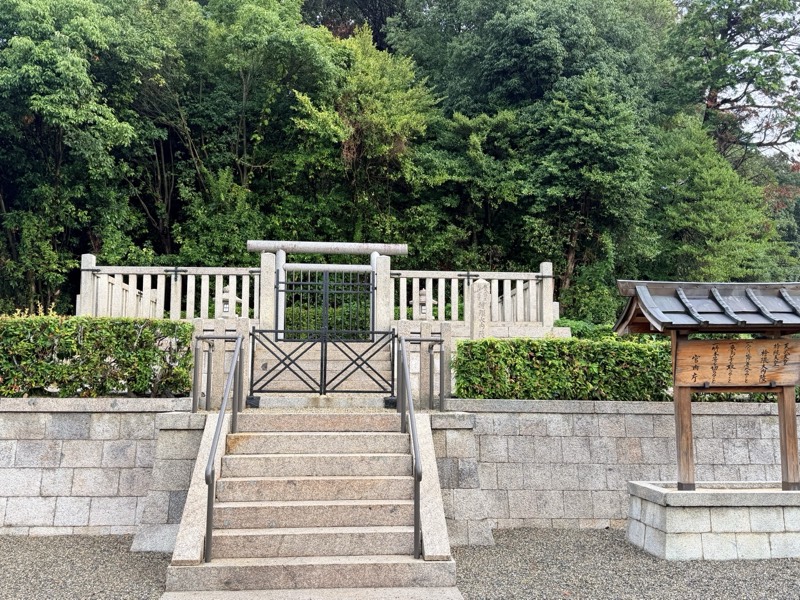
天武・持統天皇陵
One of the few octagonal imperial tombs whose occupants can be confirmed from written records.
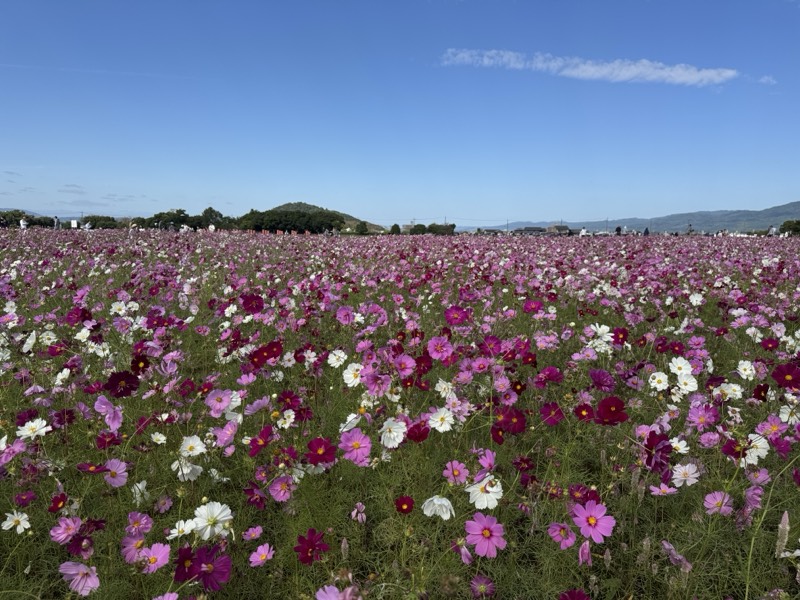
藤原宮跡
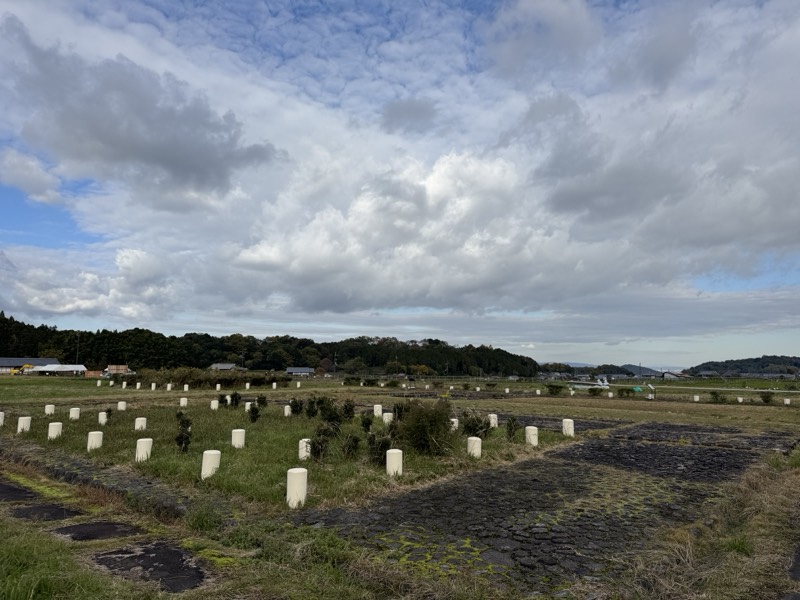
The heart of Japan's first full-scale planned capital, also known for its seasonal flower fields.
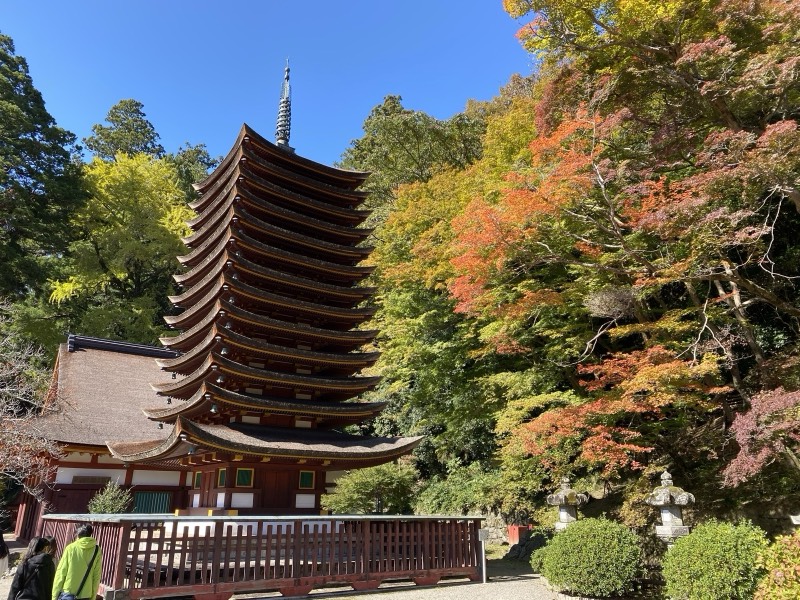
談山神社
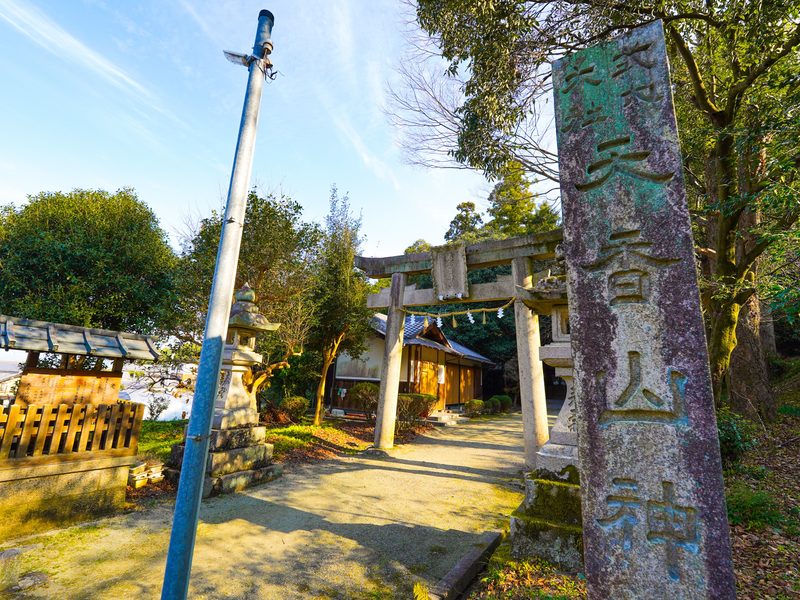
A mountain shrine said to be where the plot behind the Taika Reforms was hatched. Its wooden thirteen-storey pagoda is the only one in the world.
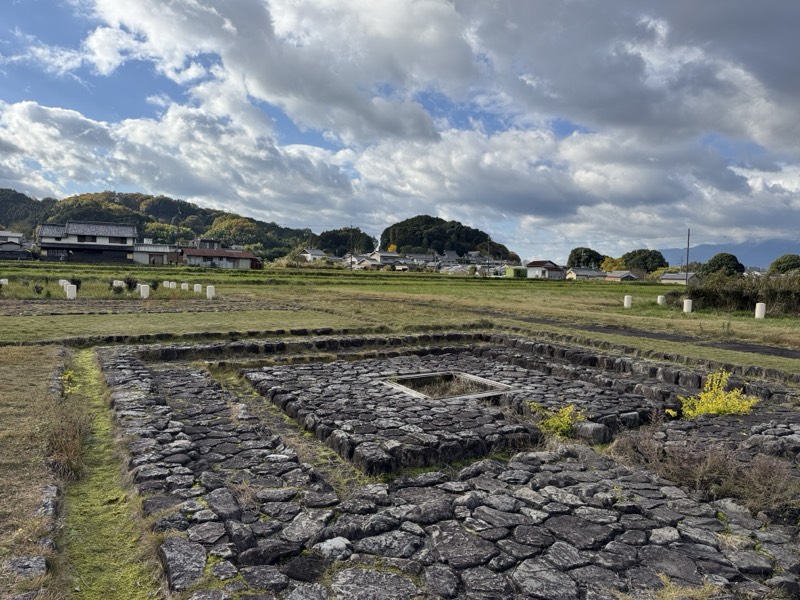
飛鳥宮跡(伝 飛鳥板蓋宮跡)
The political heart of Asuka, where several palaces were built one on top of another.
RELATED COLUMN
 No Longer from Brother to Brother: Succession through the Direct LineIn ancient Japan the throne often passed from elder brother to younger. One attempt to draw a line from…A Century of Women Rulers: Empress Jitō and East Asia in Her TimeIn 690, the year Empress Jitō took the throne in Japan, Wu Zetian became emperor in Tang China. Half a…
 What Did the White Robes Announce? Empress Jitō's Poem of Heavenly Mount KaguEmpress Jitō's poem about Mount Kagu begins "Spring has passed, and summer seems to have come." It is loved…