
Published
The man given command of the army in the Jinshin War was a 19-year-old eldest son. Because of his mother's low standing, he was considered far from the throne. Yet the way his death was treated was too grand for a mere prince.
Prince Takechi was born around 654, the eldest son of Prince Ōama, the future Emperor Tenmu: his very first child.
His mother was Amako no Iratsume, a daughter of Munakata no Kimi Tokuzen, a powerful chieftain of Tsukushi (northern Kyushu). The Munakata clan controlled the sea routes across the Genkai Sea, and the family is connected with today's Munakata Taisha Shrine. It was a major presence among regional clans, but not a house that supplied consorts to the great kings.
At the time, a prince's standing was determined by his mother's family. Even an eldest son was out of the line of succession if his mother was the daughter of a Tsukushi chieftain.
In 672 came the Jinshin War (the succession war of 672). Takechi was 19 by the traditional Japanese count.
His father Ōama left Yoshino and headed for the eastern provinces. Takechi was in Ōmi, the seat of the rival court, but he slipped away and joined his father at Tsuge no Yamaguchi in Iga.
After setting up camp at Fuwa, Ōama gave Takechi full command of military affairs. The Nihon Shoki (Japan's oldest official chronicle, compiled in 720) describes in detail how Takechi led the generals in battle against the forces of the Ōmi court.
The war ended in victory for Ōama, who took the throne in Asuka as Emperor Tenmu.

After Tenmu died, Prince Kusakabe, the crown prince, also died, in 689.
When Empress Jitō took the throne in 690, Takechi was appointed Daijō-daijin (Chancellor) in the seventh month of that year: the highest post a subject could hold.
At that point Takechi was the eldest of Tenmu's sons. By the logic of succession between brothers, he was qualified to take the throne. And he was indeed placed at the top of government, but as Chancellor, not as emperor.
In the seventh month of 696, Takechi died. He was 43 by the traditional count.
For Takechi's mogari (the period of temporary enshrinement before burial), Kakinomoto no Hitomaro composed an elegy: No. 199 in Book 2 of the Man'yōshū (Japan's oldest anthology of poetry).
It is the longest chōka (long poem) in the Man'yōshū, at 149 lines. It depicts Takechi leading the army in the Jinshin War, down to the sound of the drums and the flight of the arrows, and closes in mourning for his death.
The issue is not just its length. In the poem Takechi is called "wago ōkimi" ("our great lord"), a form of address used for an emperor.
The way the Nihon Shoki refers to him is also a little unusual.
In the entry for 696 recording Takechi's death, he is called "Nochi no Miko no Mikoto" (the Later Prince-Mikoto). Mikoto is an honorific attached to emperors, empresses, crown princes and those of equivalent standing.
Prince Kusakabe, who died earlier, was called "Hinamishi no Miko no Mikoto." Takechi's title makes him the "later" Prince-Mikoto who came after him. In other words, Takechi was being treated as a crown prince in all but name, Kusakabe's successor.
An eldest son considered far from the throne because of his mother's standing became Chancellor and, at his death, was called "Mikoto." Some people could not let this pass.
There is a theory that Takechi actually took the throne.
The evidence cited is the two points just described: the scale of Hitomaro's elegy with its imperial form of address, and the honorific "Nochi no Miko no Mikoto."
There is also evidence from a later period. In 1988 the site of Prince Nagaya's residence was found in the ruins of Heijō-kyō (the Nara capital), and more than 35,000 mokkan (inscribed wooden tablets) were excavated. Among them is one reading "Palace of Nagaya Shinnō."
Prince Nagaya was Takechi's son. Under the system, an emperor's child was a shinnō (imperial prince) and a grandchild an ō (prince). As Tenmu's grandson, Nagaya should have been an "ō" and could not be called "shinnō." If his father Takechi had been emperor, it would make sense: so the argument goes.
Some see a deal with Jitō. In return for handing the throne to the older Takechi, it would next go back to Prince Karu, Kusakabe's son. Takechi took the throne on that understanding and was later erased from the record: so the scenario runs.
However, there is no contemporary record to support this. No Emperor Takechi appears in either the Nihon Shoki or the Shoku Nihongi (the official chronicle that continues it), and the "shinnō" on the tablet can be seen as reflecting usage not yet fixed at the time, or simply the writer's respect. The wording of the poem can also be explained as praise for someone of crown-prince standing.
Takechi died in the seventh month of 696. Jitō died in the twelfth month of 702, six years later.
Immediately after Takechi's death, a council was held to decide who should receive the throne next. According to the Kaifūsō (Japan's oldest anthology of Chinese-style poetry, compiled in 751), the ministers' opinions were divided and no decision was reached. Then Prince Kadono stood up. He was the son of Prince Ōtomo, and his mother was Princess Tōchi, a daughter of Tenmu, so he was connected to both Tenchi and Tenmu. He declared that the law of our country is for descendants to succeed to the throne one after another, and that if it passes to brothers there will be disorder. When Prince Yuge tried to say something, Kadono rebuked him into silence, and the council ended there. Jitō was delighted, the text says.
In the second month of the following year, 697, Prince Karu was made crown prince, and in the eighth month the throne was passed to him. He became Emperor Monmu, aged 15.
Swap the order of the deaths around and the story changes completely.
Suppose Jitō had died first and Takechi had lived. He was the Chancellor, the eldest of Tenmu's sons, and a hero of the war. It is hard to imagine that a plan to hand the throne to a 15-year-old grandson would simply have gone through. Takechi might have taken it himself, or it might have passed to his son Prince Nagaya. Emperor Monmu might never have existed.
Prince Ōtsu was killed, Kusakabe died of illness, and Takechi died first. Jitō outlived them all.
Succession through the direct line did not prevail through Jitō's will and manoeuvring alone. It also rested on something no one could control: who happened to die first.

Takechi's name comes up in one other place: as the possible occupant of Kitora Kofun.
Kitora is a round kofun (ancient burial mound) from the late 7th to early 8th century. From the bones and teeth found in the stone chamber, the person buried there is estimated to have been a man of middle age or older. Candidates suggested include Tenmu's sons, Abe no Miushi, who served as Minister of the Right, and high officials of immigrant descent. Takechi is one of them.
However, Takechi's tomb is listed in the Engishiki (a compendium of court regulations completed in the 10th century). Called the Mitachioka Tomb, it is placed in Hirose District, Yamato Province, around present-day Kōryō Town. The location does not match, and that is the biggest weakness of the Takechi theory.
Who is buried there is still undecided.
Takechi's son was Prince Nagaya.
His father was Tenmu's eldest son, and his mother was Princess Minabe, a daughter of Tenchi. He carried the blood of both Tenmu and Tenchi. His wife, Princess Kibi, was a daughter of Prince Kusakabe, of the same double bloodline.
In the Nara period (710–794) he rose to Minister of the Left and stood at the centre of politics. His rivals were the four sons of Fujiwara no Fuhito: the brothers Muchimaro, Fusasaki, Umakai and Maro.
In the second month of 729, Prince Nagaya was denounced. The charge was that he had secretly studied sadō (sorcery) and was seeking to overthrow the state. His residence was surrounded by soldiers, and two days later he took his own life. Princess Kibi and four of their children followed him in death.
Half a year later, Fuhito's daughter Kōmyōshi was made empress, consort of Emperor Shōmu. It was the first time an empress had come from outside the imperial family.
In 737 smallpox swept through the capital.
That year the four Fujiwara brothers died one after another: Fusasaki in the fourth month, Maro and Muchimaro in the seventh, and Umakai in the eighth. All four were gone within a single year.
People whispered that it was Prince Nagaya's curse. The Nihon Ryōiki (a collection of Buddhist tales from the early 9th century) tells how Prince Nagaya's bones were sent away to Tosa, and when local people there died, they were moved to Kii.
The following year, 738, Nakatomi no Miyako no Azumahito, one of the two informers, was cut down by Ōtomo no Komushi. According to the Shoku Nihongi, the two were playing go when talk turned to Prince Nagaya, and Komushi flew into a rage. Komushi had once served Prince Nagaya.
This means the accusation was already seen as false at the time.
The eldest son considered far from the throne led an army in war, rose to the top of the court and, at his death, was called "Mikoto." Whether he ever took the throne is unknown.
His son died defeated in a struggle with the Fujiwara and was spoken of as a vengeful spirit.
There is not much to see in Asuka. His father rests in the Mausoleum of Emperor Tenmu and Empress Jitō, and at Kitora Kofun to the south, only his name is put forward as a candidate.
RELATED SPOT
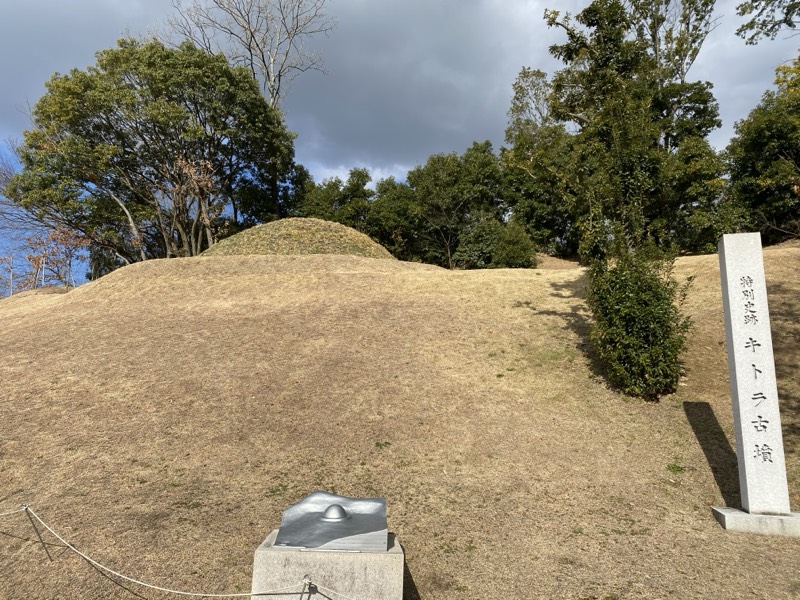
キトラ古墳
A two-tiered round burial mound famous for its chamber painted with the Four Gods and a map of the stars.
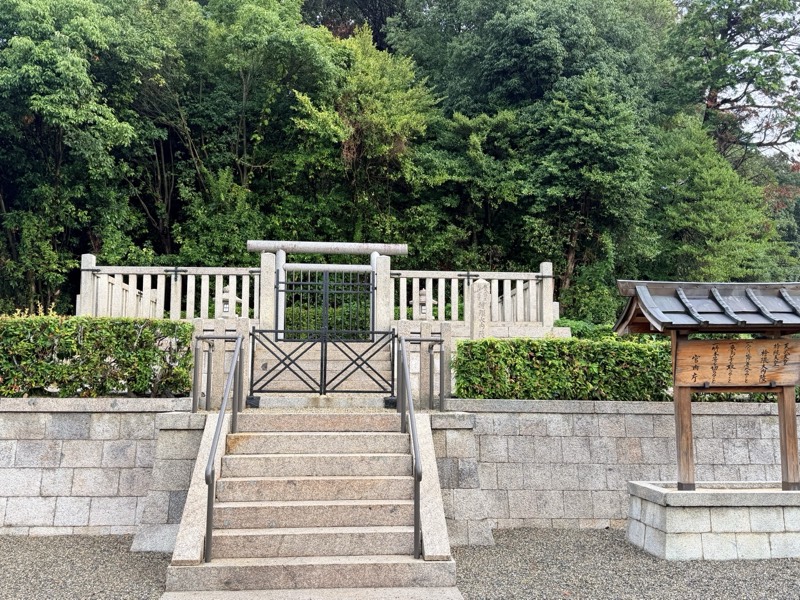
天武・持統天皇陵
One of the few octagonal imperial tombs whose occupants can be confirmed from written records.
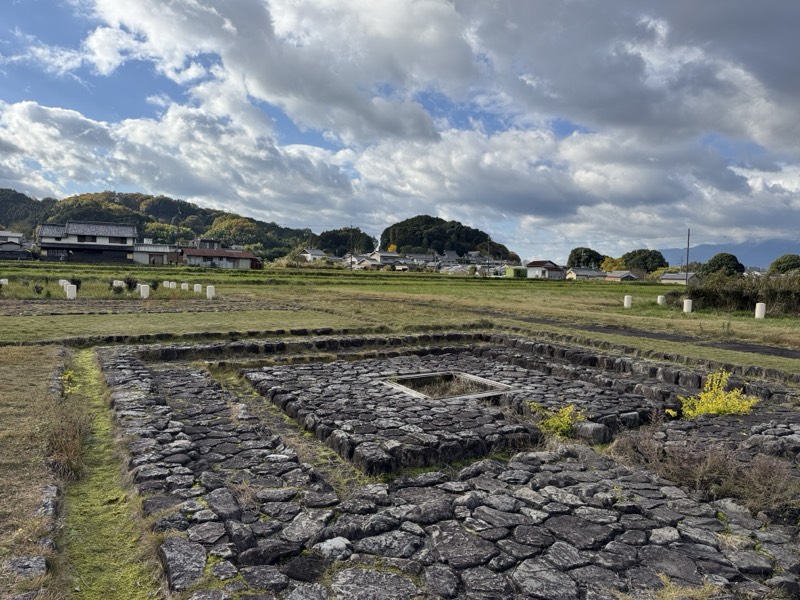
飛鳥宮跡(伝 飛鳥板蓋宮跡)
The political heart of Asuka, where several palaces were built one on top of another.
RELATED COLUMN
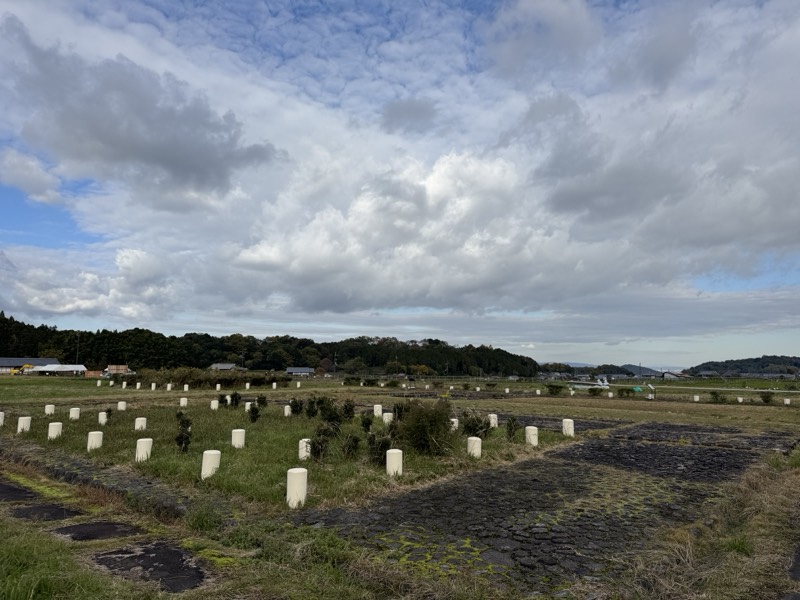 After the Oath: What Became of Emperor Tenmu's PrincesIn 679 Emperor Tenmu made six princes swear at Yoshino never to fight one another. It is well known that the…
 Two Who Crossed Imo Pass: Prince Ōama Once, Empress Jitō 31 TimesEnter the mountains at the far end of Asuka, cross a single ridge, and you are in Yoshino. Prince Ōama…Whose Successor Was Empress Jitō? Tenmu's Empress, and Tenchi's DaughterAs the empress who completed the ritsuryō state (a state governed by law codes), she is usually spoken of in…