
Published
Enter the mountains at the far end of Asuka, cross a single ridge, and you are in Yoshino. Prince Ōama crossed this road as if fleeing pursuers. Empress Jitō travelled the same road back and forth more than thirty times during her reign.
Follow the Asuka River upstream and the fields rise in terraces while the hamlets begin to cling to the slopes. Past Kayanomori the houses come to an end and the road enters the cedar forest.
Beyond the ridge lies Chimata in Yoshino Town. This crossing is Imo Pass (Imotōge). Asuka and Yoshino were connected by this one mountain crossing.
From the flatland where the palace stood to the pass is about one and a half ri (roughly 6 km). From the pass down to Miyataki, where the Yoshino Palace stood, is about as far again. On foot, it is a journey of more than half a day.
In the tenth month of 671, when Emperor Tenchi fell ill, Prince Ōama was summoned to his sickbed. He was asked to take charge of affairs after Tenchi's death, but he declined and became a Buddhist monk.
The Nihon Shoki (Japan's oldest official chronicle, compiled in 720) records words spoken by someone who saw Ōama off: it was like giving wings to a tiger and setting it loose, someone said.
Ōama spent a night at the Shima Palace and set out for Yoshino the next day. With him went Prince Kusakabe and Prince Osakabe, his consort Princess Uno-no-Sarara, some twenty-odd attendants and a dozen or so court ladies. It was no army.
That Uno-no-Sarara was the future Empress Jitō. On this occasion the two crossed the same pass together.
Withdrawing to Yoshino meant leaving the court. If pursuers were sent after him, that would be the end.

In the sixth month of the following year, 672, Ōama left Yoshino and raised an army. This was the Jinshin War (the succession war of 672).
But this time he did not go back over Imo Pass. From Yoshino he headed east, passing through Uda into Iga and Ise, and set up camp at Fuwa in Mino. It was a route for gathering troops from the eastern provinces.
Rather than crossing the pass back to Asuka, he turned his back on it and swung round to the east. Ōama crossed Imo Pass only once, on the way down.
Having won the war and taken the throne, Emperor Tenmu went to the Yoshino Palace again in the fifth month of 679.
This time he brought the empress (Jitō) and six princes: Kusakabe, Ōtsu, Takechi, Kawashima, Osakabe and Shiki, brothers born of different mothers.
Tenmu made the princes swear that there would be no strife among them for a thousand years to come. The princes swore that, though born of different mothers, they would care for one another as if born of the same mother, and Tenmu, the Nihon Shoki records, gathered them into the folds of his robe. This is known as the Yoshino Pact.
As later events show, the oath was not kept. Immediately after Tenmu's death Prince Ōtsu was killed, and Kusakabe died of illness without ever taking the throne.
From the records of the Nihon Shoki, Jitō's imperial visits to Yoshino are counted at thirty-one.
She took the throne in 690 and abdicated in 697, so her reign lasted only about eight years. That means she went to Yoshino three or four times a year.
Nor did she pick her seasons: she went even in the snow. She rode in a palanquin, but her attendants walked the mountain road, and every time the party moved it was a considerable burden.
No other emperor is known to have repeated an imperial visit so often.
The reason is not clearly recorded, and there are several readings.
One is that Yoshino was the starting point of the Jinshin War. The man who withdrew to Yoshino won and took the throne. Returning to the place where it began was a way of showing where the present order had come from.
Another reading is that it was the place of the pact. She kept going to the place where the princes had been made to swear, even as that oath was falling apart.
Some theories focus on Yoshino itself. The water is pure and the mountains are deep; it is said to have been regarded as a dwelling place of Taoist immortals, and Kakinomoto no Hitomaro left poems in praise of the Yoshino Palace.
And there is the reading that it was the road she had crossed with her husband. When she went down over the pass in 671, she was 27 by the traditional Japanese count.
There is nothing to decide in favour of any one of these. Only the sheer number of visits remains on record.

An information board at the pass quotes a poem by Emperor Tenmu: No. 25 in Book 1 of the Man'yōshū (Japan's oldest anthology of poetry).
Miyoshino no Mimiga no mine ni toki naku zo yuki wa furikeru ma naku zo ame wa furikeru sono yuki no toki naki ga goto sono ame no ma naki ga goto kuma mo ochizu omoitsutsu zo koshi sono yamamichi wo
"On Mimiga Peak / in fair Yoshino / the snow kept falling / with no season, / the rain kept falling / without pause. / Like that snow / that knows no season, / like that rain / that knows no pause, / at every bend of the way / I came lost in thought / along that mountain road."
It is a poem about coming along the road lost in thought at every bend, like snow and rain that never stop falling.
When it was composed is unknown. Read as a poem from the journey down to Yoshino, it becomes the song of a man abandoning the throne and going into the mountains.
The same board also quotes a passage by the Man'yōshū scholar Inukai Takashi, to the effect that walking lets us regain the sense of distance we have lost.
Hardly anyone crosses the pass on foot now. A prefectural road runs over it, and by car you can be there from Asuka in about twenty minutes.
Even so, about a kilometre of the old road remains: an earthen path covered with fallen leaves and moss. Go down it and you reach Yoshino; go up and you reach Asuka. This is the kind of road the two of them crossed.
RELATED SPOT
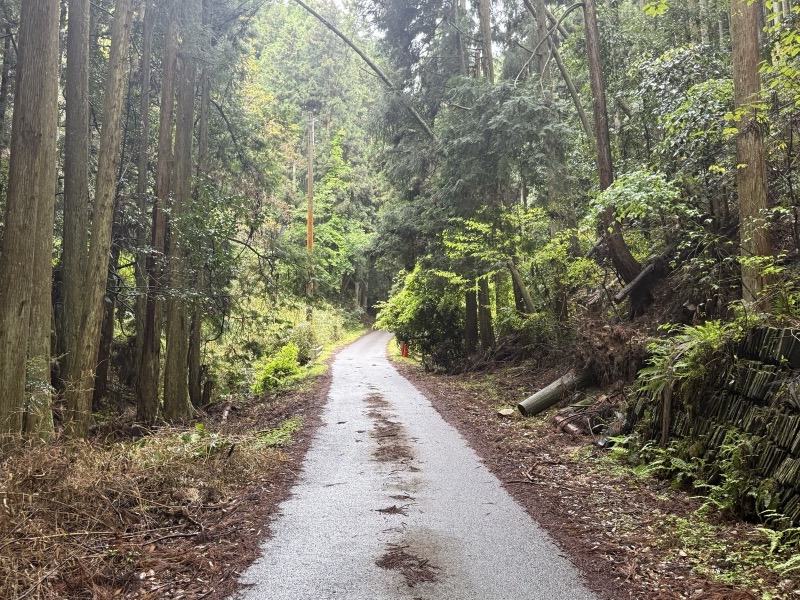
芋峠
A pass on the old road linking Asuka and Yoshino. Prince Ōama is said to have crossed it.
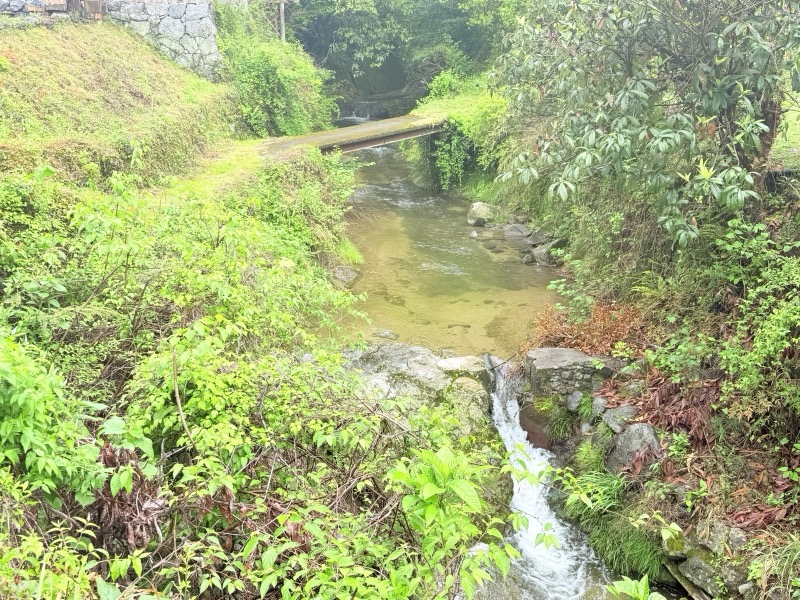
奥飛鳥
A landscape of terraced rice fields and villages, designated an Important Cultural Landscape of Japan.
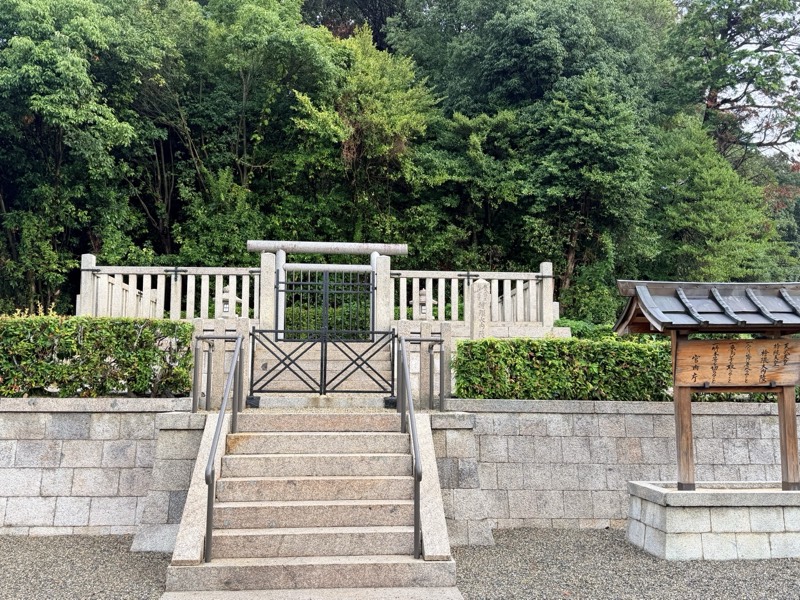
天武・持統天皇陵
One of the few octagonal imperial tombs whose occupants can be confirmed from written records.
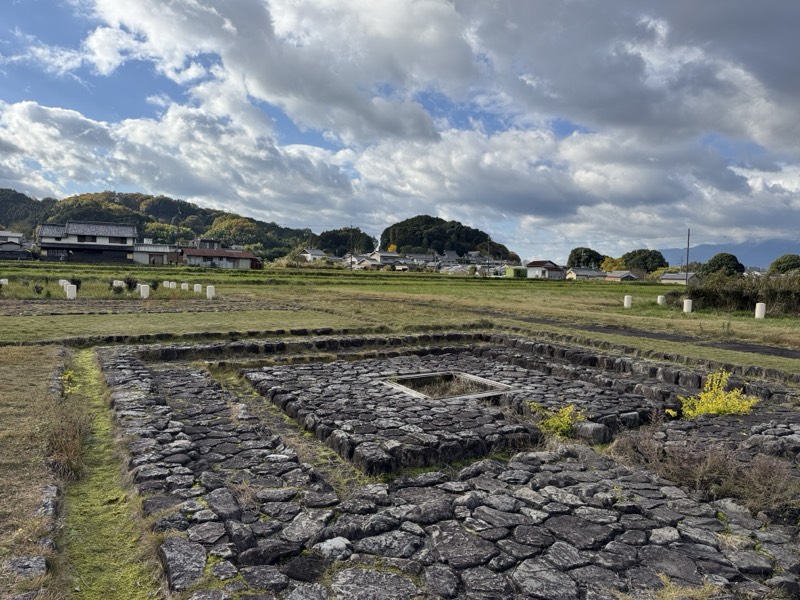
飛鳥宮跡(伝 飛鳥板蓋宮跡)
The political heart of Asuka, where several palaces were built one on top of another.
RELATED COLUMN
 After the Oath: What Became of Emperor Tenmu's PrincesIn 679 Emperor Tenmu made six princes swear at Yoshino never to fight one another. It is well known that the…Prince Takechi: The Eldest Son Far from the Throne, Yet Called "Mikoto"The man given command of the army in the Jinshin War was a 19-year-old eldest son. Because of his mother's…Whose Successor Was Empress Jitō? Tenmu's Empress, and Tenchi's DaughterAs the empress who completed the ritsuryō state (a state governed by law codes), she is usually spoken of in…