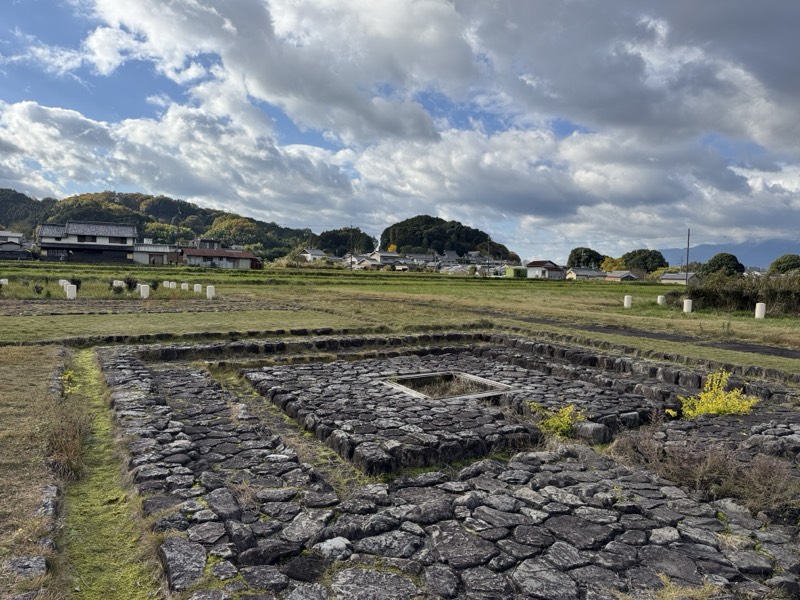
1 / 2
栗原塚穴古墳(文武天皇陵)(くりはらつかあなこふん)
The tomb designated by the Imperial Household Agency as Emperor Monmu's, at odds with the archaeological view.
This kofun (ancient burial mound) is in Kurihara, Asuka Village. The Imperial Household Agency designates it as the Hinokuma no Ako no Oka no E no Misasagi, the tomb of Emperor Monmu, the 42nd emperor.
The mound sits on top of a low stone wall facing the road, with the gate of a worship place at one corner. It is covered in trees, so its shape cannot be seen from outside.
Emperor Monmu came to the throne in 697 and died in 707 at the age of 25. He succeeded his grandmother, Empress Jitō, when she abdicated in his favour, and in 701 he issued the Taihō Code, Japan's early legal code.
Among archaeologists, the leading theory is that Nakaoyama Kofun, to the north, is Emperor Monmu's tomb. Nakaoyama is octagonal and has a small stone chamber made to hold cremated bones. The octagon, the highest-ranking shape, and a single cremated burial both fit the way Emperor Monmu was laid to rest.
As with Kengoshizuka Kofun and the tomb of Empress Saimei, this is one of the places where the Imperial Household Agency's designation and the archaeological view disagree. The designation was fixed in the Meiji era (1868–1912) and has not been changed by later research.
The tomb is managed by the Imperial Household Agency, and you cannot enter the mound. Visitors pay their respects from in front of the gate.
About 15 minutes on foot from Kintetsu Asuka Station. Walk north and you reach Takamatsuzuka Kofun and Nakaoyama Kofun.
Published
NEARBY
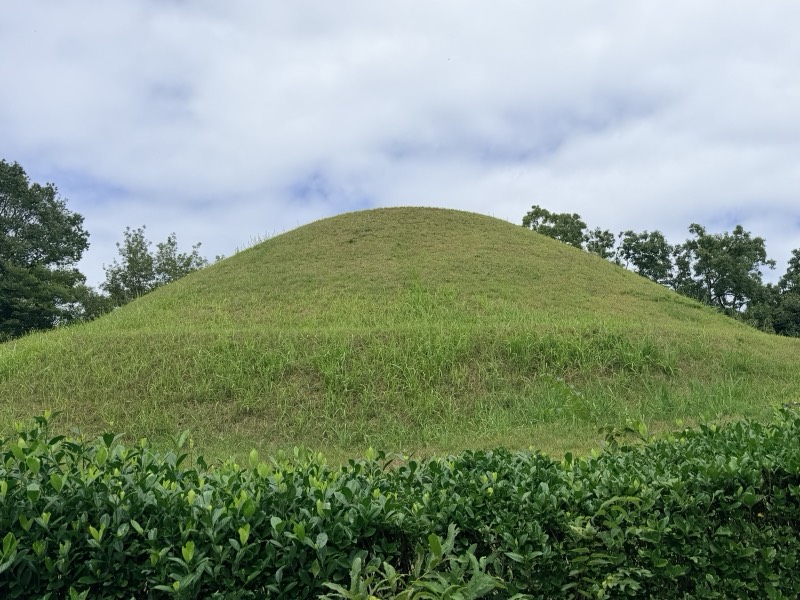
高松塚古墳
A round burial mound where brilliantly coloured paintings of court ladies were found: the defining archaeological discovery of post-war Japan.
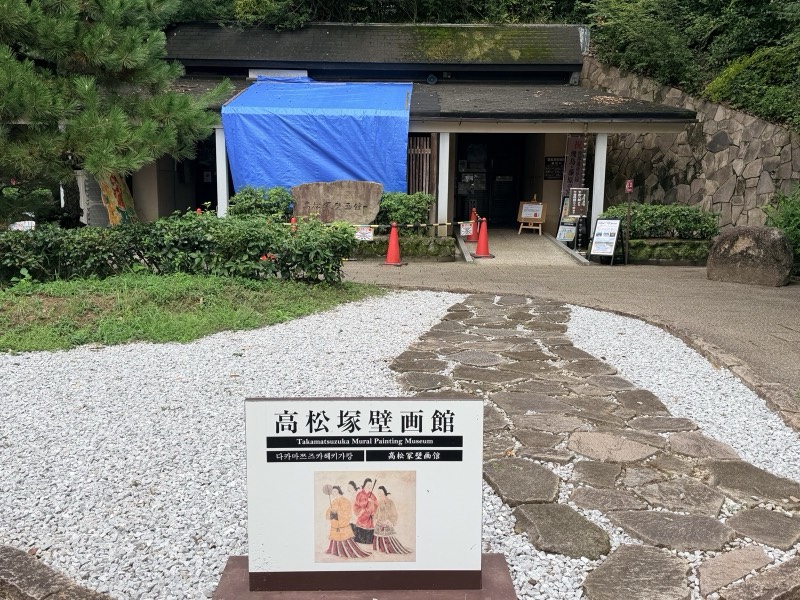
高松塚壁画館
A museum that presents the murals of Takamatsuzuka Kofun through replicas and models.
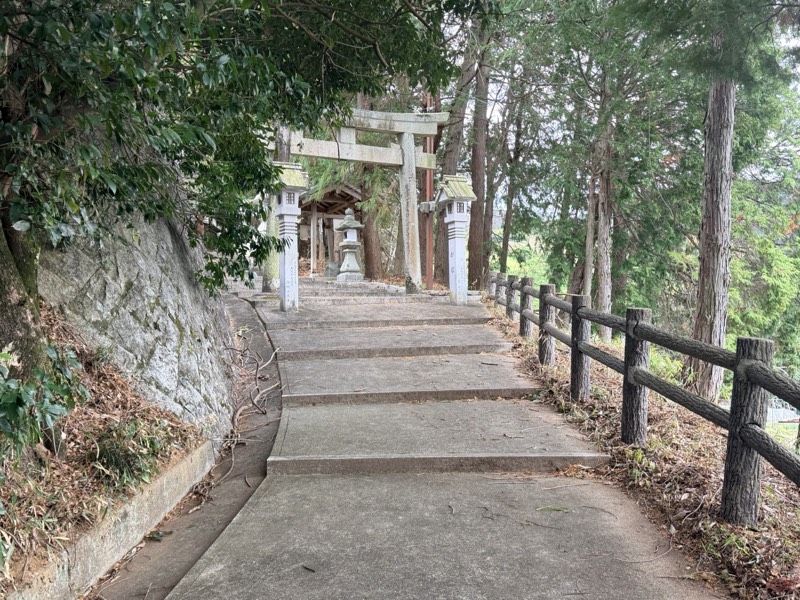
平田八坂神社
The guardian shrine of Hirata, looking down over the village and protecting it from epidemics.