


1 / 2
平田八坂神社(ひらたやさかじんじゃ)
The guardian shrine of Hirata, looking down over the village and protecting it from epidemics.
This shrine stands on a hillside overlooking the village of Hirata in Asuka. At the start of the approach is a stone marker engraved "Designated Village Shrine, Yasaka Shrine," and from there stone steps climb through a grove of cedars.
At the top are a torii gate and the shrine building, and through gaps in the trees you can look down on the village and its fields. There is no shrine office and nowhere selling charms, and you will rarely pass another visitor.
Yasaka shrines enshrine the god Susanoo no Mikoto. Their head shrine is Yasaka Shrine in the Gion district of Kyoto, from which the deity was shared with shrines across Japan.
Susanoo has long been regarded as a god who calms epidemics. In the Heian period (794–1185), goryōe rites were held when epidemics swept the capital, and these were the origin of the Gion Festival. The belief then spread to villages around the country. The wish to keep disease out of the village led to small shrines like this one being founded everywhere.
The "village shrine" (sonsha) on the stone marker was a shrine rank used from the Meiji era until the end of the Second World War. In the sequence of imperial shrines, national shrines, prefectural shrines, district shrines and village shrines, it was the rank closest to everyday life, and meant, literally, the guardian shrine of a village.
Village shrines that were "designated" received offerings (heihaku) from the authorities at their annual festival. The shrine ranking system itself was abolished after the war, but the stone markers remain as they were. You can see markers like this in villages throughout Asuka.
About 15 minutes on foot from Kintetsu Asuka Station. It is in the same Hirata district as Takamatsuzuka Kofun, so you can stop by while touring the kofun.
This is not a tourist site but a shrine still cared for and protected by the people who live nearby. Please visit quietly.
Published
NEARBY
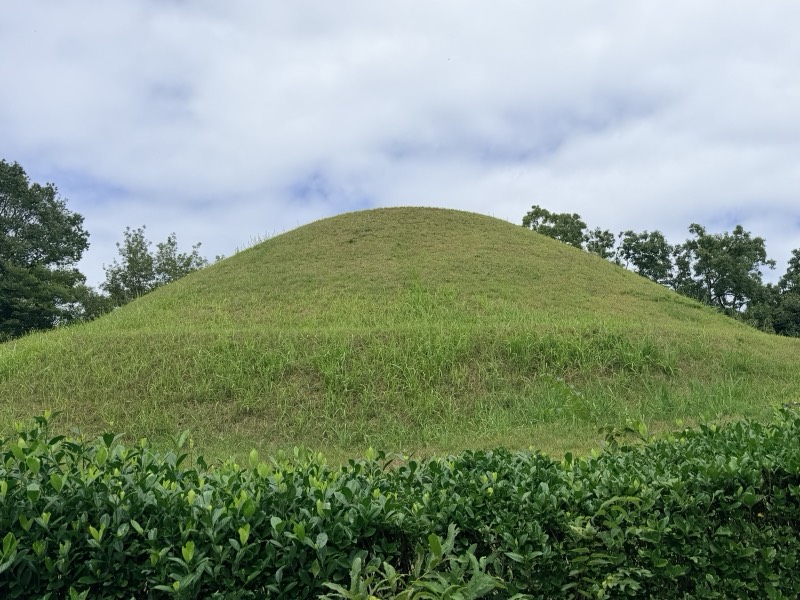
高松塚古墳
A round burial mound where brilliantly coloured paintings of court ladies were found: the defining archaeological discovery of post-war Japan.
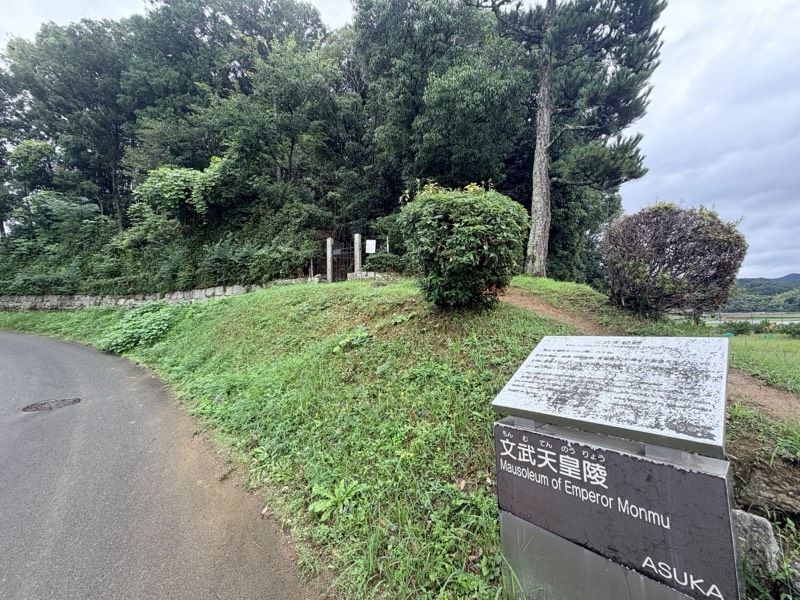
栗原塚穴古墳(文武天皇陵)
The tomb designated by the Imperial Household Agency as Emperor Monmu's, at odds with the archaeological view.
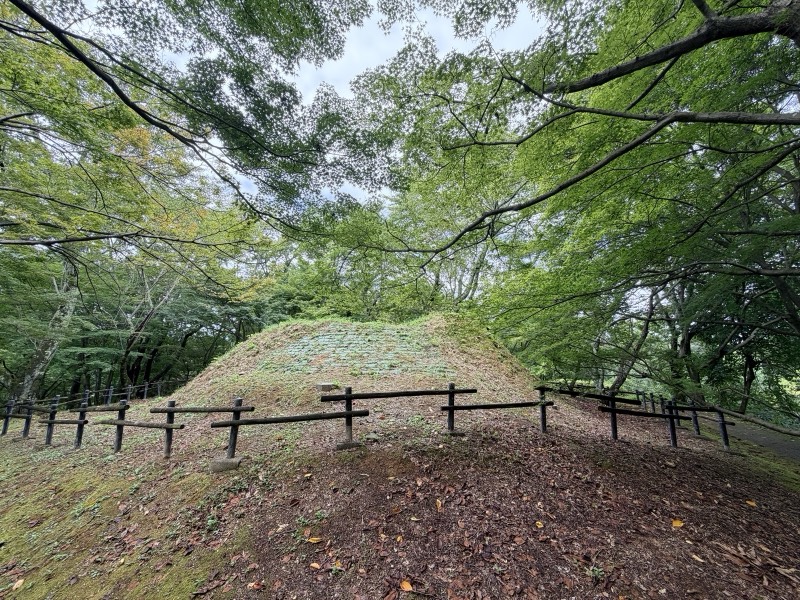
中尾山古墳
A small octagonal mound thought to be the tomb of the cremated Emperor Monmu.