1 / 4
益田岩船(ますだのいわふね)
A giant stone lying deep in a bamboo grove. No one knows what it was made for.
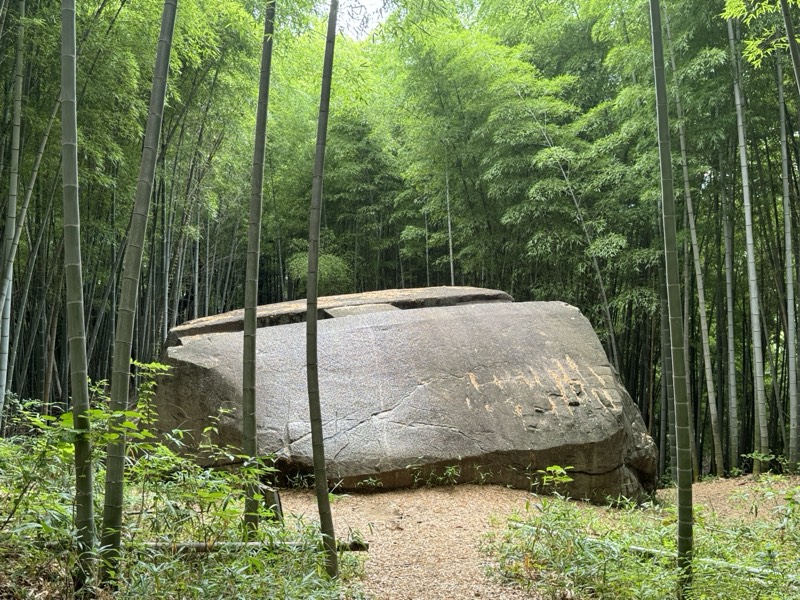
On a hilltop in Kashihara City, just west of Asuka Village, lies a huge worked block of granite. It is surrounded by bamboo, and you cannot see it until you reach the top of the slope. When its sheer size appears between the trees, the first reaction is astonishment.
It measures about 11 m east to west, 8 m north to south and 4.7 m high, and is estimated to weigh around 800 tonnes. It is one of the largest of all the stone monuments in Asuka.
The top has been cut flat, and in it are two square holes, each about 1.6 m on a side and 1.3 m deep, set about 1.4 m apart.
The sides still bear grooves cut in a neat grid pattern. These are marks left in the middle of shaping the stone, and show that it was never finished. Stand close and look up, and you can see the strokes of the chisel lined up just as they were cut.
No one knows what it was for. Many theories have been put forward over the years.
The leading view is that it was meant to become the stone burial chamber of a kofun (ancient burial mound) but was abandoned partway. If the two holes are seen as two burial rooms, the structure closely resembles the chamber of Kengoshizuka Kofun. The stone is thought to have cracked during the work and been left.
Other theories say it was a platform for observing the heavens, a lookout, or a tomb for cremated remains. None of them is conclusive.
The name comes from Masuda Pond, an irrigation reservoir built near here in the Heian period (794–1185). According to legend, the stone was the base for a monument erected on the pond's embankment, and so it came to be called the Masuda Iwafune, the "rock boat" of Masuda.
This tradition has not been confirmed either. Only the name remains, and the stone's purpose is unknown. Asuka has many stone monuments like this, but one of this size with no known purpose stands out.
It lies outside Asuka Village, in Shirakashi-chō, Kashihara City. About 20 minutes on foot from Kintetsu Okadera Station. A mountain path leads in from the back of a residential area and climbs through the bamboo.
The path is narrow and slippery after rain, so wear comfortable shoes. There are no lights nearby, so go while it is still daylight.
The stone's appearance changes with the light falling through the bamboo. Few people come here, so you can take your time face to face with the giant stone.
Published
NEARBY
牽牛子塚古墳
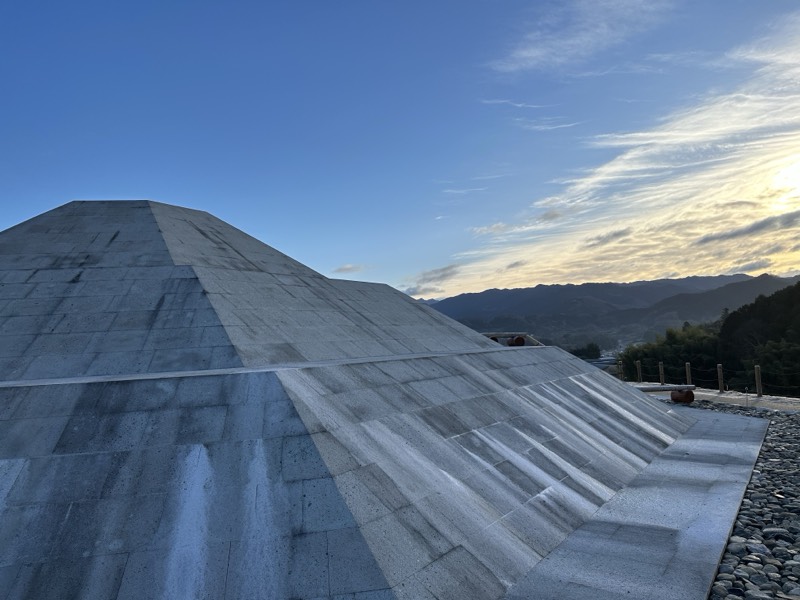
An octagonal burial mound, now widely thought to be the tomb of Empress Saimei.
与楽カンジョ古墳
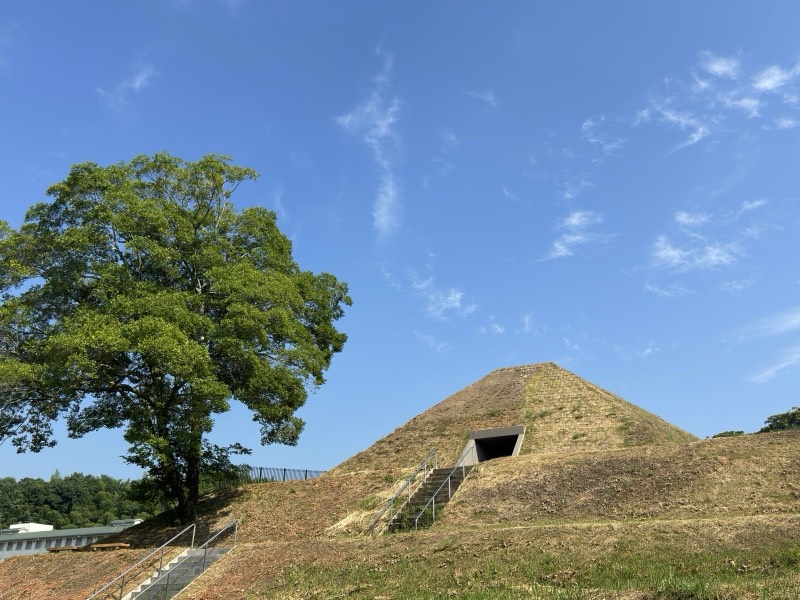
A stone chamber with a ceiling so high you have to crane your neck, and a floor paved entirely with river stones.
岩屋山古墳
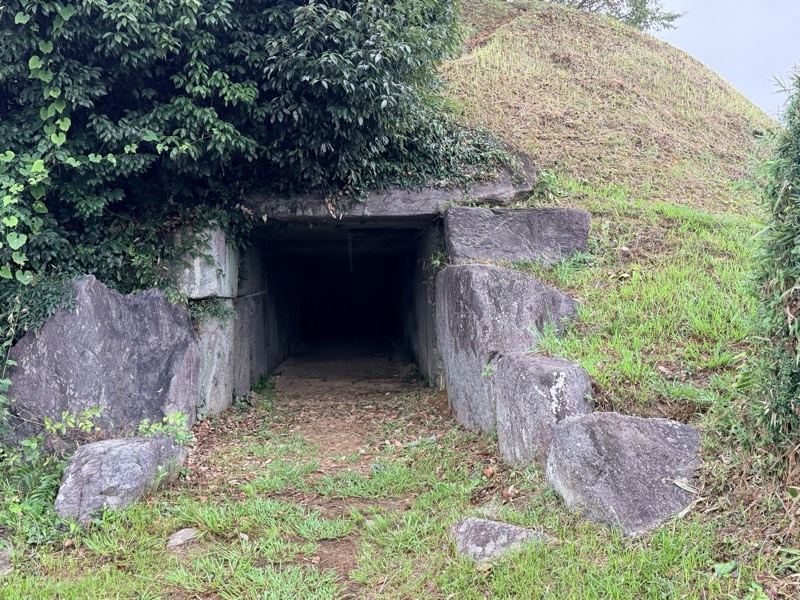
Five minutes from the station: walk straight into a burial chamber built of tightly fitted cut stone.