


1 / 3
与楽カンジョ古墳(ようらくカンジョこふん)
A stone chamber with a ceiling so high you have to crane your neck, and a floor paved entirely with river stones.
This kofun (ancient burial mound) stands in Yōraku, in Takatori Town just west of Asuka Village. It has been restored, and you can go inside the stone chamber.
The first surprise inside is the height. The burial room where the body was laid is about 5.6 m to the ceiling. The stones were stacked so that each course projects slightly inward, narrowing toward the top; looking up from below, you feel as if you are standing at the bottom of a dome.
Asuka's best-known stone chambers are either roofed with giant flat stones, like Ishibutai Kofun, or built of cut stones fitted without gaps, like Iwayayama Kofun. This one is different from both: it is built of natural stones piled up to gain height.
The other thing that catches your eye is the floor. Round river stones are packed across it without a gap.
In the centre is a worked flat stone, and beyond it is a hole. The flat stone is thought to be the platform on which the coffin rested, and the floor stones are thought to have been laid for drainage.
The high ceiling and the stone-paved floor are both features rarely seen in Asuka's kofun, and it has been pointed out that they are close to the way tombs were built on the Korean Peninsula.
It is thought to have been built around the end of the 6th or the beginning of the 7th century. The mound is square, about 36 m on each side and about 9 m high. Square mounds of this size are not common in this period.
The person buried here has not been identified, but the leading view is that it belonged to one of the clans of immigrant descent, such as the Yamato no Aya.
Like Hinokuma, this area preserves strong traces of immigrants from the continent. Miniature cooking utensils modelled on stoves and steamers (koshiki) have been excavated from the Yōraku tomb group; these too are regarded as grave goods typical of immigrant tombs.
This kofun does not stand alone: it is designated a national Historic Site as part of the Yōraku Kofun Group, together with Yōraku Kansuzuka Kofun and Terasaki Shirakabezuka Kofun, three tombs in all.
Kansuzuka Kofun is close by, and a signpost points the way. It too has a stone chamber with a high ceiling, so tombs built the same way stand side by side.
The origin of the name "Kanjo" is unclear. One theory says it is a corruption of kanjō, the ritual of inviting a deity.
The tomb is outside Asuka Village, in Yōraku, Takatori Town. It is about 30 minutes' walk west of Kintetsu Asuka Station, beyond Kengoshizuka Kofun.
There is no lighting in the chamber. If you want to see how the back wall and ceiling are built, bring a light. The floor is dark too, and the round stones are slippery.
The mound has been restored as a grassy hill, and steps lead up to the chamber entrance. The surroundings are farmland and hills. There are no visitor facilities, so it is best to bring drinks and anything else you need.
On a nearby hill there is also a path to the ruins of Kaibukiyama Castle. There is a sign, but the path becomes narrow.
Published
NEARBY
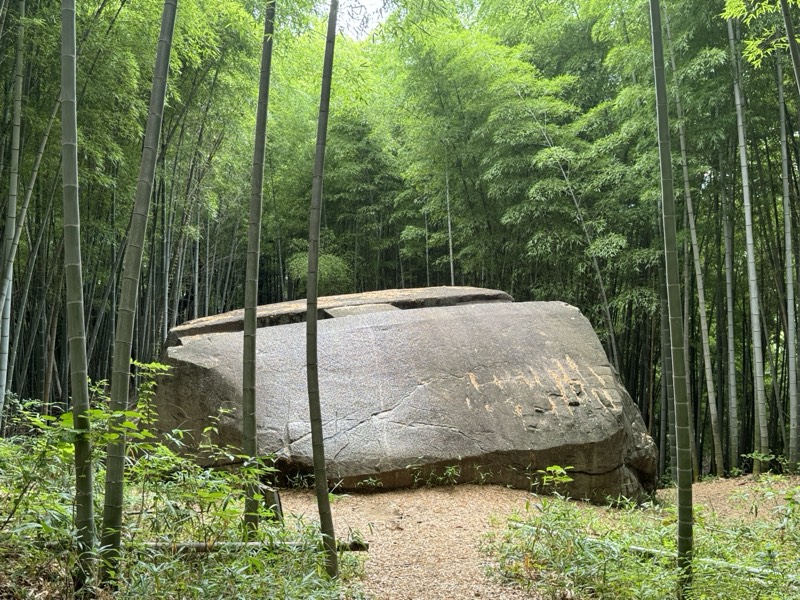
益田岩船
A giant stone lying deep in a bamboo grove. No one knows what it was made for.
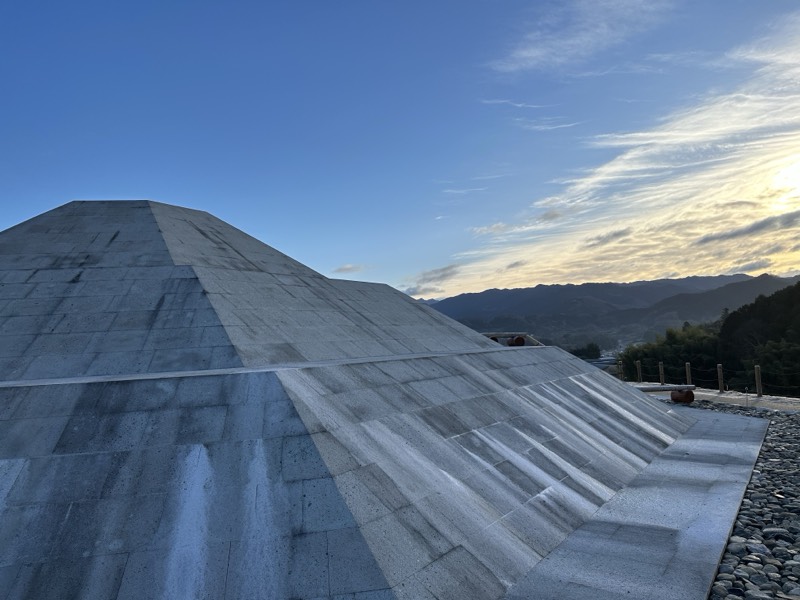
牽牛子塚古墳
An octagonal burial mound, now widely thought to be the tomb of Empress Saimei.
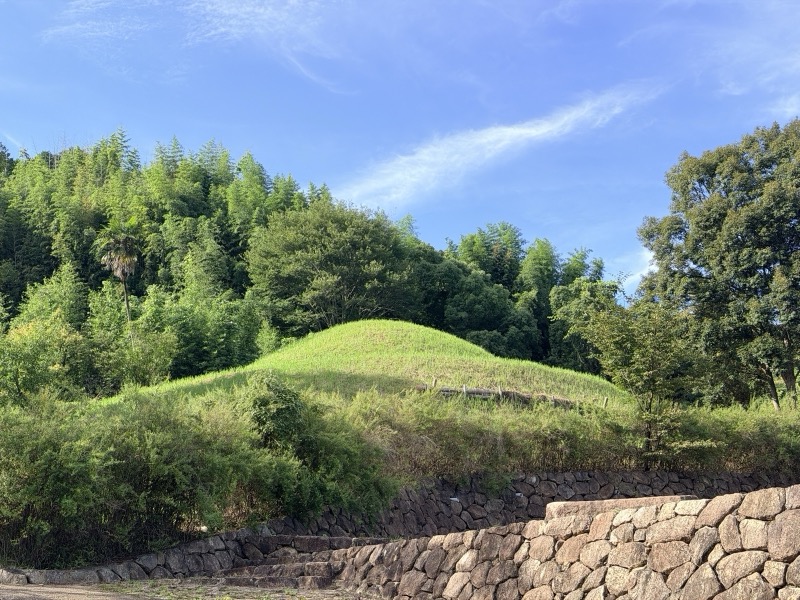
マルコ山古墳
A hexagonal burial mound 24 m across between opposite sides, a shape rarely found anywhere in Japan.