


1 / 2
都塚古墳(みやこづかこふん)
A square burial mound built of stepped stone, like a step pyramid.
This square kofun (ancient burial mound) was built in the late 6th century. It stands on a slope overlooking the village of Sakata, up the hill to the south-east of Ishibutai Kofun.
It became widely known in 2014, when investigations revealed that the mound had been built of stone piled up in many steps. Japanese kofun are normally made of heaped earth, so this was unprecedented, and it was widely reported as "a kofun like a step pyramid." Each side measures about 41 m.
Stones ranging from the size of a fist to the size of a human head were laid in steps on the slopes of the mound. There are thought to have been at least five steps.
Similar structures are found in tombs of Goguryeo, a kingdom on the Korean Peninsula. Given the Soga clan's close ties with immigrant craftsmen, it has been suggested that the tomb may reflect that influence. A shape that breaks the usual rules for Japanese kofun says a great deal about the character of Asuka.
The corridor-style stone chamber opens to the south, and its entrance survives. It is about 12 m long in total. Inside is a house-shaped sarcophagus carved out of tuff.
The sarcophagus is about 2.2 m long, 1.5 m wide and 1.7 m high. It has a lid shaped like a roof and still sits where it was placed in the chamber. The size of the chamber and of the sarcophagus suggest that this was the tomb of a very powerful person.
For conservation, the entrance is fenced off and you cannot go inside. From outside the fence you can see the capstone and part of the sarcophagus.
The leading theory is that this is the tomb of Soga no Iname. Iname wielded great power as chief minister (ōomi) in the mid-6th century, promoted the acceptance of Buddhism, and was the father of Soga no Umako.
Ishibutai Kofun, thought to be Umako's tomb, lies just down the hill, which also supports this theory. In this view, the tombs of father and son stand at the top and bottom of the same slope.
A construction date in the late 6th century also fits reasonably well with Iname's death in 570. However, this has not been confirmed either.
The tomb has another name, Kinchōzuka ("Golden Bird Mound"), from a legend that a golden bird sings here on the morning of New Year's Day.
The names of kofun preserve how local people have seen them. Ishibutai, Oni no Manaita, Kinchōzuka: in Asuka, many names apart from the scholarly ones are still alive.
About 10 minutes on foot from the "Ishibutai" stop on the Asuka loop bus from Kintetsu Kashiharajingu-mae Station. Terraced rice fields and the village spread out along the way as you climb from Ishibutai.
Few people come here. Just a few minutes' walk from the crowds at Ishibutai, you find yourself on a quiet hillside.
Published
NEARBY
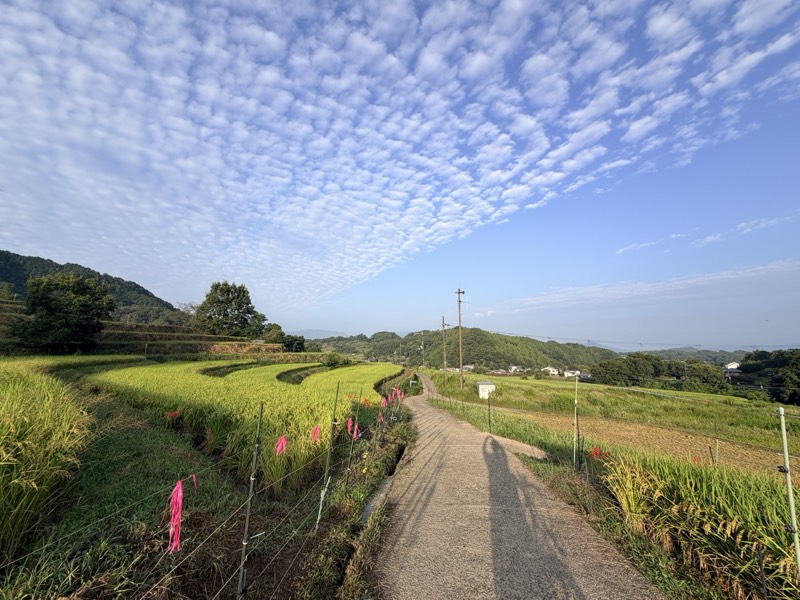
阪田の棚田
Terraced rice fields on the slopes of Sakata, right by Miyakozuka Kofun. In autumn, red spider lilies line the ridges.
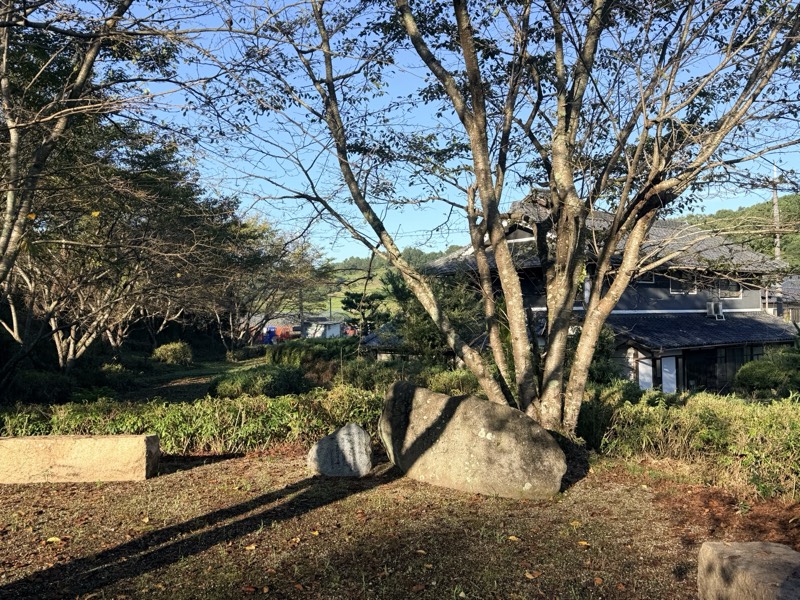
坂田寺跡
The family temple of the clan of Kuratsukuri no Tori, maker of the Asuka Daibutsu. One of Asuka's oldest temples, it was also a nunnery.
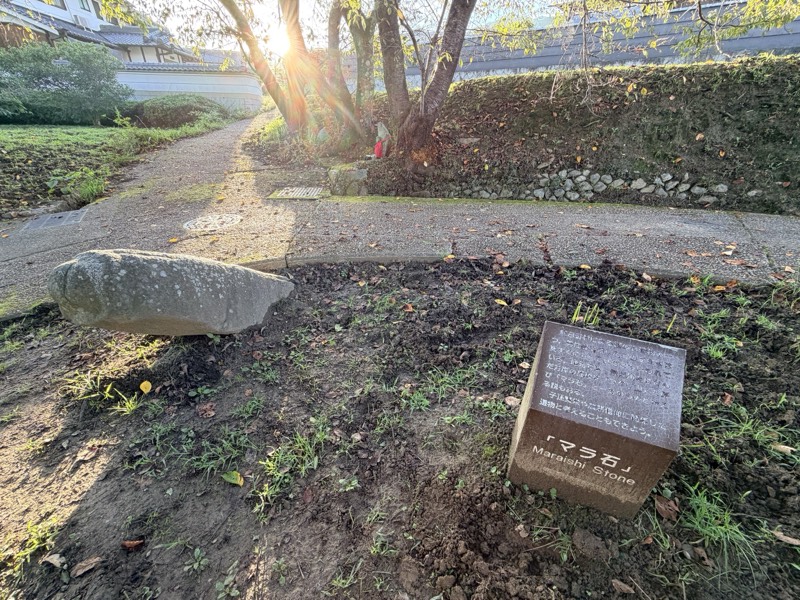
マラ石
A phallus-shaped stone lying by the roadside. One theory pairs it with "Fuguri-yama" on the opposite bank.