


1 / 3
坂田寺跡(さかたでらあと)
The family temple of the clan of Kuratsukuri no Tori, maker of the Asuka Daibutsu. One of Asuka's oldest temples, it was also a nunnery.
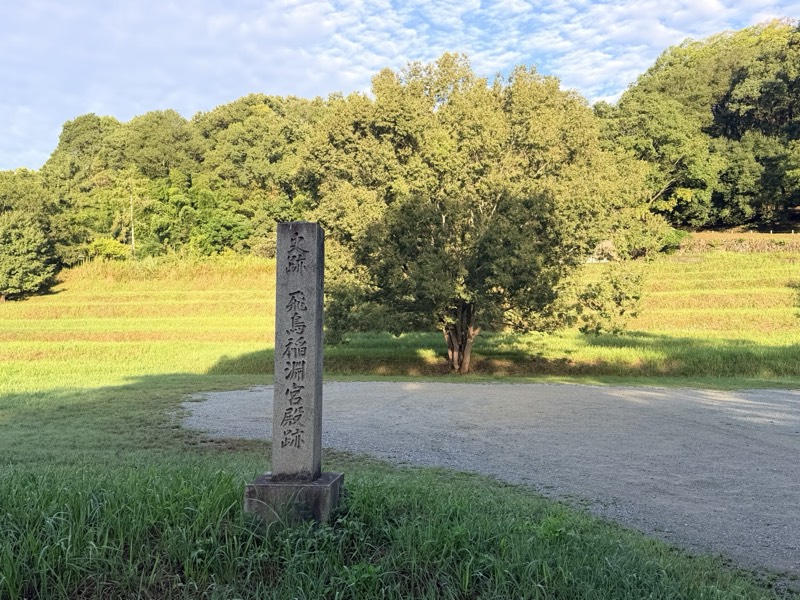
Head east from Iwaido past Maraishi and, just before the hamlet of Sakata, you reach the Sakata-dera Temple site. None of the temple buildings remain; today there are only fields and grass.
Sakata-dera was the family temple of the Kuratsukuri clan. The Fusō Ryakki (a 12th-century history) dates its beginning to 522, when Shiba Tatto, who had come from the continent, built a thatched hall at Sakatahara in Takaichi District. This is earlier than the reign of Emperor Kinmei, when Buddhism is said to have been officially introduced, and it shows immigrants worshipping the Buddha privately.
The Nihon Shoki (Japan's oldest official chronicle, compiled in 720) records that in 587 Kuratsukuri no Tasuna asked to make a jōroku (life-size, about 4.8 m) Buddha and a temple for the emperor, and that in 606 Kuratsukuri no Tori was granted 20 chō of rice fields in Sakata District, Ōmi Province, with which he built Kongō-ji Temple. This Kongō-ji is thought to be Sakata-dera.
Kuratsukuri no Tori is known as the sculptor Tori Busshi, maker of the seated Shaka Buddha of Asuka-dera (the Asuka Daibutsu) and the Shaka Triad in the Golden Hall of Hōryū-ji. Shiba Tatto was his grandfather and Tasuna his father.
Sakata-dera is regarded as one of the oldest temples, alongside Asuka-dera, and together with Toyura-dera it was one of the nunneries of the Asuka period. The Nihon Shoki records that in 686 a musha daie, a great Buddhist assembly open to all, was held at this temple for the late Emperor Tenmu, and it was counted among the five great temples of the time.
Excavations have confirmed a Buddhist hall and corridors from the Nara period (710–794): a building on a platform faced with cut tuff, the platform and foundation stones at the west end of the south corridor, a drip channel about 50 cm wide, a walkway paved with river stones the size of a human head, and foundation stones of quartz diorite 80 cm across.
Northeast of the main hall and lecture hall, a pit containing ritual objects buried to consecrate the building platform was found. Besides mirrors, gold leaf, silk thread, copper coins and crystal beads, it yielded pottery with "Sakata-dera" written on it in ink, round eaves tiles with a simple lotus design and flat eaves tiles with a honeysuckle arabesque design. The pottery bearing the temple's name confirmed that this was Sakata-dera.
On the other hand, where the main buildings of the Asuka-period temple stood is still not known. The site is not designated a national Historic Site, but it is one of the component properties of the Japan Heritage story "The Birth of Japan: Women Who Soared in Asuka."
Published
READ MORE
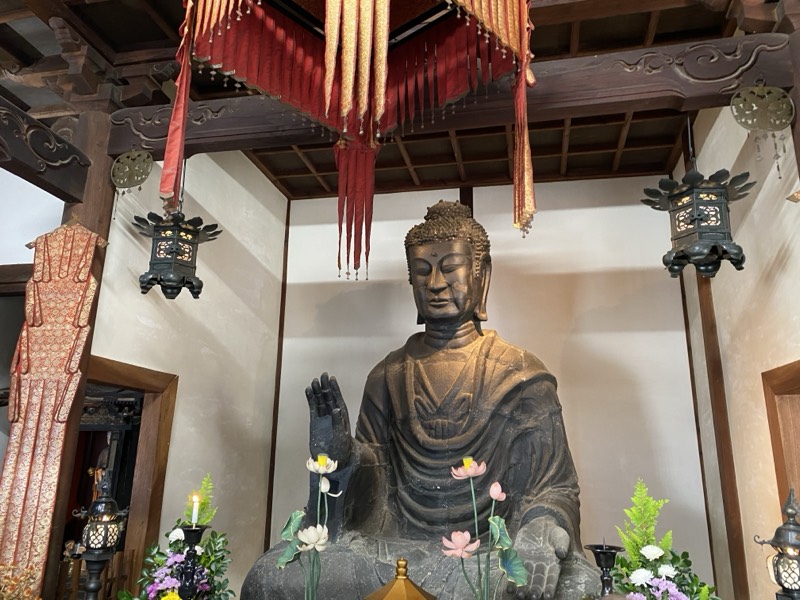 Zenshin-ni: The First Person in Japan to Become a Nun Was an 11-Year-Old GirlIn 584, three people took holy orders in Asuka. All three were women, daughters of immigrant families. A…
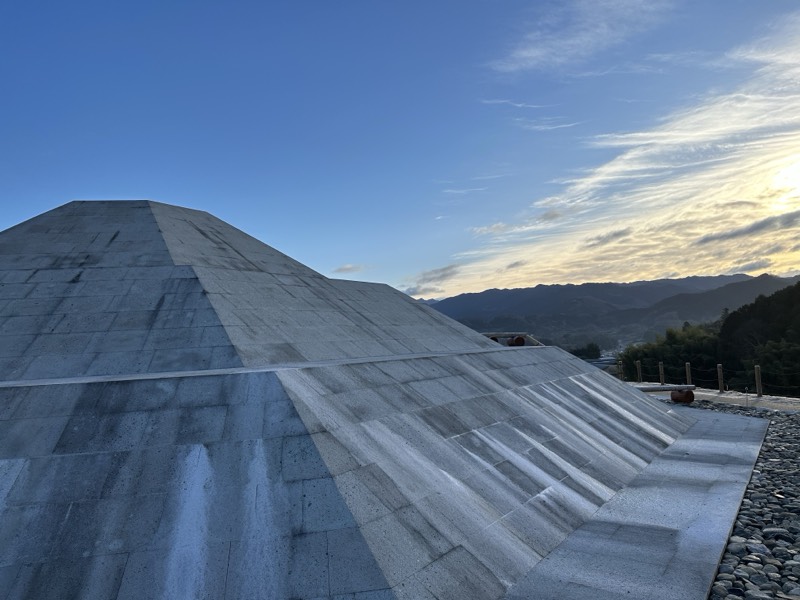 Women Who Soared through Asuka: The Five at the Heart of a Japan Heritage StoryThree reigning empresses (Suiko, Kōgyoku/Saimei and Jitō), the poet Nukata no Ōkimi, and the nun Zenshin-ni…
NEARBY
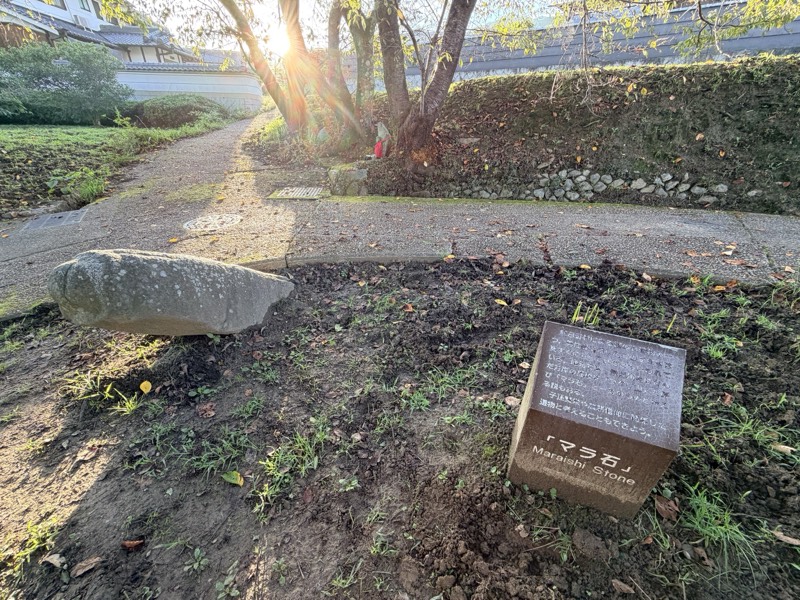
マラ石
A phallus-shaped stone lying by the roadside. One theory pairs it with "Fuguri-yama" on the opposite bank.
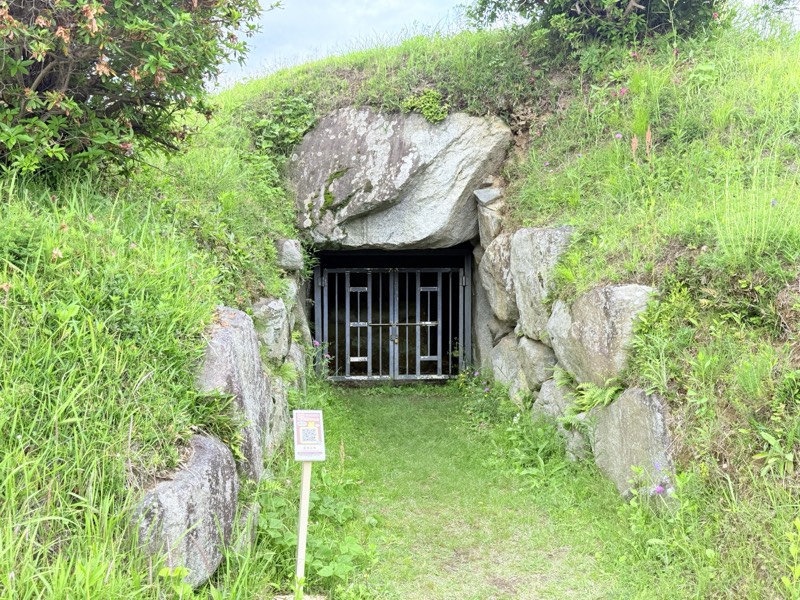
都塚古墳
A square burial mound built of stepped stone, like a step pyramid.
飛鳥稲淵宮殿跡
A mid-7th-century site on the left bank of the Asuka River where buildings stood in a neat formation. It is considered a candidate for a temporary palace.