
Published
In 584, three people took holy orders in Asuka. All three were women, daughters of immigrant families. A thatched hall built by the father of one of them is said to have been the beginning of Sakata-dera Temple.

The name of the first person in this country to take holy orders is recorded in the Nihon Shoki (Japan's oldest official chronicle, compiled in 720): Zenshin-ni. Her lay name was Shima, and she was the daughter of Shiba Tatto.
This was in 584. Soga no Umako had obtained a stone statue of Maitreya brought over from the Korean kingdom of Baekje, and had people search for someone to worship it. The person they found was Ebin, who had come from Goguryeo and had by then left the priesthood. With Ebin as her teacher, Umako had Shima ordained. The Nihon Shoki gives her age as 11.
Two more were ordained after her: Toyome, daughter of Ayahito no Yabo, became Zenzō-ni, and Ishime, daughter of Nishigori no Tsubo, became Ezen-ni.
All three were women, and all three were daughters of immigrant families. Buddhism in this country, then, began not with male monks but with teenage girls.
In 585 an epidemic broke out. Mononobe no Moriya and Nakatomi no Katsumi told the emperor that it was caused by worshipping a foreign god.
Temples were burnt and Buddhist images thrown into the Horie canal in Naniwa. The three nuns were stripped of their robes, taken to the post station at Tsubaichi market and flogged in public.
This was the year after they took orders. Zenshin-ni was 12.
In 588, Zenshin-ni and her companions went to Baekje.
Their aim was to receive the precepts. To become a proper monk or nun, one had to be given the precepts according to a prescribed ceremony. No one in Japan knew the procedure, so they would go and learn it: that was the three women's case.
This is regarded as the earliest record of anyone crossing the sea to study, before the first missions to Sui China were sent.
They returned in 590 and lived at Sakurai-dera Temple. This temple was later moved to the site of the Toyura Palace after Empress Suiko left it, and became Toyura-dera, Japan's first nunnery.

Zenshin-ni's father, Shiba Tatto, was also an immigrant. The Fusō Ryakki (a chronicle compiled in the late Heian period) records that he arrived in 522, built a thatched hall at Sakatahara in Takechi District, enshrined a Buddhist image there and worshipped it.
This is earlier than the reign of Emperor Kinmei, when Buddhism is said to have been officially introduced. Before it arrived through envoys between states, people who had come from abroad were already worshipping the Buddha for themselves. That place is said to have been the beginning of Sakata-dera Temple.
Sakata-dera later became the clan temple of the Kuratsukuri family and one of the nunneries of the Asuka period.
Follow the family tree and it leads to someone unexpected.
Shiba Tatto had a son, Kuratsukuri no Tasuna. In 587, when Emperor Yōmei fell ill, he asked to become a monk and vowed to make a jōroku (life-size-and-a-half, about 4.8 m standing) Buddha and a temple for the emperor's sake.
Tasuna's son was Kuratsukuri no Tori: Tori Busshi, the sculptor who made the seated Shaka Buddha of Asuka-dera Temple, the Asuka Daibutsu. The Shaka Triad in the Golden Hall of Hōryū-ji Temple is also his work.
Zenshin-ni was Tori's aunt. The first person to take holy orders in this country and the person who made its first full-scale Buddhist statues came from the same family.
Everything so far is written in the Nihon Shoki and the Fusō Ryakki. So did Zenshin-ni live at Sakata-dera?
That is not written. The only residence of Zenshin-ni that the Nihon Shoki records is Sakurai-dera after her return. Her connection with Sakata-dera rests on just two points: it is where her father built his thatched hall, and the temple was a nunnery.
Even so, the site of Sakata-dera has been chosen as a component of the Japan Heritage story "The Dawn of the Nation of Japan: Women Who Soared through Asuka," because Zenshin-ni is one of the five women at the heart of that story.
The site of Sakata-dera lies just before the hamlet of Saka, reached by heading east from Iwaido past the Mara-ishi stone.
Excavations have found a Buddhist hall and corridors from the Nara period. A pit containing ritual objects buried to consecrate the platform yielded pottery inscribed in ink with the words "Sakata-dera," confirming that this was the temple. Where the Asuka-period temple buildings stood, however, is still unknown.
It is not designated a national Historic Site. There is nothing but rice fields and grassland. This may be where the family of a girl who took orders at 11 first worshipped the Buddha in this country. Whether you stand there with that in mind changes what you see.
RELATED SPOT
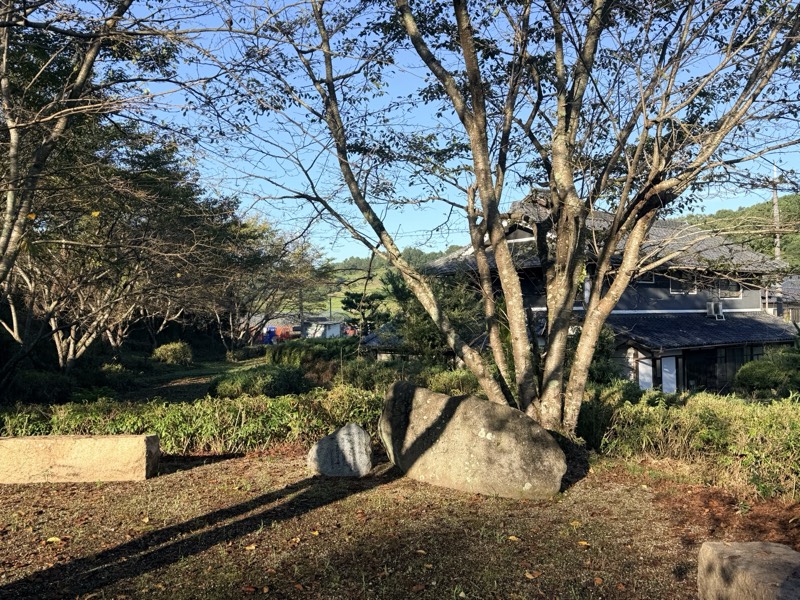
坂田寺跡
The family temple of the clan of Kuratsukuri no Tori, maker of the Asuka Daibutsu. One of Asuka's oldest temples, it was also a nunnery.
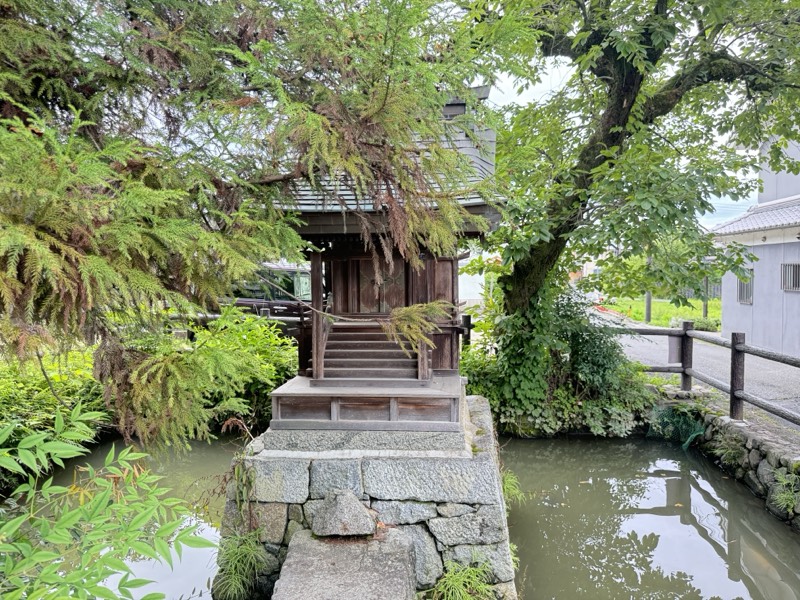
向原寺(豊浦寺跡)
A temple standing on the site of Toyura-dera, Japan's first nunnery, with the Naniwa Pond tied to the legend of Buddhism's arrival.
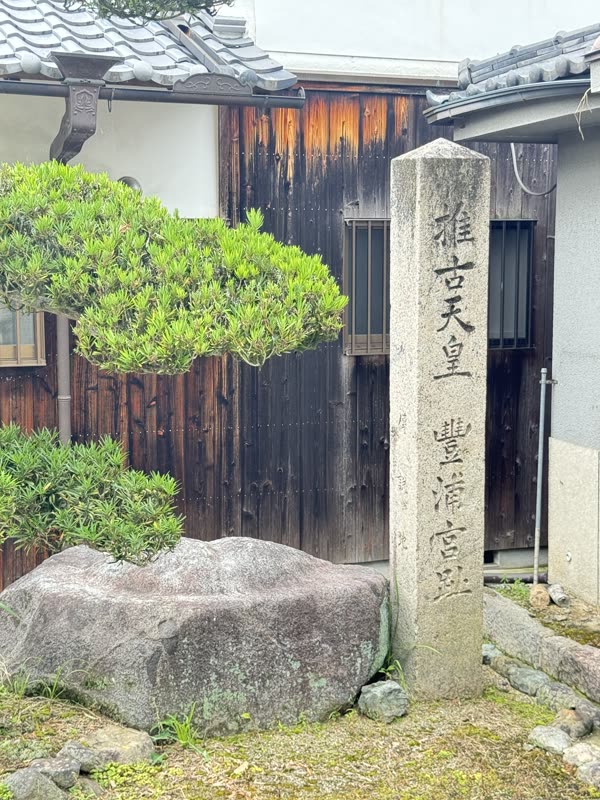
豊浦宮跡
The site of the palace where Empress Suiko took the throne, marking the beginning of the Asuka period.
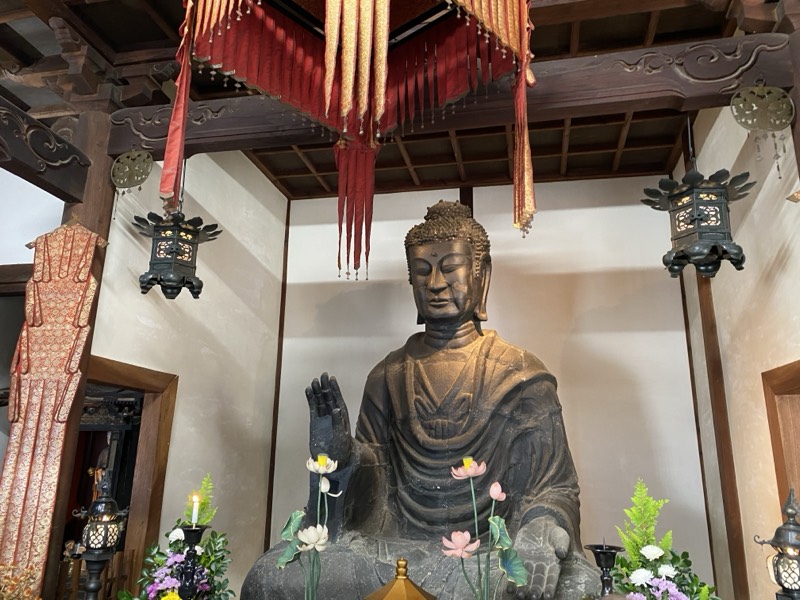
飛鳥寺・蘇我入鹿首塚
Japan's first full-scale Buddhist temple. The Great Buddha of Asuka still sits on the spot where it was made, 1,400 years ago.
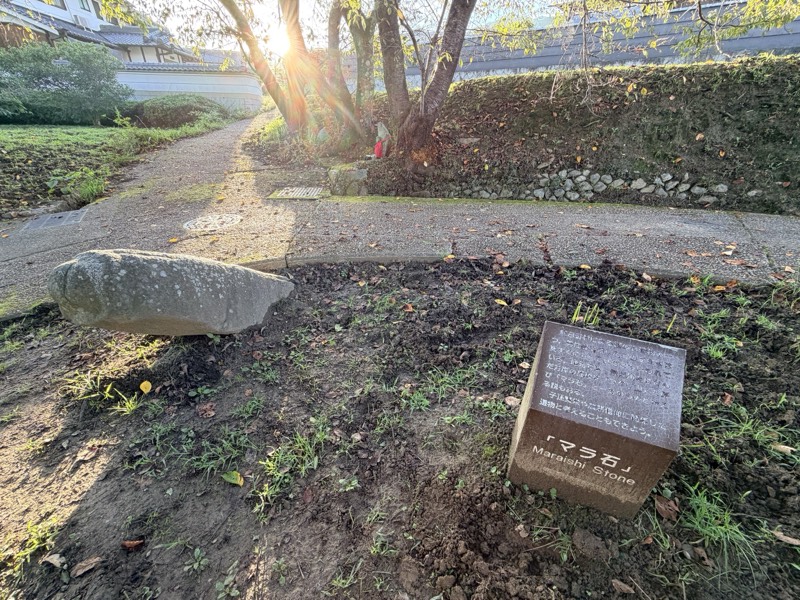
マラ石
A phallus-shaped stone lying by the roadside. One theory pairs it with "Fuguri-yama" on the opposite bank.
RELATED COLUMN
Where Was the Naniwa Canal? A Discarded Buddha's Road to Zenkō-jiA waterway in Osaka near the sea, or a small pond in Asuka? The "Naniwa no Horie", which the Nihon Shoki… Was Prince Shōtoku Really Soga no Umako? Reading the "Prince = Umako" TheoryAlmost every achievement of Prince Shōtoku comes with the name of Soga no Umako beside it. What if the man…
 Who Was Prince Shōtoku? Born at Tachibana-dera, Moved to IkarugaThe Twelve Cap Ranks, the Seventeen-Article Constitution, the embassies to Sui China: Prince Shōtoku…