
Published
Asuka is not only the village in Nara. Around Habikino and Taishi in Osaka Prefecture there is another Asuka, known in ancient times as Chikatsu Asuka, "Near Asuka". The Asuka in Yamato was Tōtsu Asuka, "Far Asuka". Near and far from where?

In Habikino, Osaka Prefecture, the place name Asuka still survives. The area at the western foot of Mount Nijō, from Habikino to the town of Taishi, has long been called Asuka. To tell it apart from the Asuka in Nara, it is called Chikatsu Asuka (Near Asuka), and the Nara one Tōtsu Asuka (Far Asuka).
Ancient Kawachi Province had a district called Asukabe, and in Asuka, Habikino, stands Asukabe Shrine. It is said to have been founded by the Asukabe clan, descendants of people who came from the Korean kingdom of Baekje, to honour their ancestor.
The origin of the two names appears in the section on Emperor Richū in the Kojiki (Japan's oldest surviving chronicle, compiled in 712). It is a story about Prince Mizuhawake, later Emperor Hanzei, on his way from Naniwa to Yamato.
The prince spent a night at a place in Kawachi and said that tomorrow he would go up to Yamato, so the place was named "Near Asuka". After entering Yamato he said he would stay here today to purify himself, and tomorrow visit Isonokami Shrine, and that place was named "Far Asuka".
It is a place-name story built on a pun between asu ("tomorrow") and Asuka. No scholar thinks the names really arose this way. But it shows that by the early 8th century, when the Kojiki was compiled, the two Asukas were already known side by side.
"Near" and "far" are generally thought to describe distance from Naniwa (present-day Osaka). Heading east from the port of Naniwa, you reach the Asuka of Kawachi first, and beyond the pass south of Mount Nijō lies the Asuka of Yamato. Seen from the capital's side, the far Asuka was the original one.
Naniwa was the gateway from the sea, where envoys and goods from the continent arrived first. From there you travelled inland overland to reach the capital, and that geography shows in the names "near" and "far".
The Nihon Shoki (Japan's oldest official chronicle, compiled in 720) records that in 613 a great road was laid from Naniwa to the capital. It is thought to correspond to the later Takenouchi Kaidō and the Yokoōji road. It ran east from Naniwa across the Kawachi plain, through Near Asuka and over the Takenouchi Pass into Yamato, then east along the Yokoōji. At its end lay the palaces of Far Asuka.
Envoys from abroad are thought to have travelled to Asuka along this road too. The Takenouchi Kaidō is now presented as part of the Japan Heritage story "Japan's Oldest National Road".
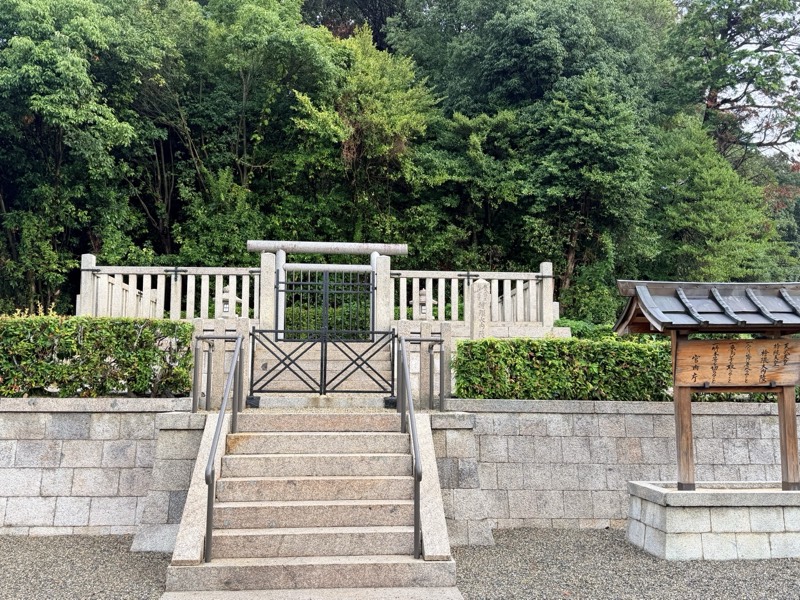
What shows that Near Asuka was a special place is the Shinaga valley in Taishi. Tombs identified as those of Emperor Bidatsu, Emperor Yōmei, Empress Suiko and Emperor Kōtoku are gathered here, together with the Shinaga tomb at Eifuku-ji, said to be Prince Shōtoku's grave. It is known as the "Valley of Royal Tombs".
Rulers from around the Asuka period were buried in Near Asuka, across the pass. Empress Suiko, who took the throne at the Toyura Palace and governed from the Oharida Palace, is one of them. Perhaps the two Asukas were one continuous land: one for living, one for resting.
Nearby is the Ichisuka tomb cluster, with more than 200 mounds mostly from the 6th century, and in one corner stands the Osaka Prefectural Chikatsu Asuka Museum. Designed by Andō Tadao, it presents the links between Kawachi and Yamato from the Kofun period to the Asuka period.
The two Asukas also appear in the names of palaces. The Kojiki records that Emperor Ingyō ruled from the Far Asuka Palace, and Emperor Kenzō from the Near Asuka Palace.
However, the Nihon Shoki calls Emperor Kenzō's palace the Chikatsu Asuka no Yatsuri Palace, and there are theories placing it in Kawachi and in Yatsuri, a district of Asuka Village. On this view, "Near Asuka" did not always mean Kawachi.
From Asuka to Near Asuka, following the Yamada-michi road to the Yokoōji and crossing the Takenouchi Pass is close to the route of the ancient highway. It takes about an hour by car. By train, Kaminotaishi Station on the Kintetsu Minami-Osaka Line is the nearest station for Eifuku-ji and Asukabe Shrine.
If you visit Near Asuka after walking around Asuka-dera and the Toyura Palace site, you can trace in a single day both the palace where Empress Suiko governed and the tomb where she rests. Try measuring for yourself the distance that people coming from Naniwa called "far".
RELATED SPOT
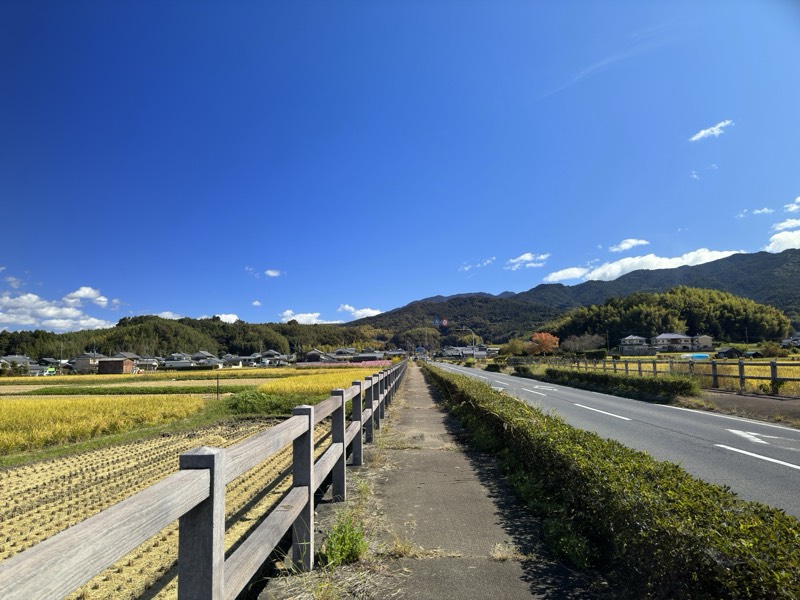
山田道
An ancient official road running east–west through Asuka. It welcomed envoys from Sui China and led to Yamada-dera Temple.
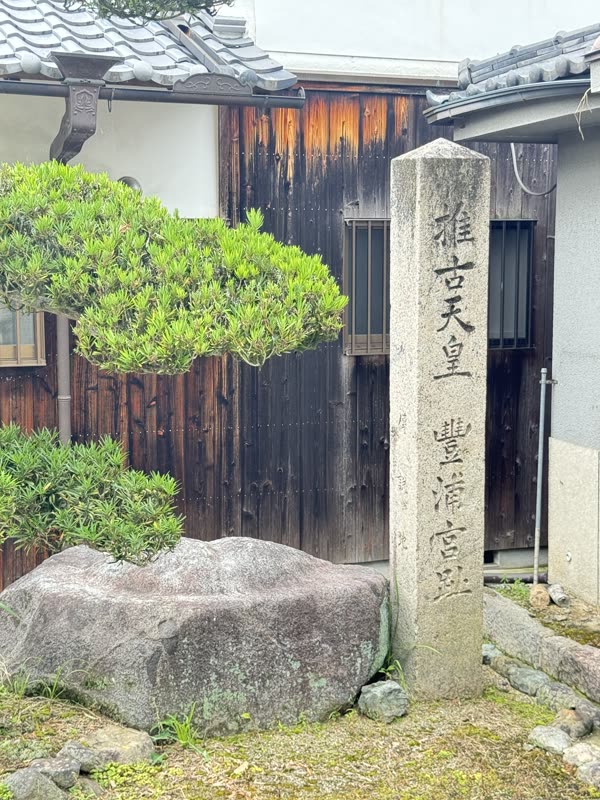
豊浦宮跡
The site of the palace where Empress Suiko took the throne, marking the beginning of the Asuka period.
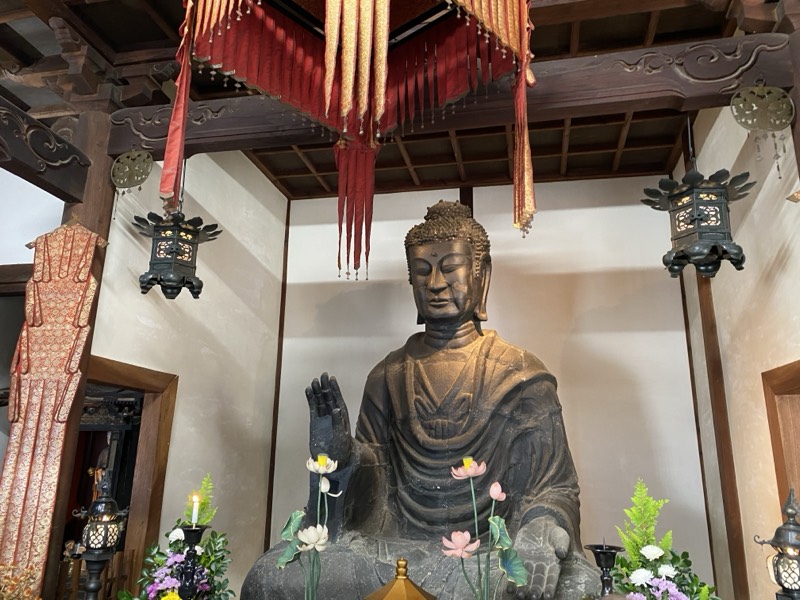
飛鳥寺・蘇我入鹿首塚
Japan's first full-scale Buddhist temple. The Great Buddha of Asuka still sits on the spot where it was made, 1,400 years ago.
RELATED COLUMN
 Where Was the Palace Before Asuka? From Makimuku to IwareFrom Makimuku at the foot of Mt Miwa, by way of Iware, to Asuka: the seat of royal power moved south across a…
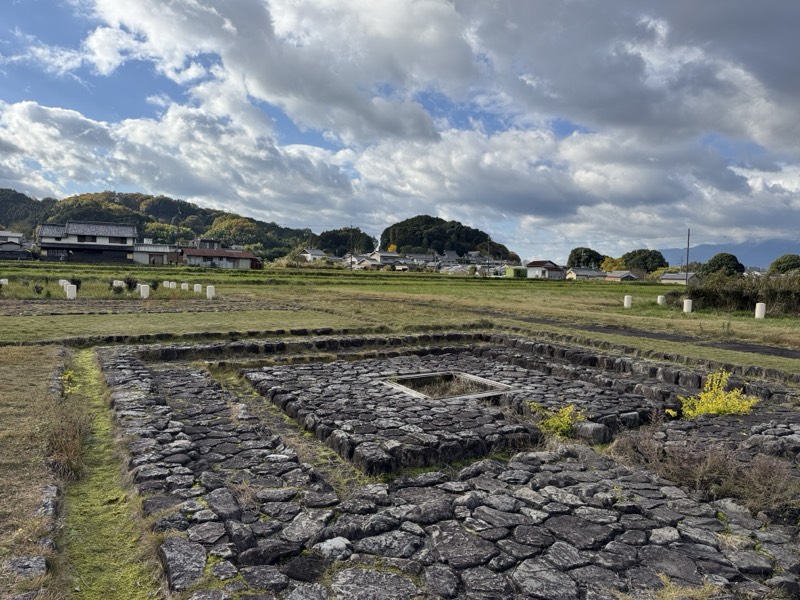 Asuka-Fujiwara World Heritage: All 19 Component Sites and How to Visit Them, with Half-Day, One-Day and Two-Day Routes"Asuka-Fujiwara" was inscribed on the World Heritage List in 2026. We list all 19 component sites with their…
 Was Emperor Tenmu Really the Younger Brother? Prince Aya, the Name That VanishedBefore she married Emperor Jomei, Empress Kōgyoku had already borne a son: Prince Aya (Aya no Miko). The…