
Published
Born into the branch of the Soga clan that kept its storehouses, he joined the side that killed Iruka, and four years later died suspected of treason. His daughters became the mothers of Empress Jitō and Empress Genmei.
When people think of the Soga clan, they think of the main line: Iname, Umako, Emishi and Iruka. That is the house that was struck down in the Isshi Incident.
Soga no Kura-no-Yamada no Ishikawamaro belonged to the same clan but a different house. He was Umako's grandson, and his father was Kuramaro, which made him Iruka's cousin.
The word "Kura" (storehouse) in his name shows what kind of house it was. The Kogo Shūi records that the Soga managed three storehouses: the Imikura (sacred storehouse), the Uchitsukura (inner storehouse) and the Ōkura (great storehouse). The Kura branch is thought to take its name from that role, keeping those storehouses and with them the wealth of the court and the clan.
While the main line stood at the front of politics, this house held the purse strings. In his long name, "Yamada" is where he lived, and "Ishikawa" also comes from a place name.
On the 12th day of the 6th month of 645, a ceremony was held at the Asuka Itabuki Palace at which envoys from the three Korean kingdoms presented tribute. This was the Isshi Incident.
Ishikawamaro's role was to read out the memorial accompanying the tribute. While he was reading, the attackers were to cut down Iruka.
But the men assigned to the deed, Saeki no Komaro and the others, did not come out. The Nihon Shoki (Japan's oldest official chronicle, compiled in 720) writes: the text was nearly at an end; Ishikawamaro's sweat poured, his voice faltered and his hands shook.
Iruka asked, "Why are you trembling?" Ishikawamaro replied, "Because I am so close to the sovereign, and I am overawed."
At that moment Prince Naka no Ōe stepped forward himself and cut at Iruka. A Soga was present at the very spot where the Soga were struck down.

In the government formed after the incident, Ishikawamaro became Minister of the Right. The Minister of the Left was Abe no Uchimaro. He had entered the heart of the new regime.
He had also married a daughter to Prince Naka no Ōe. As a reward for joining the attackers, it was a fine position.
But four years later, in the 3rd month of 649, his half-brother Soga no Himuka told Naka no Ōe that Ishikawamaro was plotting treason.
Ishikawamaro made no defence. He left Naniwa and went to Yamada-dera in Asuka, a temple he had begun building himself in 641 and which was not yet finished.
On the 25th day of the 3rd month he took his own life in front of the Buddha hall. The Nihon Shoki records that eight people in all, including his wife and children, died.
The last words handed down are not words of resentment: "Negawaku wa, shōjō seze, kimi o uramiji" ("I pray that, through every life to come, I shall never bear a grudge against my lord"). That is, even if he were reborn, he would not resent his sovereign.
His body and belongings were examined, and no evidence of treason was found. The Nihon Shoki goes on to say that, learning he had been innocent, Naka no Ōe was filled with regret. Himuka, who had slandered him, was sent away to Tsukushi in Kyushu.

The daughter who had married Naka no Ōe grieved when she heard of her father's death, and died soon afterwards. The Nihon Shoki records her under the name Miyatsuko-hime.
It says that Nonaka no Kawara no Fubito Mitsu composed poems to comfort the grieving Naka no Ōe. One was about a pair of mandarin ducks, one of whom was gone.
Entries about a future emperor mourning his wife stand out in the Nihon Shoki. They suggest that Ishikawamaro's death left a deep mark even on the side that destroyed him.
What follows is what gives this man his place in the history of Asuka.
Ishikawamaro's daughter Ochi no Iratsume bore Prince Naka no Ōe three children: Princess Ōta, Princess Uno no Sarara and Prince Takeru.
This Princess Uno no Sarara later became Empress Jitō.
Another daughter, Mei no Iratsume, had a child, Princess Ahe, who became Empress Genmei.
So Ishikawamaro was the maternal grandfather of both Empress Jitō and Empress Genmei. The blood of a man who died suspected of treason flows in the imperial line that followed.
Jitō's elder sister, Princess Ōta, married Emperor Tenmu and gave birth to Prince Ōtsu. Empress Jitō's son was Prince Kusakabe. The generation that would build the Fujiwara capital and the state governed by ritsuryō (law codes) came from this house.
Work on Yamada-dera, which had stalled, resumed in the reign of Emperor Tenmu, and the temple was completed.
Excavations in 1982 found the eastern corridor lying where it had fallen, buried in the earth. Its pillars, lattice windows and bracket sets came out of the ground in the order in which they had collapsed. Nowhere else has so much wooden architecture from the Asuka period (late 6th to early 8th century) survived together.
The man who built it never saw the temple finished. Even so, thanks to this temple, 7th-century architecture can now be known from the real thing.
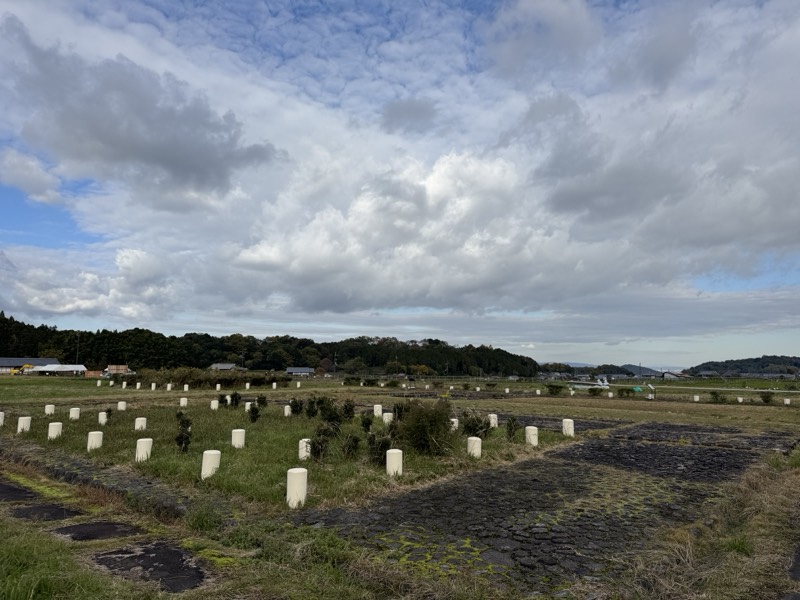
The Yamada-dera Temple Site is in Yamada, Sakurai City. The foundation stones and platforms have been laid out, and admission is free. In 2026 it was inscribed as a World Heritage Site, as one of the components of "Asuka-Fujiwara: Archaeological Sites of Japan's Ancient Capitals and Related Properties".
Timbers from the excavated corridor are on display at the nearby Asuka Historical Museum.

RELATED SPOT
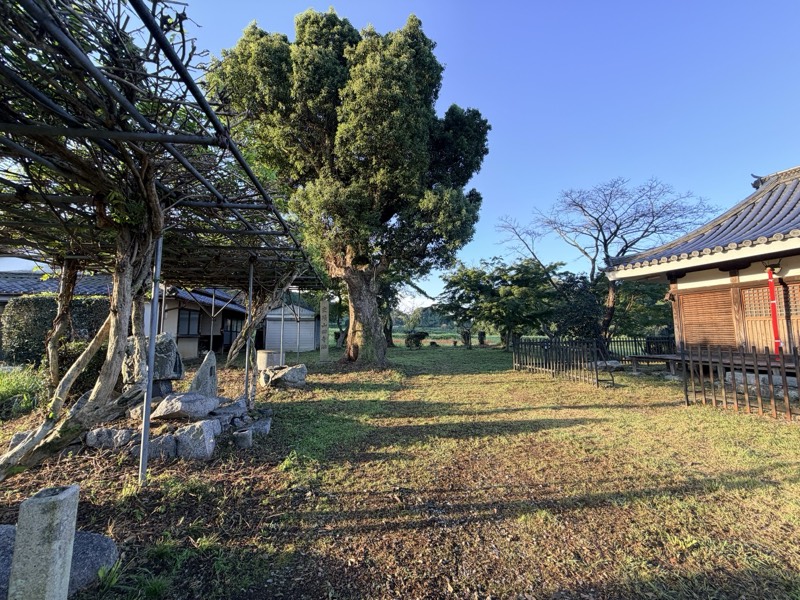
山田寺跡
A temple site where a corridor was excavated just as it had collapsed and been buried.
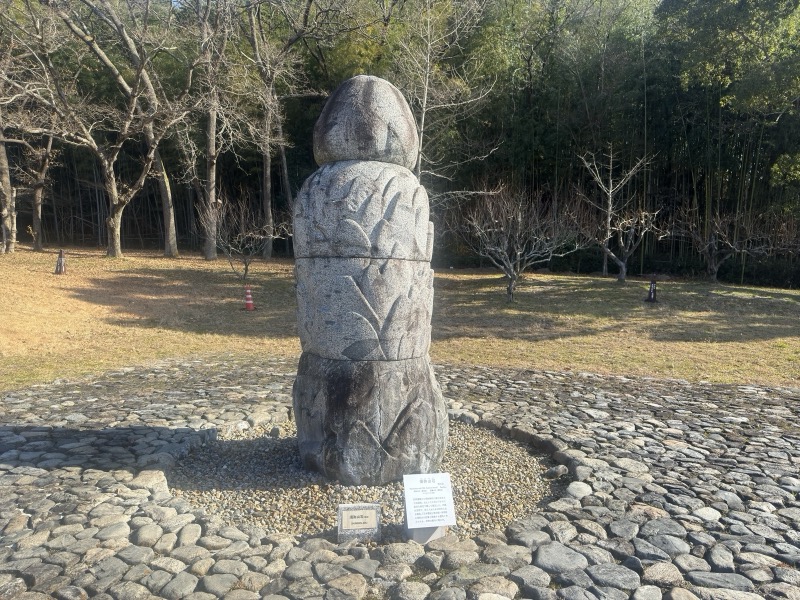
奈良文化財研究所 飛鳥資料館
The Nara National Research Institute's museum, displaying finds from Asuka and the east corridor of Yamada-dera Temple.
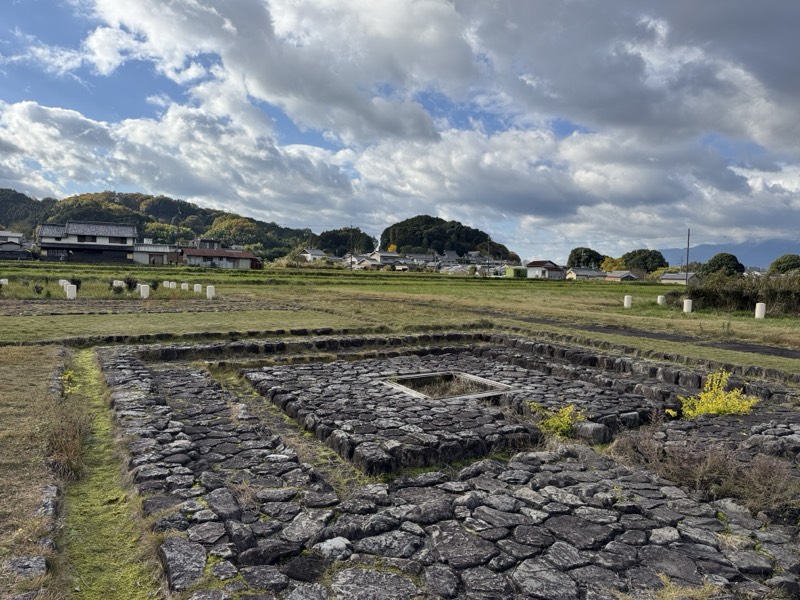
飛鳥宮跡(伝 飛鳥板蓋宮跡)
The political heart of Asuka, where several palaces were built one on top of another.
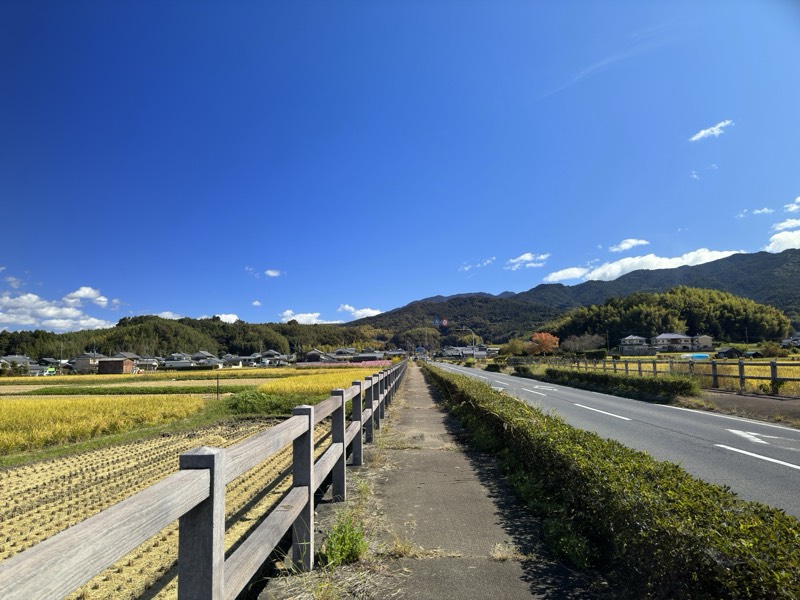
山田道
An ancient official road running east–west through Asuka. It welcomed envoys from Sui China and led to Yamada-dera Temple.
RELATED COLUMN
 The Bride Who Vanished on Her Wedding Night: How Ochi no Iratsume Came to MarryIt was a match arranged by Nakatomi no Kamatari: the eldest daughter of Soga no Kura-no-Yamada no…
 "Ōe" Is Not a Name: Naka-no-Ōe, Furuhito-no-Ōe and Yamashiro-no-ŌeThe "Ōe" in Prince Naka-no-Ōe is not a personal name. It is a term showing eligibility to succeed to the…
 Was Prince Shōtoku Really Soga no Umako? Reading the "Prince = Umako" TheoryAlmost every achievement of Prince Shōtoku comes with the name of Soga no Umako beside it. What if the man…