


1 / 3
新沢千塚古墳群(にいざわせんづかこふんぐん)
About 600 burial mounds spread over low hills: one of Japan's most important kofun clusters.
This cluster of kofun (ancient burial mounds) covers a range of low hills running north-west from Mount Kaibuki in south-western Kashihara. There are about 600 mounds in all. It is one of Japan's most representative clusters of small burial mounds, and was designated a Historic Site of Japan in 1976.
Construction began around the end of the 4th century, about 1,600 years ago, and continued for some 200 years until around the end of the 6th century. Most mounds were built in the 100 years from the late 5th to the early 6th century. Kofun No. 500 and No. 213 have been identified as among the earliest.
In the 1960s, about 130 mounds, roughly a fifth of the total, were excavated. The best known of them is Kofun No. 126.
Built in the late 5th century, it is a rectangular mound about 22 m east to west, 16 m north to south and 1.5 m high. The wooden coffin was buried directly in the ground, and in and around it were many grave goods thought to have come from Persia, China and the Korean Peninsula.
They show that objects from so far away were reaching Japan in the 5th century. The finds are designated an Important Cultural Property.
Today the area is laid out as Niizawa Senzuka Kofun Park, and you can walk between the mounds. There is a Dragon Plaza with grass sledding and playground equipment, a Cherry Blossom Plaza with benches, and a Terraced Field Plaza, and the Silk no Mori facility and the Kashihara City Museum of History stand next to the park. Parking is free.
The site is in Kashihara City, not Asuka Village. In summer the grass grows tall and the shapes of the mounds are hard to make out. If you want to follow the rise and fall of the ground, it feels easier to walk in a season when the grass is short.
Published
NEARBY
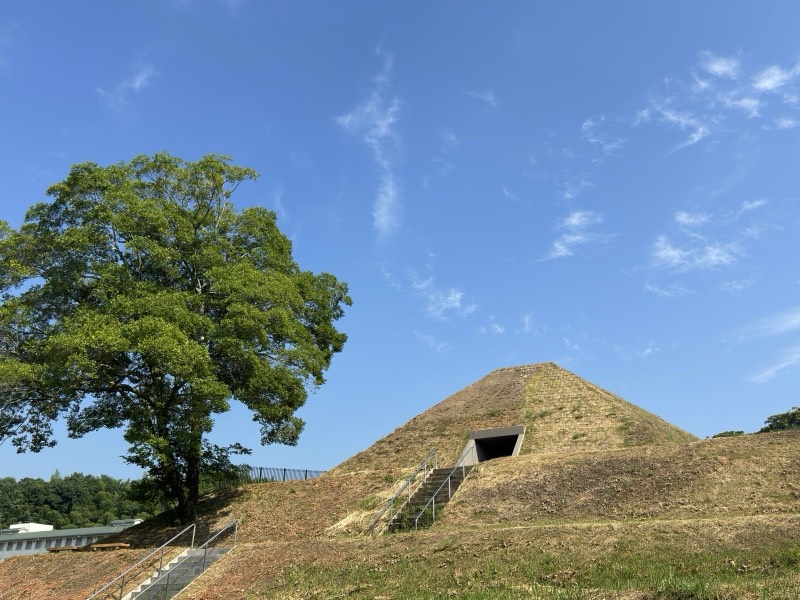
与楽カンジョ古墳
A stone chamber with a ceiling so high you have to crane your neck, and a floor paved entirely with river stones.
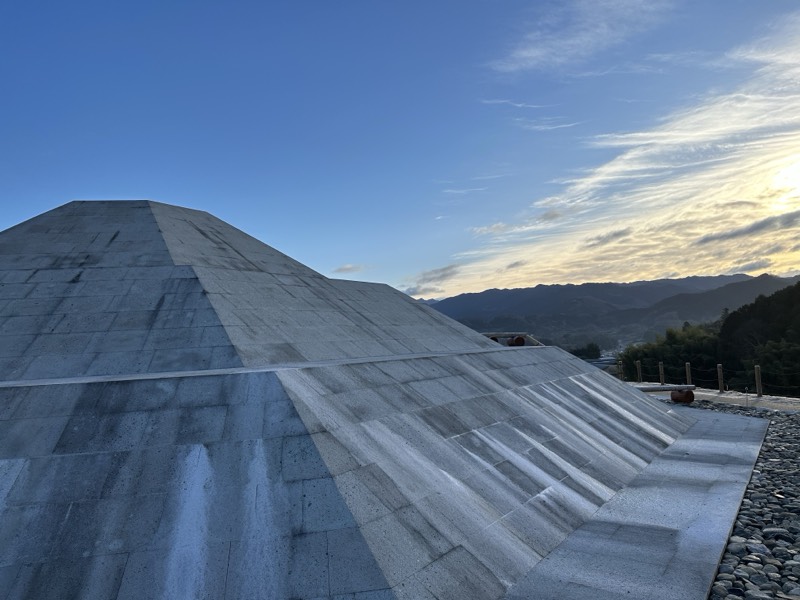
牽牛子塚古墳
An octagonal burial mound, now widely thought to be the tomb of Empress Saimei.
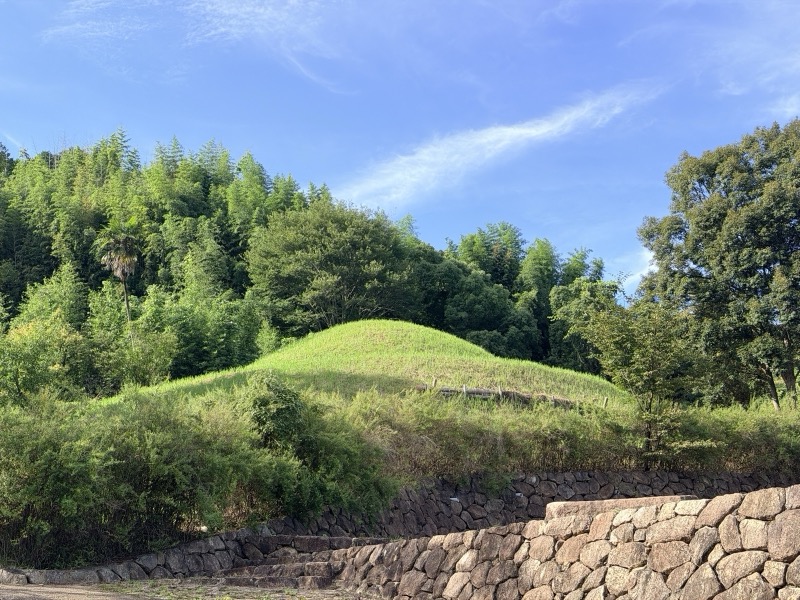
マルコ山古墳
A hexagonal burial mound 24 m across between opposite sides, a shape rarely found anywhere in Japan.