
Published
Kashihara, where Emperor Jinmu was enthroned, is now placed at the foot of Mt Unebi in Kashihara City. But the same tradition also survives in another Kashihara, in Gose City.
In Gose City, Nara Prefecture, there is a village called Kashihara. In one corner of it stands Jinmu Tennō Shrine.
The deity enshrined is Emperor Jinmu, Japan's legendary first emperor. Shrines with Emperor Jinmu as their principal deity are few, even across the whole country.
A tradition has long been handed down that this is the site of the palace where Emperor Jinmu was enthroned.

This tradition did not come out of nowhere.
In the Nihon Shoki (Japan's oldest official chronicle, compiled in 720), under the 31st year of Emperor Jinmu's reign, there is an account of the emperor climbing Hohoma Hill in Wakigami to look out over the land.
The emperor remarked that it was "shaped like dragonflies (akizu) mating," and from this, the Nihon Shoki continues, came Akitsushima, a name for the country. It is the scene in which a name for Japan was born.
Wakigami is a place name in Gose City, and one view identifies Hohoma Hill with Honmagaoka in the city. Gose, in other words, is a place where Emperor Jinmu appears in the Nihon Shoki.
Meanwhile, the Nihon Shoki describes Emperor Jinmu's palace as being "southeast of Mt Unebi, in the land of Kashihara."
In 1890, on the basis of that description, Kashihara Jingū Shrine was founded at the southeastern foot of Mt Unebi. It was Emperor Meiji who approved a petition from the public.
It was a time when the idea of a nation with Emperor Jinmu as its first emperor was being given concrete form anew. At this point, where the palace site lay became a real question.

What follows is a story handed down in Kashihara, Gose City.
If their land were recognised as the site of Emperor Jinmu's palace, their fields and houses would be taken from them. Fearing this, the villagers burned the things that could have served as proof, so the story goes.
As a result, the palace site was fixed at the foot of Mt Unebi, and only the shrine remained in Kashihara.
This is a local legend, and there is no record to back it up. Nor has it been passed down what was burned, or how.
There is debate over whether Emperor Jinmu existed at all. Taken at face value, the Nihon Shoki's chronology puts his enthronement in 660 BC, which does not fit the picture of the Yayoi period drawn by archaeology.
Evidence for locating the palace was scarce from the start: the description "southeast of Mt Unebi" and the place name shared by two Kashiharas. That is almost all there is to go on.
What is certain is that in the Meiji era a choice had to be made, and one was chosen. And that the one not chosen kept its shrine and its tradition.
Jinmu Tennō Shrine is in Kashihara, Gose City. It is a small shrine among the houses, with stone lanterns lined up in front of the hall. It is about 20 minutes by car from Asuka Village.
Kashihara Jingū Shrine is in Kume-chō, Kashihara City, a short walk from Kintetsu Kashiharajingu-mae Station. Visit the two Kashiharas one after the other and you will find they are only about 10 km apart.
RELATED SPOT
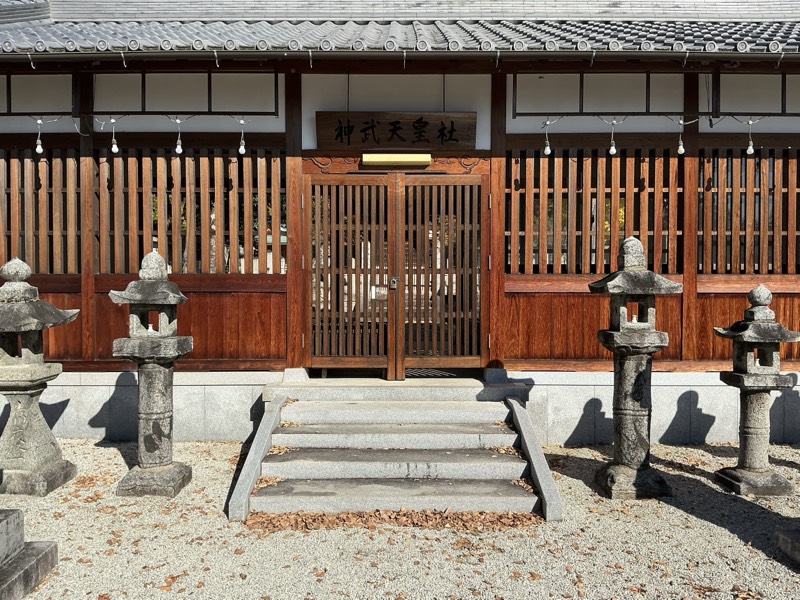
神武天皇社
A shrine dedicated to Emperor Jinmu, where a tradition says he was enthroned.
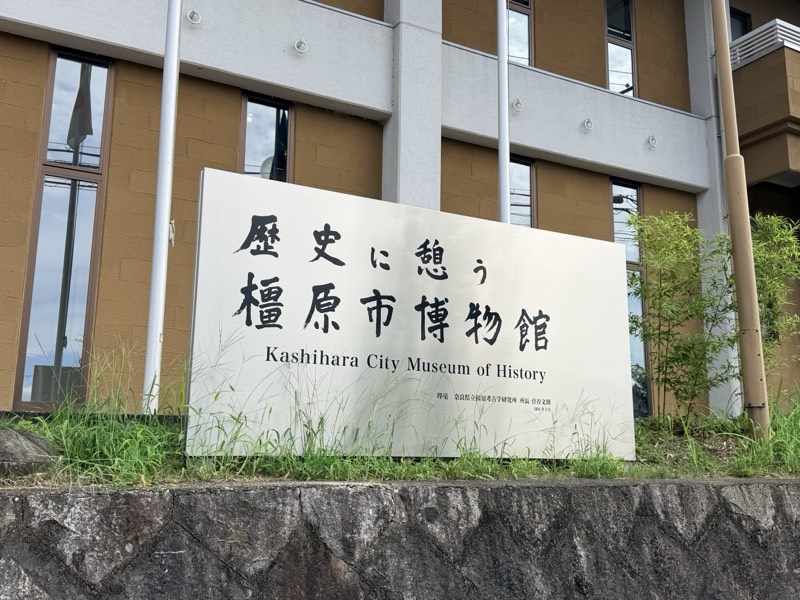
歴史に憩う橿原市博物館
A hands-on history museum right next to the Niizawa Senzuka kofun cluster.
RELATED COLUMN
 Where Was the Palace Before Asuka? From Makimuku to IwareFrom Makimuku at the foot of Mt Miwa, by way of Iware, to Asuka: the seat of royal power moved south across a…
 Whose Successor Was Empress Jitō? Tenmu's Empress, and Tenchi's DaughterAs the empress who completed the ritsuryō state (a state governed by law codes), she is usually spoken of in…No Longer from Brother to Brother: Succession through the Direct LineIn ancient Japan the throne often passed from elder brother to younger. One attempt to draw a line from…