


1 / 2
板蓋神社(いたぶきじんじゃ)
A small Hachiman shrine on the hill northwest of the Kawaradera site. Its name recalls the Itabuki Palace, and the hillside behind it yielded a hoard of Kawaradera's clay Buddhist tiles.
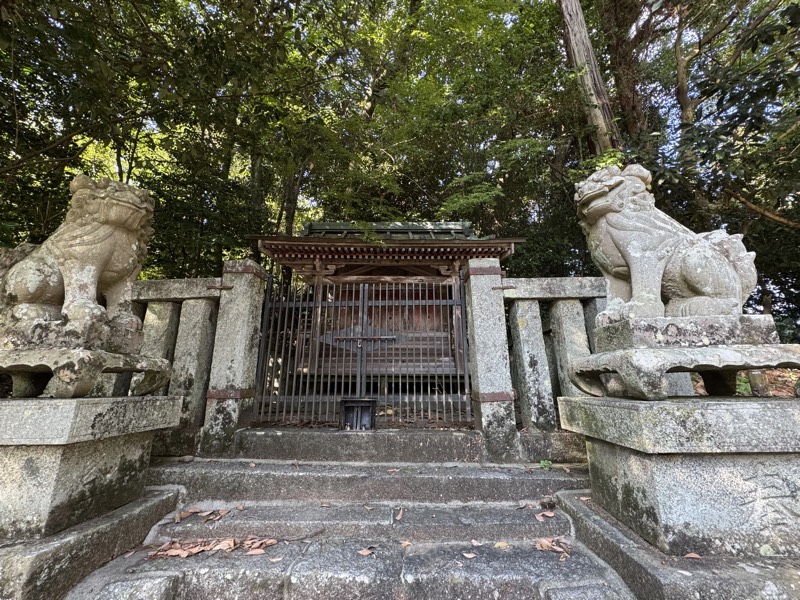
This shrine stands on a low hill northwest of the Kawaradera temple site, on what was the temple's back hill. Climb the steep stone steps and you reach a small main hall enclosed by a stone fence, guarded by a pair of komainu lion-dogs.
The deities enshrined are Emperor Ōjin, Emperor Chūai and Empress Jingū, the gods of a Hachiman shrine. The stone lantern in the precinct is carved "Hachimangū", and locals also call it "Hachiman-san".
The name Itabuki ("board-roofed") is the same as that of Empress Kōgyoku's Asuka Itabuki Palace. That palace, the scene of the Isshi Incident of 645, is thought to have stood at the Asuka Palace Site, about 500 m east of here.
When the Itabuki Palace burned down in 655, Empress Saimei (Kōgyoku, enthroned for a second time) moved to the Kawara Palace. Kawaradera, just below the shrine, is thought to have been built on the site of that Kawara Palace.
However, nothing has come down about when the shrine was founded or how its name is connected with the Itabuki Palace. The Hachiman gods are also thought to have been enshrined here only in later times.
In 1974, an excavation on the slope of this hill found burnt fragments of Buddhist images gathered together in a large pit: more than 1,300 senbutsu (clay tiles pressed with images of the Buddha and fired) and over 2,000 fragments of clay statues. The site is known as the Kawaradera Urayama (back hill) Site.
The tiles are thought to have decorated the walls of Kawaradera's halls, and the pit is thought to be where items burnt and broken in a fire at the temple were collected and buried.
Get off the Asuka loop bus at "Kawara" and climb the stone steps northwest of the Kawaradera site. The steps are very steep, with a handrail in the middle. There is no parking.
From partway up the steps you can look down on the Kawaradera site and, across the road to the south, Tachibanadera. Stop by after walking around the Kawaradera site and you will see how the temple and its back hill belong together.
Published
READ MORE
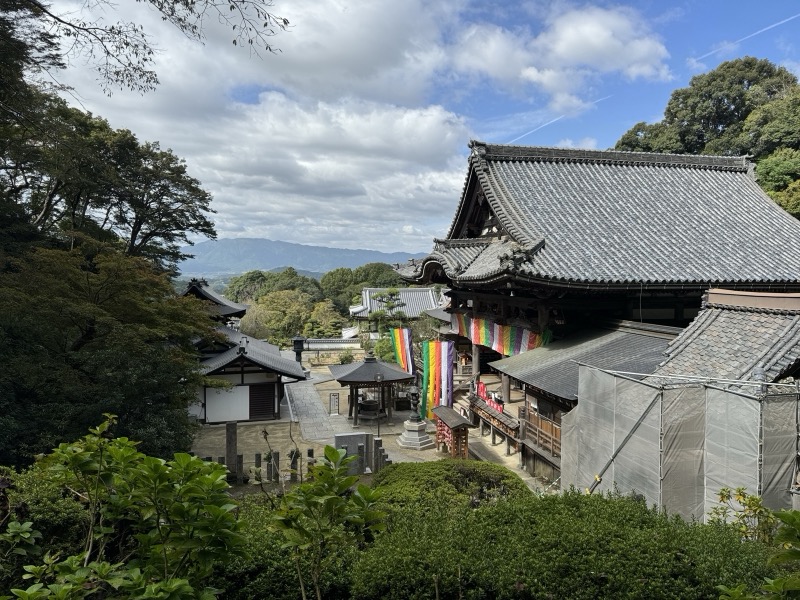 Buddhas Made of Clay: Okadera's Nyoirin Kannon, Hōryūji's Pagoda, and the Fragments from Kawaradera's Back HillClay statues, built up over a wooden core, were made widely in the late 7th and 8th centuries and then faded…
 They Buried the Burnt Buddhas: The Kawaradera Urayama SiteOn the slope northwest of the Kawaradera site, below Itabuki Shrine, a large pit packed with fragments of…
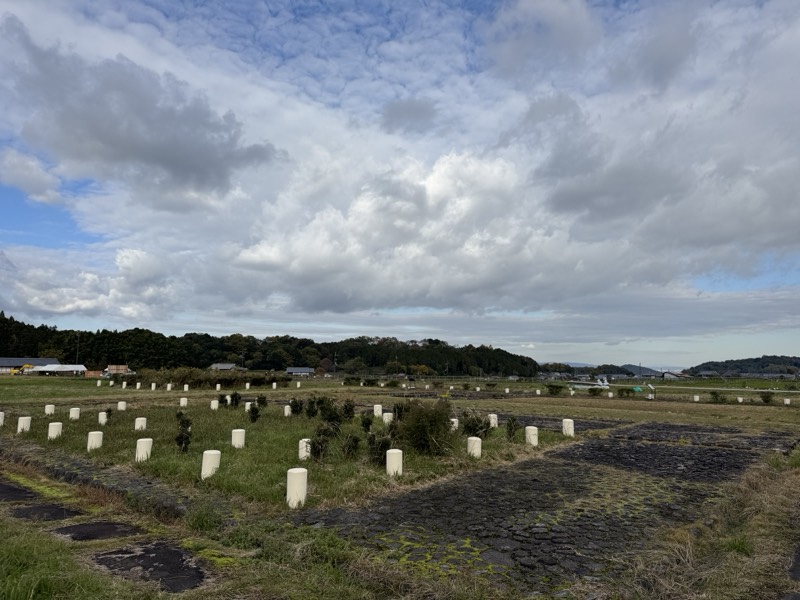 Drawing an Invisible Palace from Holes in the Ground: Reading the Excavations at the Asuka Palace SiteVisit the Asuka Palace Site and, apart from a stone pavement and a well, you see mostly fields. The palace…
NEARBY
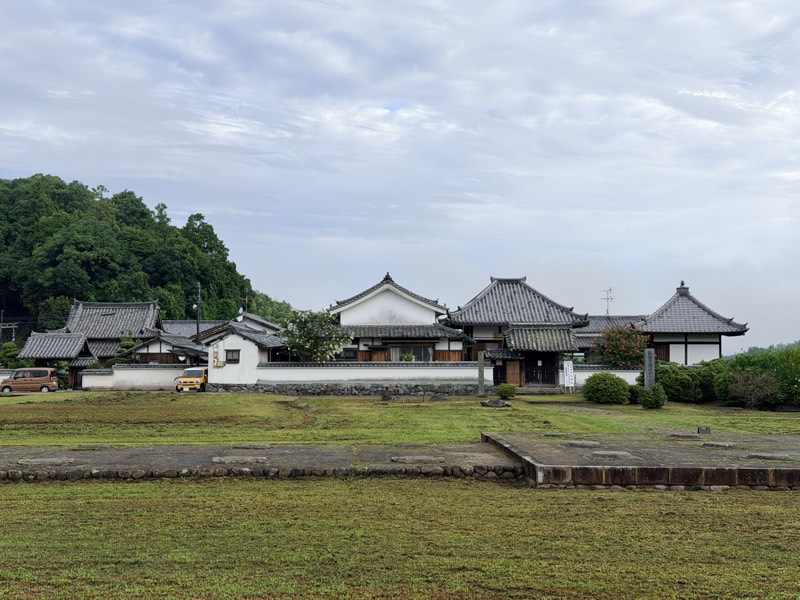
川原寺跡(弘福寺)
One of the four great temples of Asuka. Its foundation stones still show how large its halls once were.
飛鳥京跡苑池
The site of a palace garden, regarded as the earliest example of a Japanese garden.
飛鳥川
The river that runs through the village, sung of in the Man'yōshū.