
Published
On the slope northwest of the Kawaradera site, below Itabuki Shrine, a large pit packed with fragments of burnt Buddhist images was found in the spring of 1974: more than 1,300 clay tiles and over 2,000 fragments of clay statues. For a great temple with few surviving records, it is the most concrete evidence of what its halls looked like inside.

Northwest of the Kawaradera site is a low hill with Itabuki Shrine on top. It is the temple's "back hill" (urayama).
Fragments of old pottery often turned up in the fields here. Word of them reached Yoshinori Aboshi, an archaeologist at Kansai University. Born in Asuka village, he had deep ties with the local people, and news of things found in the fields naturally came to him.
Among the finds were pieces of fired clay with Buddhist figures in relief, so at first the place was thought to be the site of a kiln or workshop that made them.
The excavation began in March 1974, with Kansai University students taking part. It was planned to finish within the university's spring break.
The near side of the field had been cut down and levelled in later times, and no old layers remained. So the dig moved to the slope leading up to the shrine. There, differences in the colour of the soil revealed a large pit dug by human hands.
The pit was packed with fragments of Buddhist images and ritual objects. Each piece had to be recorded in place before it was lifted, and the dig ran past the start of the new term, into early May. At a symposium in November 2026 marking the World Heritage inscription, one of the participants looked back on it as "a happy miscalculation."
The most numerous finds were senbutsu: plaques made by pressing clay into a mould to form a Buddhist image in relief, then firing it. Each is about 20 cm square and shows a triad, with a Buddha in the centre and a bodhisattva on each side. There are more than 1,300 of them. No other site has yielded so many from one place.
Some of the tiles have traces of nail holes on their sides, and they are thought to have been nailed close together to decorate the walls of a hall. One was found with "Amida" written on the back. Tiles of the same design have also been found at Tachibanadera, across the road to the south.
Next came fragments of clay statues (sozō), more than 2,000 of them. These were images built up in clay over a wooden core. They ranged from small figures to statues on the scale of a jōroku, about 4.8 m tall.
There were also many small fragments of gilt-bronze ritual objects. Later study identified among them a sankosho (a three-pronged vajra used in Esoteric Buddhist rites) and a cast, gilded lotus pedestal.
Many of the tiles and statues were burnt. The current view is that this was not a kiln: when Kawaradera's halls and pagoda burned, the broken images and ritual objects were gathered up and placed in this pit.
Ironically, the fire is what preserved them. A clay statue is just dried earth, easily crumbled by damp and water. Fired by the blaze, the clay hardened like unglazed pottery and kept its shape in the ground for nearly 1,300 years.
When the fire happened is not certain. Kujō Kanezane's diary Gyokuyō records that Kawaradera burned in 1191, and a document of 1070 says records had been lost in an earlier fire. The finds in the pit are thought to come from a fire around the 9th century, which would mean there was a major fire even before the ones in the records.
The pit does not seem to have been dug and then simply filled. At the symposium, it was reported that the pit was first dug, a layer of soil was laid in the bottom, and only then were the objects from the halls placed in it.
From this, the view has been put forward that some ritual, perhaps like a ground-purification ceremony, was performed before the burial. Even burnt, a Buddha was still a Buddha, and the objects may have been laid to rest with prayers rather than thrown away as rubbish. What that ritual involved, however, is not yet known.

Kawaradera was one of the four great temples of Asuka, with Asukadera, Yakushiji and Daikandaiji. Yet there is no reliable record of when it was built, and its later history is hard to trace, so it is sometimes called "the mysterious great temple."
From the foundation stones we know the layout and size of the buildings. But they cannot tell us how the halls were decorated, what images stood in them, or what rites were performed. The contents of this pit tell us that: walls covered with triad tiles, clay statues large and small, gilded ritual objects. The discovery of the vajra has even raised the possibility that Esoteric Buddhist rites were performed here.
Because of the circumstances of the dig, the finds have been kept at several institutions. In 2010, Kansai University carried out a second excavation to confirm the shape of the pit, and has worked on listing the type and number of every object. People who took part in the dig are still compiling the results today.
In August 2023, ahead of the dig's 50th anniversary, one of the tiles was put on special display at Gufukuji, the temple that stands on the Kawaradera site today. Some 1,200 years after it left the hall's wall, and about 50 years after it left the ground, the Buddha made a "homecoming" to its own temple.
Look at the foundation stones of the Central Golden Hall at the Kawaradera site, then climb the stone steps to Itabuki Shrine to the northwest. The site lies on the slope up to the shrine; it has been filled in, and nothing shows on the surface. But walking it, you can feel how close the temple and the back hill are. The burnt Buddhas were laid to rest on the hill right behind their temple.
RELATED SPOT
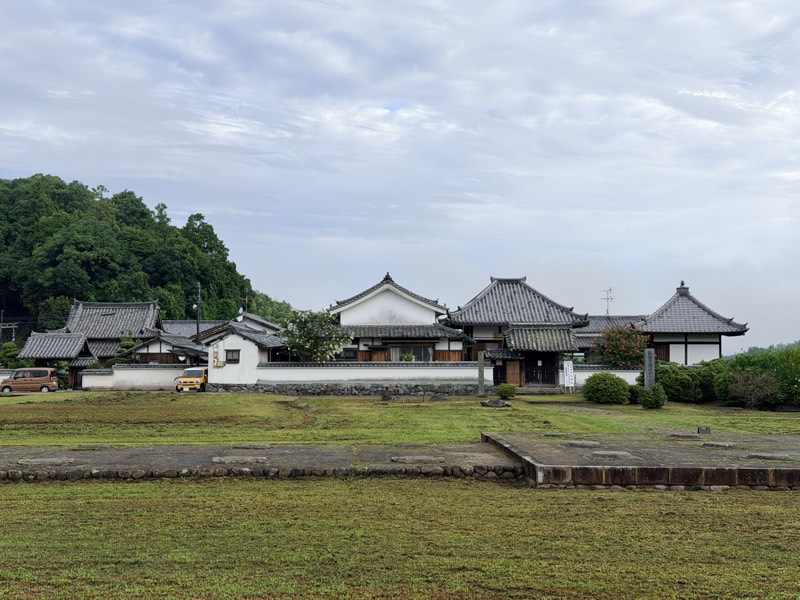
川原寺跡(弘福寺)
One of the four great temples of Asuka. Its foundation stones still show how large its halls once were.
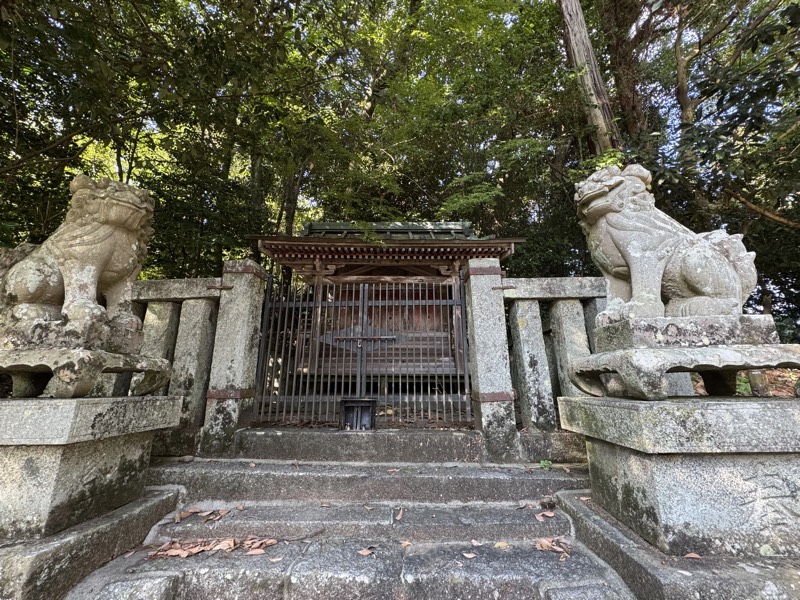
板蓋神社
A small Hachiman shrine on the hill northwest of the Kawaradera site. Its name recalls the Itabuki Palace, and the hillside behind it yielded a hoard of Kawaradera's clay Buddhist tiles.
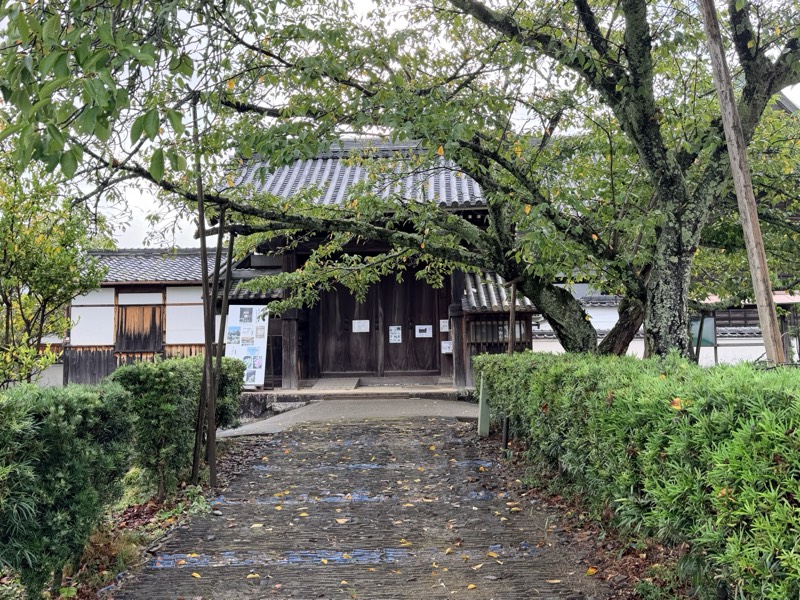
橘寺
The temple said to stand on the birthplace of Prince Shōtoku, home to the two-faced Nimenseki stone.
RELATED COLUMN
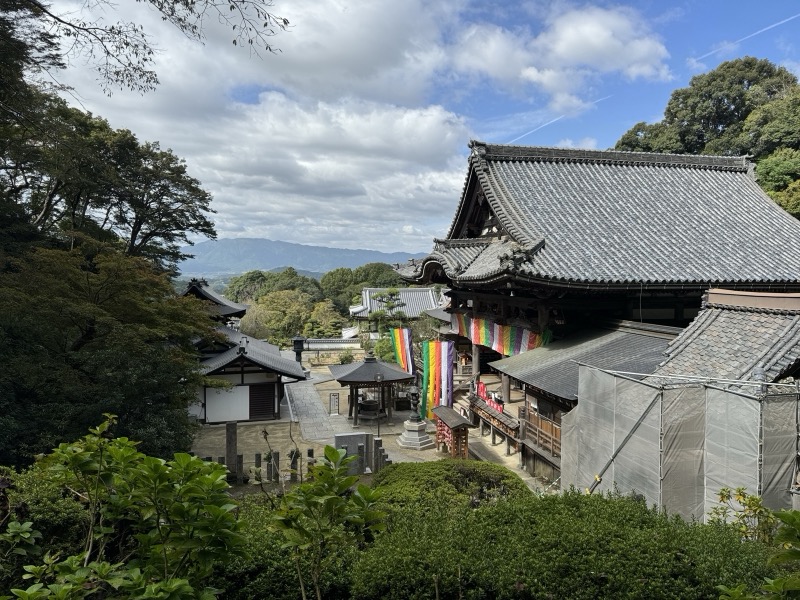 Buddhas Made of Clay: Okadera's Nyoirin Kannon, Hōryūji's Pagoda, and the Fragments from Kawaradera's Back HillClay statues, built up over a wooden core, were made widely in the late 7th and 8th centuries and then faded…
 How a Foreign Buddha Became a Japanese Face: Buddhist Statues of Asuka and FujiwaraFrom the Asuka Daibutsu to the Yakushi Triad of Yakushi-ji Temple took about a hundred years. Over that…The Asuka Daibutsu: How Much of It Is 1,400 Years Old?In the Kamakura period (1185–1333), lightning set Asuka-dera Temple ablaze. All that survived, the records…