
Published
He is the representative poet of the Man'yōshū, yet his name appears in neither the Nihon Shoki nor the Shoku Nihongi. All that is certain about Kakinomoto no Hitomaro are the poems and headnotes he left behind. From his poem at Ikazuchi Hill to his death in Iwami, and the theory that he was not a single poet at all, we separate what is known from what is not.
Kakinomoto no Hitomaro is the representative poet of the Man'yōshū. Later ages called him the "sage of poetry" and even came to worship him as a god of waka.
Yet no one knows when he was born or died, or what offices he held. His name never appears even once in the Nihon Shoki or the Shoku Nihongi. The only clues are the poems in the Man'yōshū and the headnotes and notes attached to them.
So a great deal about Hitomaro has been told by inference, including the theory that he may never have existed as a single poet at all.
Hitomaro's poems that can be dated all fall between 689 and 700.
The earliest is an elegy for Prince Kusakabe, who died in 689. The latest is the elegy for Princess Asuka, who died in 700. This spans the reign of Empress Jitō and the start of Emperor Monmu's reign.
In those years he mourned the deaths of princes and princesses and, accompanying the sovereign on royal journeys, composed poems praising the land. He is thought to have held the position known as a court poet, offering poems at important moments of court life.
The poems the Man'yōshū clearly attributes to Hitomaro number about twenty long poems (chōka) and about seventy short poems (tanka). There are also more than 360 poems taken from the "Kakinomoto no Ason Hitomaro Collection," but whether Hitomaro composed these himself or gathered them is unknown.
One of Hitomaro's best-known poems was composed at Ikazuchi Hill in Asuka Village.
Our sovereign, being a god, has built a lodge above the thunder in the clouds of heaven. (Book 3, no. 235)
Because our sovereign is a god, he has built a temporary palace above the thunder in the clouds. The poem plays on the hill's name, ikazuchi, "thunder," to praise the sovereign as a god. The headnote does not name the sovereign; most take it to be Empress Jitō, though some argue for Emperor Tenmu or Emperor Monmu.

In his elegy for Prince Kusakabe, too, Hitomaro begins with the gods gathering at the beginning of heaven and earth, and portrays the prince as a child of the sun descended from heaven. The reigns of Tenmu and Jitō were the years when the idea of the emperor as a god took shape. Hitomaro's words supported it in the form of poetry.
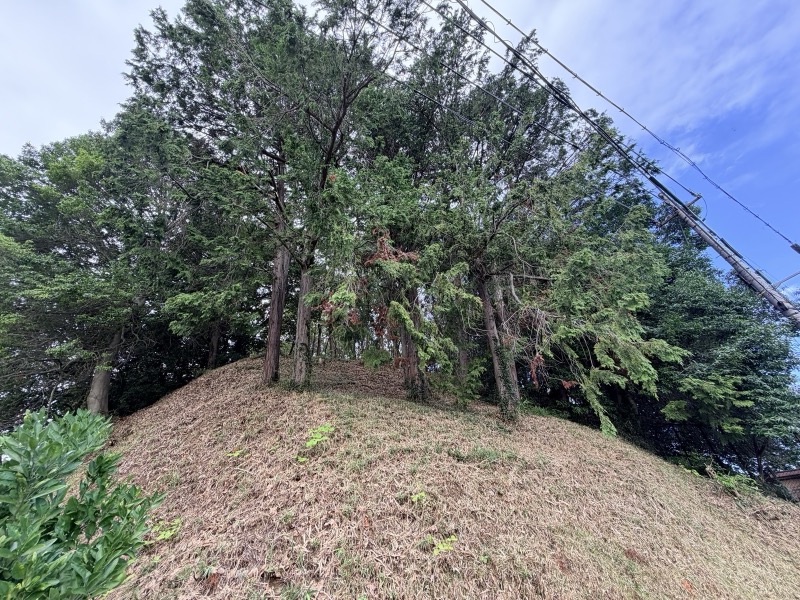 SPOTIkazuchi-no-oka Hill雷丘A small hill with a story about catching thunder. The area to its east is a proposed site of the Oharida Palace.Access: About 10 minutes on foot from the "Toyura" stop on the Asuka loop bus from Kintetsu Kashiharajingu-mae StationSee the spot page →
Hitomaro also sang of an abandoned capital. The Ōtsu Palace in Ōmi, built by Emperor Tenji, was abandoned after the Jinshin War. This poem was written when Hitomaro visited its ruins.
Sasanami's Cape Kara at Shiga remains as it was, but waits in vain for the boats of the courtiers. (Book 1, no. 30)
Cape Kara is just as it was, but the courtiers who went boating there will never return. While serving the court of the victorious Emperor Tenmu's line, he mourned the capital of the losing side.
Around 692 the young Prince Karu, later Emperor Monmu, went hunting on the Aki plain in Uda, where his father Prince Kusakabe had once hunted too. A poem by Hitomaro, who went with him, is especially famous.
In the east, over the field, I see the dawn glow rising, and when I look back, the moon is sinking. (Book 1, no. 48)
Dawn light rises in the eastern sky; looking back, the moon sinks in the west. Many readers see the rising light as the young prince and the setting moon as his late father.
Hitomaro also left poems about his own wives.
One is a long poem on the death of a wife who lived in the village of Karu, around today's Ōkaru-chō in Kashihara, just west of Asuka Village. It opens, "The road to Karu, where the birds fly through the sky, is my beloved's village," and laments the death of a wife he had visited in secret.
The other group concerns a wife he parted from in Iwami Province, the western part of today's Shimane Prefecture: "Though the bamboo leaves rustle all through the mountain, I think only of my wife, for I have come away from her" (Book 2, no. 133).
The Man'yōshū contains a poem said to have been written by Hitomaro in Iwami as he faced death.
Not knowing I lie pillowed on the rocks of Kamoyama, is my wife still waiting for me? (Book 2, no. 223)
It is followed by poems in which his wife, Yosami no Otome, mourns her husband's death. But where Kamoyama was is unknown. The poet Saitō Mokichi argued for Yugakai in Misato, Shimane Prefecture, and in Masuda there is a tradition that Kamojima, the island where Hitomaro died, sank into the sea in an earthquake.
Some see this group of poems as a poem-tale assembled by later people around the theme of Hitomaro's death. It may be not that the place of his death is unknown, but that it was a place within a story from the start.
The Kakinomoto were a clan based in the northeastern Nara Basin, around today's Tenri. In the eight kabane of 684 they rose from omi to ason. That is why the Man'yōshū writes his name as Kakinomoto no Ason Hitomaro.
Some members of the clan did leave their names in the official histories. Kakinomoto no Omi Saru, granted the rank of shōkinge in 681, is recorded in the Shoku Nihongi as having died in 708 at the junior fourth rank, lower grade. The official histories generally record only people who reached the fifth rank or above. The common understanding is that Hitomaro left no record because he was a lower official who never rose that high.
Even so, doubts about the real Hitomaro have not gone away.
One view is that Hitomaro was not a single poet. There is no record of him in the official histories, and the line between his own poems and those of the "Hitomaro Collection" is unclear. Perhaps, the argument goes, the works of various people who composed poems at court, and poems handed down within the Kakinomoto clan, were gathered under the single name "Hitomaro."
Other theories accept that he existed but paint a very different picture. In Minasoko no Uta ("Songs from the Bottom of the Water," 1973), the philosopher Umehara Takeshi argued that Hitomaro had once held high rank, was exiled to Iwami for some offense, and was made to drown. He also identified him with the Kakinomoto no Saru mentioned above. The theory drew wide attention but has not won support among scholars of Japanese literature and history.
It is also certain that legend made Hitomaro larger. The Hyakunin Isshu poem "Must I sleep alone through this long night, long as the trailing tail of the mountain pheasant?" is attributed to Hitomaro, but in the Man'yōshū it appears as a poem by an unknown author. Famous poems gathered around the famous poet.
Today's scholarship largely holds that the poems whose headnotes name Hitomaro as author were the work of one poet who served the court under Jitō and Monmu. But what can be said for certain about that person's life remains surprisingly little.
The kana preface to the Kokin Wakashū, compiled around 905, called Hitomaro "the sage of poetry." Toward the end of the Heian period, the Hitomaro eigu, ceremonies offering poems before his portrait, began, and Hitomaro shrines were built in many places.
A lower official not given a single line in the official histories became, over a thousand years, a god of poetry. In the name Hitomaro, the life of one poet and the feelings of the ages that received him are inseparably layered.
Ikazuchi Hill is a small hill about a ten-minute walk northwest of Asuka-dera Temple. At its foot stands a board carved with "Our sovereign, being a god." The road Hitomaro took to visit his wife at Karu is thought to lie further west, around Ōkaru-chō in Kashihara.
RELATED SPOT
雷丘
A small hill with a story about catching thunder. The area to its east is a proposed site of the Oharida Palace.
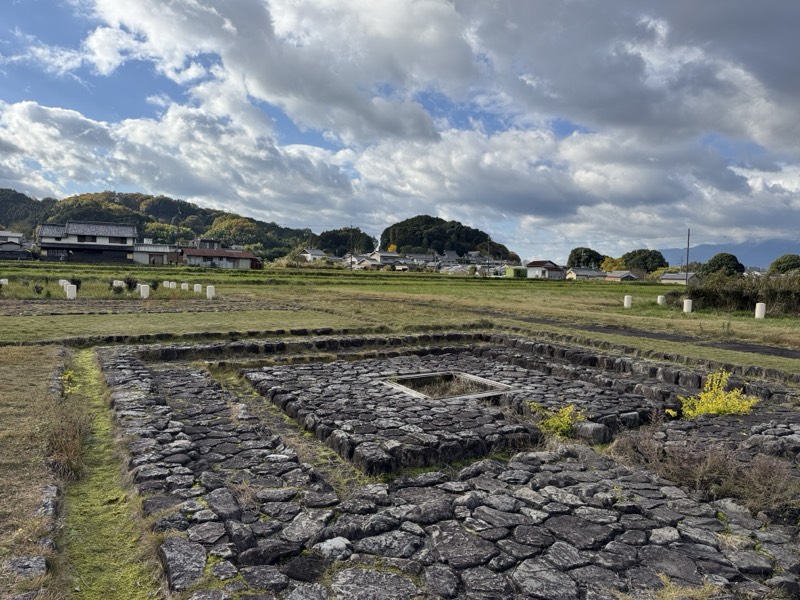
飛鳥宮跡(伝 飛鳥板蓋宮跡)
The political heart of Asuka, where several palaces were built one on top of another.
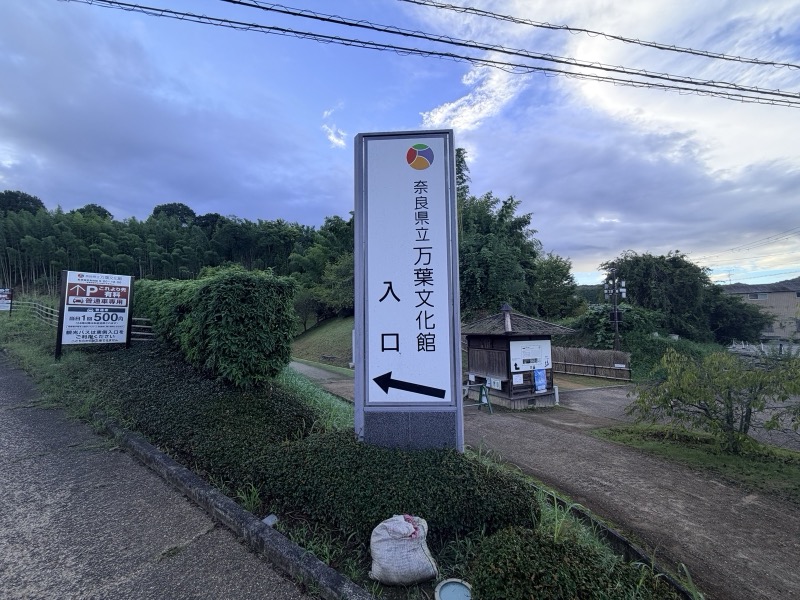
奈良県立万葉文化館
A centre for ancient culture built around the Man'yōshū.
RELATED COLUMN
Whom Was "You Waving Your Sleeve" For? Nukata no Ōkimi and the Poems of GamōnoNukata no Ōkimi had a daughter with Prince Ōama and is thought to have later gone over to Emperor Tenchi. In… After the Oath: What Became of Emperor Tenmu's PrincesIn 679 Emperor Tenmu made six princes swear at Yoshino never to fight one another. It is well known that the…Prince Takechi: The Eldest Son Far from the Throne, Yet Called "Mikoto"The man given command of the army in the Jinshin War was a 19-year-old eldest son. Because of his mother's…