
Home/Columns/Palace Design Did Not Advance in a Straight Line: Early Naniwa, Asuka and Fujiwara Palaces
Published
After the Isshi Incident of 645, a grand and orderly palace was built at Naniwa. Yet the palaces built after the court returned to Asuka do not clearly show that form. It reappears only at Fujiwara Palace. Set the three side by side, and the making of the state looks less like steady progress.
The core of a Nara-period palace had three main parts: the Inner Palace (dairi) where the sovereign lived, the main hall where the sovereign came out for ceremonies (later the Daigokuden), and the Court of State (chōdōin) where officials lined up to conduct business. In the Court of State, long halls stood in rows on either side of a great courtyard.
Where did this form come from, and how was it settled? This was one of the topics of the panel discussion at a symposium marking the World Heritage inscription in November 2026.
After the Isshi Incident of 645, Emperor Kōtoku moved the capital to Naniwa (present-day Osaka). According to the Nihon Shoki, the palace completed in 652 was beyond words to describe.
The Early Naniwa Palace remains found south of Osaka Castle are widely thought to be this Naniwa Nagara-Toyosaki Palace. South of the Inner Palace stood a great main hall about 36 m wide, and south of that spread a Court of State about 234 m by 263 m, with fourteen halls arranged symmetrically.
It is thought to have been the first palace to separate, on a large scale, the sovereign's residence from the space for government and ceremony.

Yet in the palace built after Empress Saimei returned to Asuka, Period III at the Asuka Palace Site, no Court of State like Naniwa's has been clearly found. The Inner Enclosure is divided into a ceremonial south and a residential north, and later, under Emperor Tenmu, the Ebinoko Enclosure with its own main hall was added. But rows of halls for officials do not appear.
Then at Fujiwara Palace, the Inner Palace, Daigokuden and Court of State reappear clearly, lined up from north to south. Fujiwara had twelve halls of state, and this form was handed on to Heijō Palace.

In the discussion, a researcher of palace layouts explained that it was once common to see a direct line from Early Naniwa to Fujiwara. Now several stages of the Asuka palace are known to lie in between.
Even if Naniwa's form reappears at Fujiwara, it was not necessarily inherited directly. Placing the Asuka palace in between shows that state formation did not proceed in a straight line. Political reform had setbacks as well as advances, and the view was offered that the Asuka palace's form may reflect them.
The speaker himself cautioned, however, that this was his own reading of the plans, not an established theory, and that it might be reading too much into them.
The Naniwa palace survived after the court returned to Asuka. In 683, Emperor Tenmu issued an edict that "capitals and palaces should not be in one place only; two or three must be built," making Naniwa a capital as well. There were thus two capitals, Asuka and Naniwa. The Naniwa palace burned in the first month of 686.
So while a grand, orderly palace stood at Naniwa as a stage for ceremony, the Asuka palace took a different form. How the two were used may also help explain why they differed.
The date of the Early Naniwa Palace is also debated. Burnt post holes found in excavation match the fire of 686, and the burnt palace is generally taken to be Kōtoku's. But some researchers find it hard to believe that such an orderly palace was built in the 650s and date it to Tenmu's reign instead. Which view one takes changes how the three palaces line up.
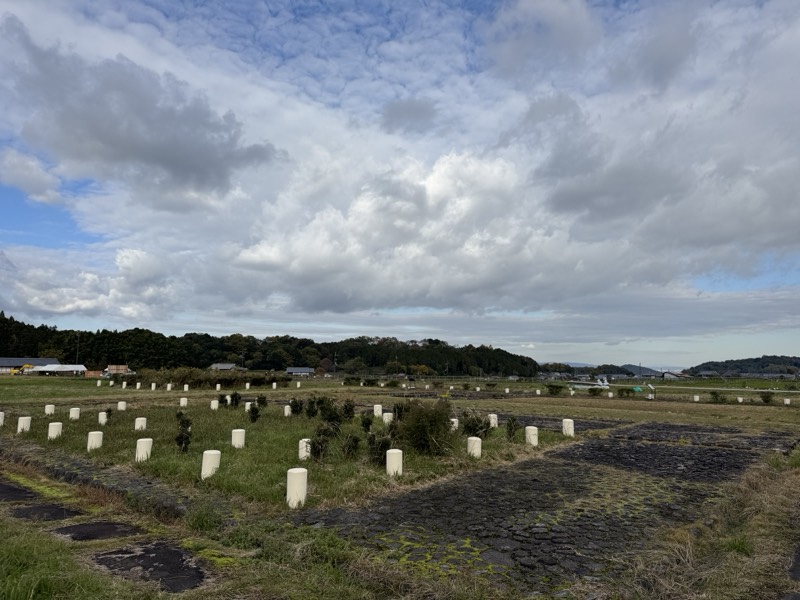
The Asuka and Fujiwara palace sites are within walking distance of each other. See the paving and well at the Asuka Palace Site, check the whole palace on the model at the Asuka Historical Museum, then stand on the site of the Court of State at Fujiwara. The difference in scale feels like the difference in the shape of the state. The Naniwa palace site can be seen at Naniwanomiya Historical Park, south of Osaka Castle.
RELATED SPOT
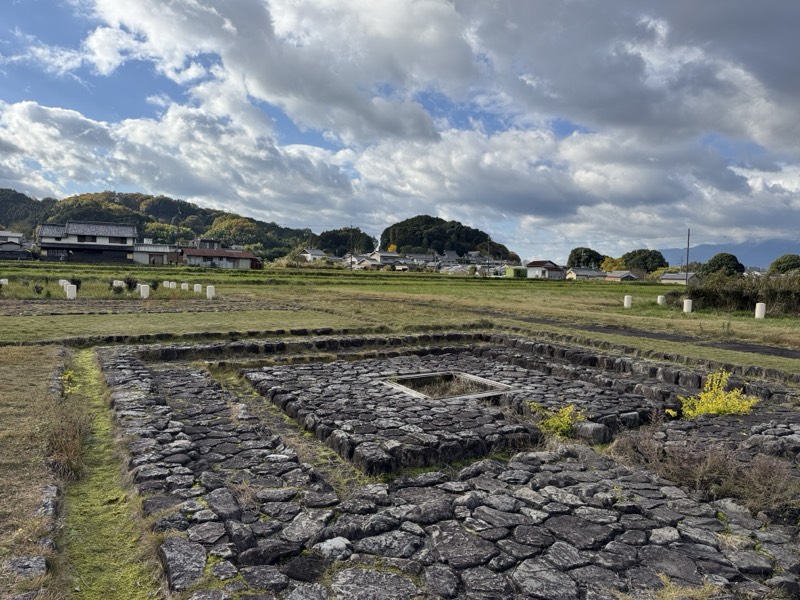
飛鳥宮跡(伝 飛鳥板蓋宮跡)
The political heart of Asuka, where several palaces were built one on top of another.
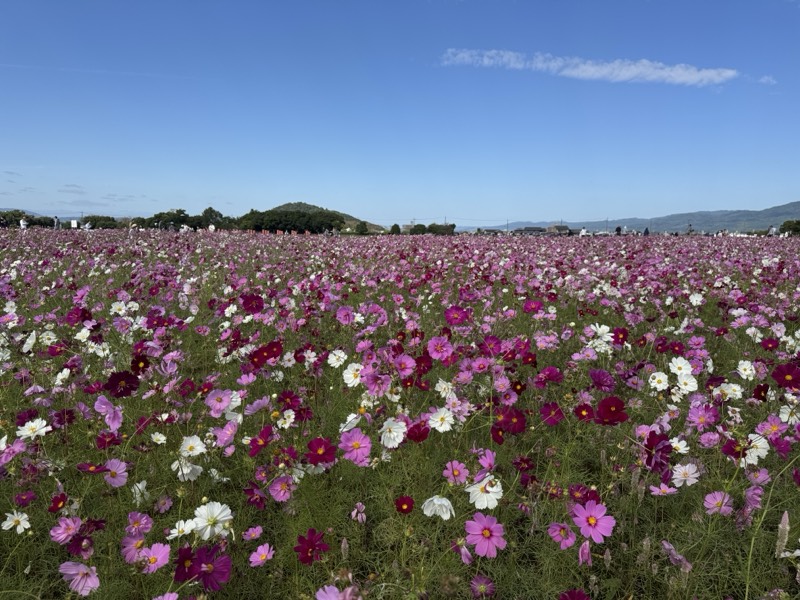
藤原宮跡
The heart of Japan's first full-scale planned capital, also known for its seasonal flower fields.
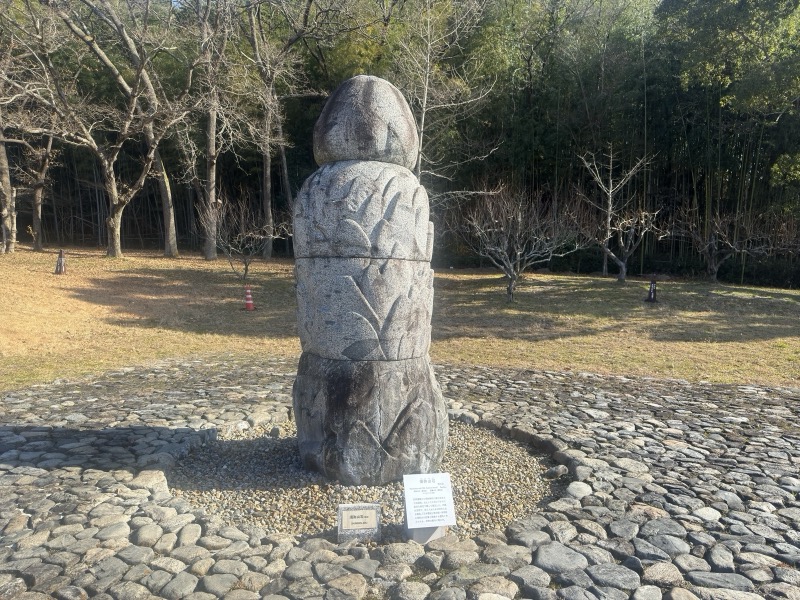
奈良文化財研究所 飛鳥資料館
The Nara National Research Institute's museum, displaying finds from Asuka and the east corridor of Yamada-dera Temple.
RELATED COLUMN
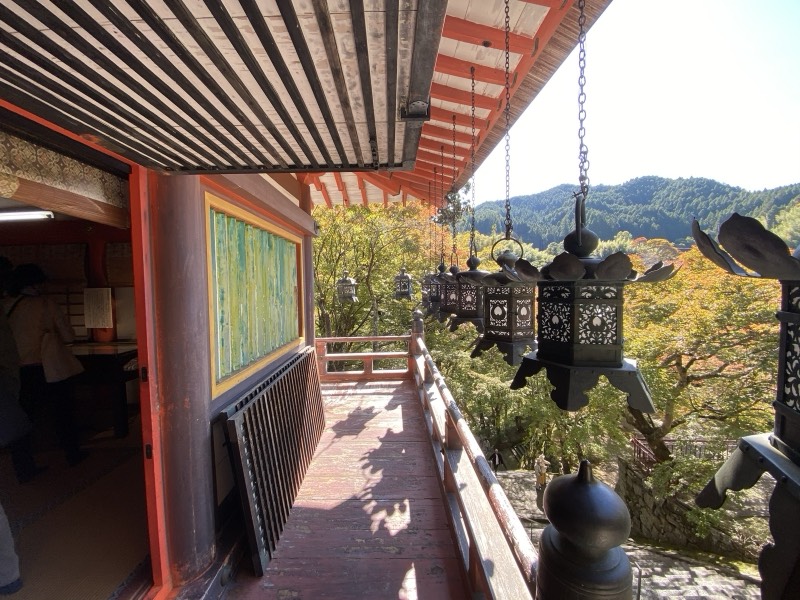 Was Futatsuki-no-miya a Fortress? Unrest After the Isshi Incident and the "Kan" on the MountainFutatsuki-no-miya, which Empress Saimei built on the summit of Tōnomine, has been called a palace of the…
 Whose Successor Was Empress Jitō? Tenmu's Empress, and Tenchi's DaughterAs the empress who completed the ritsuryō state (a state governed by law codes), she is usually spoken of in…The Original Didn't Follow the Book: Fujiwara-kyō Seen from Chang'anFujiwara-kyō placed its palace at the centre of the capital, just as the Chinese classic the Rites of Zhou…