
Home/Columns/Was Futatsuki-no-miya a Fortress? Unrest After the Isshi Incident and the "Kan" on the Mountain
Published
Futatsuki-no-miya, which Empress Saimei built on the summit of Tōnomine, has been called a palace of the immortals and a Daoist temple. There is another view: that it was a stronghold on the mountain. A little over ten years after the Isshi Incident, was Asuka really at peace?
In 656 the Nihon Shoki records Empress Saimei's works like this:
"On Tamu-no-mine she had a wall built around the summit like a crown. And beside the two tsuki trees on the summit she raised a kan, and named it Futatsuki-no-miya. It is also called Amatsu-miya."
Tamu-no-mine is Tōnomine, the mountain rising east of Asuka. Its summit was ringed with a wall as if crowned, and a kan was built at the top.
One view reads this entry as the record of a stronghold on the mountain. Ringing a summit with earthworks or stone like a headband is a form often seen in ancient hill forts. Kan means a lofty hall, but in Chinese palaces the watchtowers standing on either side of a gate were also called kan. A wall around the summit and a tall building to look out from: put side by side, they do resemble a fort.

Was Asuka unsettled enough to need a fort? The ten-odd years from the Isshi Incident to Futatsuki-no-miya were full of incidents.
In 645 Soga no Iruka was cut down at court, and his father Emishi set fire to his own residence and died. Three months later Prince Furuhito-no-Ōe, a candidate for the throne, was killed on suspicion of rebellion. In 649 Soga no Kurayamada no Ishikawamaro, who had sided with Prince Naka-no-Ōe in the Isshi Incident, was suspected of rebellion and took his own life at Yamada-dera.
In 653 Prince Naka-no-Ōe asked for the capital to be moved back to Asuka, and when Emperor Kōtoku refused, the prince withdrew to Asuka anyway, taking his mother the former Empress Kōgyoku, Emperor Kōtoku's consort Princess Hashihito, Prince Ōama and many officials. Left alone in Naniwa, Emperor Kōtoku died the next year. Empress Saimei's second accession came out of these tensions.
Even after Futatsuki-no-miya, in 658 Prince Arima was arrested on suspicion of rebellion and put to death. In the government that followed the fall of the Soga, no one could tell who might become an enemy, or when.
Beyond the country, things were no calmer.
In 645 Emperor Taizong of Tang sent a great army against Goguryeo. In 651 Emperor Gaozong of Tang declared a policy of backing Silla and holding down Baekje and Goguryeo, and word of it reached Wa through Baekje's envoys. Wa sent envoys to Tang three times in the 650s alone, in 653, 654 and 659, and the envoys of the Hakuchi era are said to have been asked by Tang to help Silla. Then in 660 Baekje was destroyed by Tang and Silla.
No one knew when the wars on the Korean Peninsula might cross the sea. If an enclosure and a watchtower were set up on a mountain overlooking the capital in such a time, the fortress theory has the background of its age to support it.

There is a precedent within Asuka itself. According to the Nihon Shoki, in 644 Soga no Emishi and Iruka built houses side by side on the Amakashi hill, ringed them with palisades and put armouries beside the gates. They also built a house east of Mt. Unebi, dug a pond to make it a stronghold, stored arrows, and always kept fifty soldiers around them. The idea of ringing a hill with defences for protection existed in Asuka before the Isshi Incident.
Tōnomine itself suited defence. It looks down on the Asuka basin and is close to the pass road to Yoshino. In the Middle Ages a chain of forts did in fact run along its ridges, and it became a base for the temple's forces in their struggles with Kōfuku-ji and others.
On the ridge east of the Sakafuneishi site, too, a fence of earth-fast posts with post holes 1.5 metres square has been found along the ridge line, and a similar fence has turned up at the nearby Yatsuri Makito site. It has been suggested these were defences around Asuka, but their date is not yet known.
The fortress theory has weak points too.
First, the wording. The Nihon Shoki clearly calls the hill forts built later, such as Takayasu Castle (667) and Ōno Castle in Kyushu, "castles" (ki/jō). The entry on Futatsuki-no-miya has only "palace" and "kan", with no word suggesting defence or soldiers. Its other name, Amatsu-miya, the Heavenly Palace, also sits oddly as the name of a fort.
Second, how it was used. Empress Jitō went there in 693 and 696, and in 702 it was repaired as the "Futatsuki Detached Palace". "Detached palace" is a term for a palace visited on imperial outings.
Third, its remains have not been found. The sandstone wall at the Sakafuneishi site, taken to be the wall on the hill east of the palace, is about a metre high with a polished face, and the excavators see it as built more for appearance than defence. Whether it is Futatsuki-no-miya itself is not settled either.
A Daoist temple, a palace of the immortals, a place for the ruler's rites, a fort. Views on Futatsuki-no-miya are so divided because the entry is short and the remains have not been found.
These views do not necessarily cancel each other out, though. A facility on a mountain overlooking the capital could be a place of ritual and, at the same time, a refuge in an emergency. Empress Saimei's reign was a time of taking in new ideas, and also a time of tension at home and abroad. Futatsuki-no-miya may reflect both.
RELATED SPOT
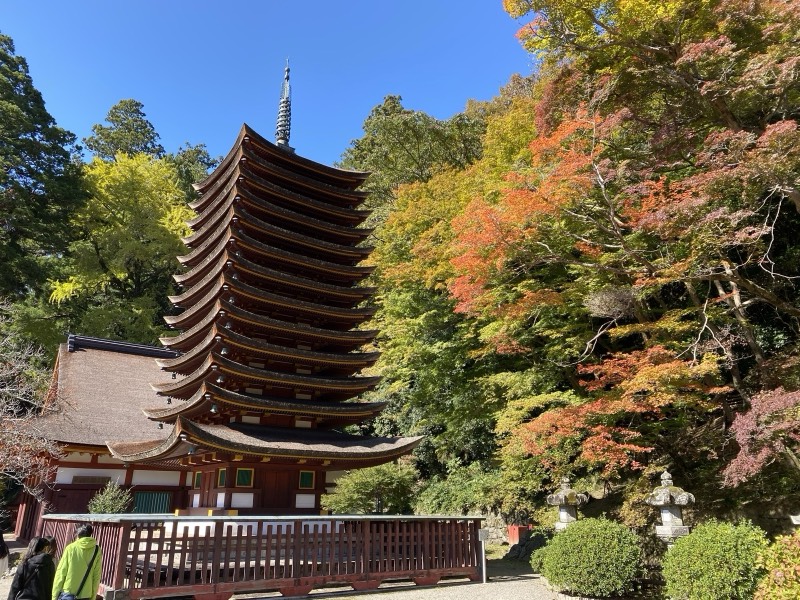
談山神社
A mountain shrine said to be where the plot behind the Taika Reforms was hatched. Its wooden thirteen-storey pagoda is the only one in the world.
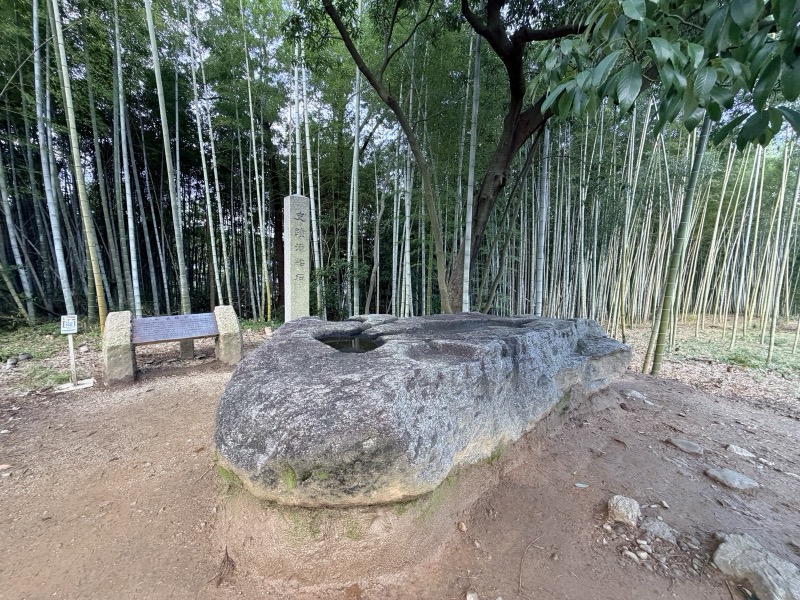
酒船石
A mysterious stone carved with circles and channels, lying in a bamboo grove on top of a hill.
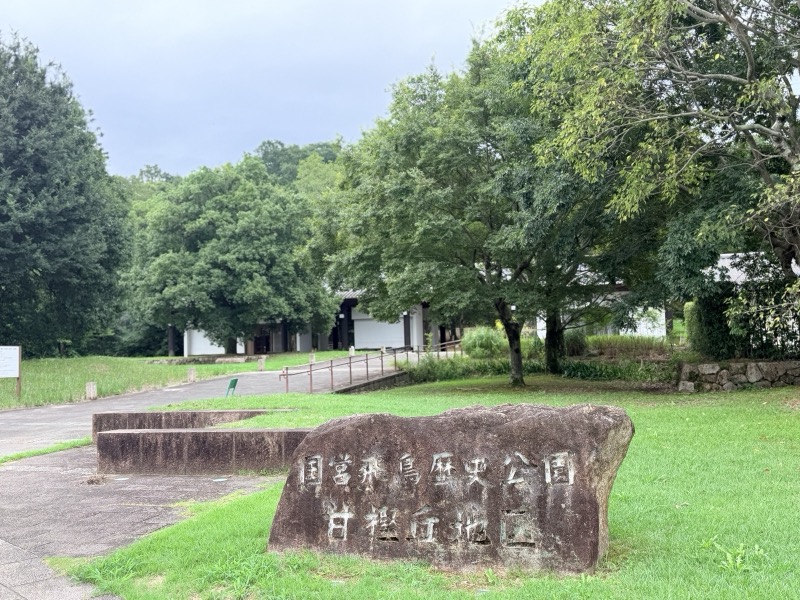
甘樫丘
A hill with views over all of Asuka, said to have been the site of the Soga clan's residences.
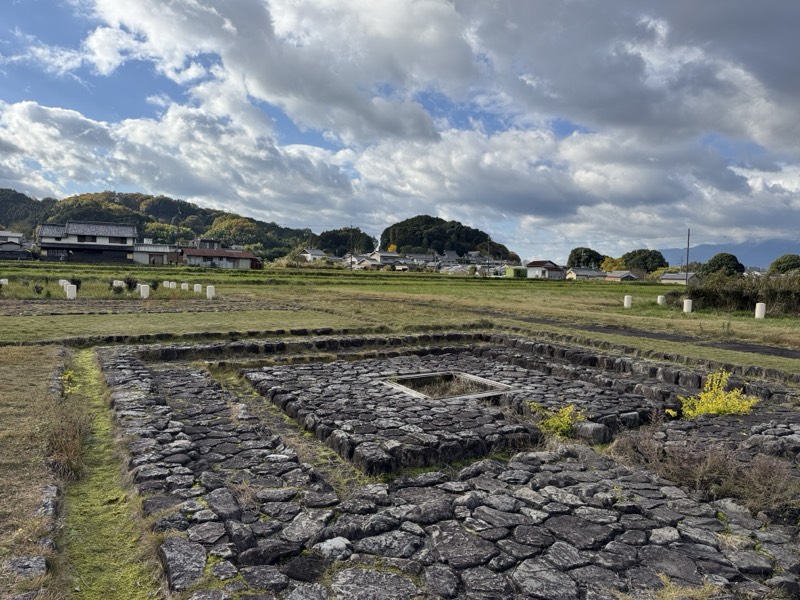
飛鳥宮跡(伝 飛鳥板蓋宮跡)
The political heart of Asuka, where several palaces were built one on top of another.
RELATED COLUMN
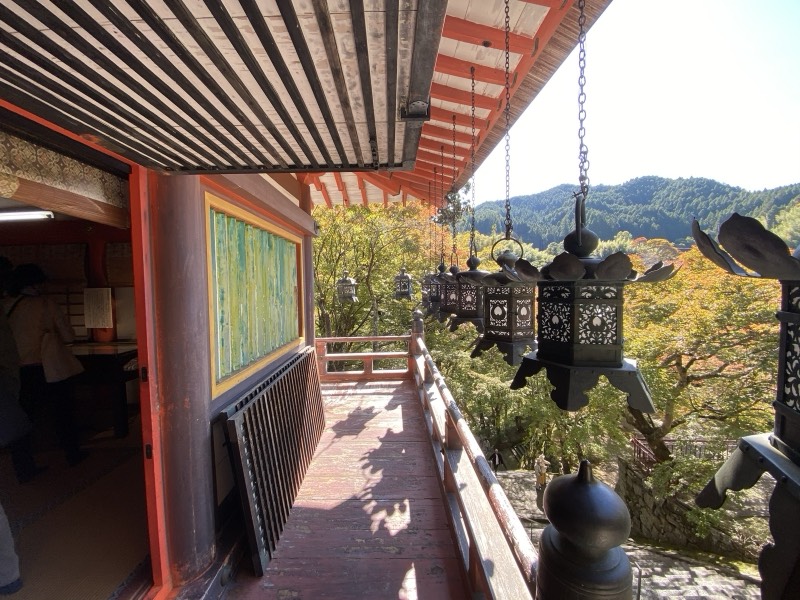 Futatsuki-no-miya: The "Heavenly Palace" Built on the Summit of TōnomineEmpress Saimei had a building put up on the summit of a mountain east of Asuka, beside two zelkova trees. It…
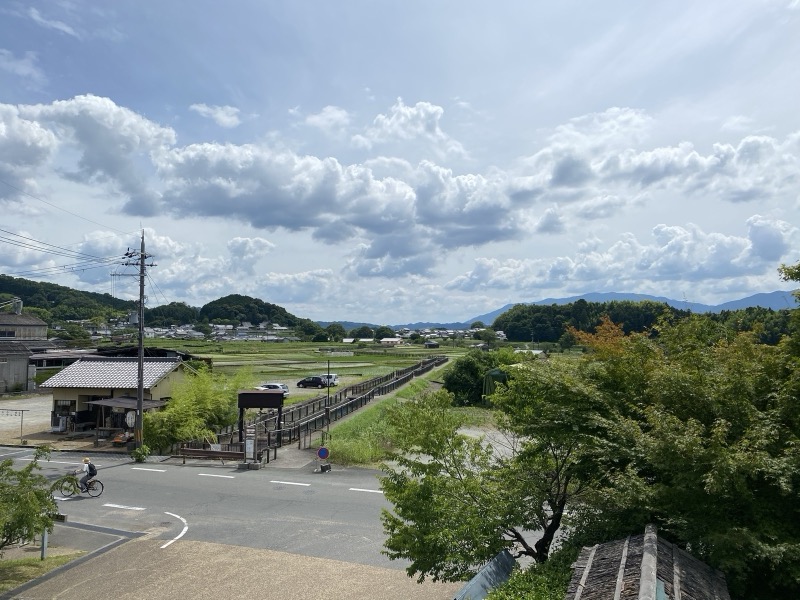 The "Canal of Madness": Two Hundred Boats Bringing Tenri Stone to AsukaEmpress Saimei had a canal dug and brought stone from a mountain in Tenri to Asuka by boat. People mocked it…
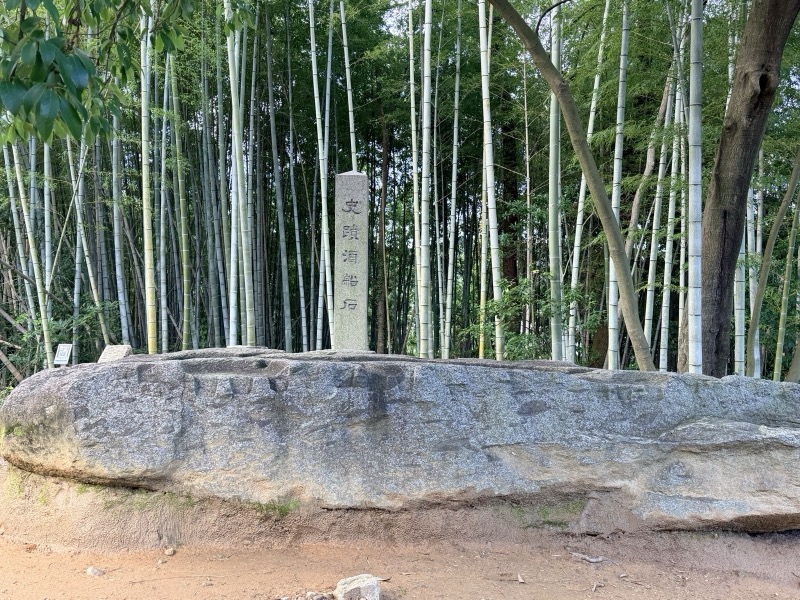 The Stone Wall on the Hill East of the Palace: 700 Metres of Sandstone at the Sakafuneishi SiteIn 1992, work on a walking path turned up a sandstone wall on the Sakafuneishi hill. Was the wall that ran…