
Published
Empress Saimei had a canal dug and brought stone from a mountain in Tenri to Asuka by boat. People mocked it as the taburegokoro no mizo, the "ditch of a mind gone mad". Excavation is gradually bringing that ditch to light.

In 656, straight after the entry on building Futatsuki-no-miya, the Nihon Shoki goes on to describe the works.
"At that time she was fond of undertakings." The empress loved building, and had water engineers dig a ditch from west of Kaguyama (Mt. Amanokagu) to Isonokami-yama. Two hundred boats were loaded with stone from Isonokami-yama, hauled downstream, and the stones were piled up to make a wall on the hill east of the palace.
Then the words of people of the time are quoted: "The canal of madness. Thirty thousand and more spent on labour. Seventy thousand and more spent on the wall. The palace timber rots; the mountaintop is buried." More than thirty thousand were spent on the ditch and more than seventy thousand on the wall, the timber for the palace rotted, and the top of the hill was buried. And further: "They make a hill of stone. As fast as they make it, it will fall down of itself."
The figures for labour are generally taken as totals of person-days: not thirty thousand and seventy thousand people working at once, but the sum of each person working one day counted as one. Even so, a hundred thousand days of work went into the ditch and the wall alone. In this period such labour was imposed on the people as a form of tax.
The entry closes with the remark, "Perhaps they made this slander because it was not yet finished." Some researchers take this line as a comment added by the compilers who put the record in order.
Isonokami-yama is thought to be a hill near Isonokami Shrine in what is now Tenri City.
The stone wall found in 1992 on the hill east of the Asuka Palace site was built of sandstone from near Mt. Toyoda in Tenri City: a fine-grained tuffaceous sandstone, cut into brick-like blocks about 30 × 20 × 15 centimetres. It is not local Asuka stone. The "stone of Isonokami-yama" in the Nihon Shoki had turned up as real objects.
Tenri is more than ten kilometres from Asuka even in a straight line. If hauling boats along a waterway was easier than carrying heavy stone overland, the reason for digging the ditch becomes clear. These sandstone blocks were later reused at the Asuka Palace site and the Asukaike workshop site, and at Asukaike one was even used as a mould for Fuhonsen coins.

So where did the ditch run? Excavations in Asuka Village have produced clues.
At the Asuka Higashigaito site, east of Asuka-dera between the temple and Asuka-niimasu Shrine, a canal about 10 metres wide with stone-lined banks was found. It was dug in the mid-7th century and used into the Nara period, narrowing a little with each of two rebuildings. Upstream it leads to the valley east of the Sakafuneishi hill; downstream it heads north and can be traced to around the west side of Okuyama Kume-dera. Beyond that it is thought to have joined the Naka River and then the Yone River, which runs west of Mt. Amanokagu. Both its date and its route fit the entry in the Saimei chronicle.
The canal was found at the Asuka Higashigaito site in the fiscal 1998 excavation, and its upstream section was later confirmed in the valley east of the Sakafuneishi site. The hill just west of the canal is ringed with stone walls, while the ridge to the east has none. The wall and the canal ran side by side.
Some researchers think that rather than digging one new canal all the way from Tenri to Asuka, existing rivers were linked and the missing stretches dug. The full route has not yet been confirmed.
Discontent with these works was recorded in another form two years later, in 658.
While the empress was away at the hot springs in Kii, Soga no Akae, left in charge of the capital, told Prince Arima that the empress's rule had three failings: building great storehouses to gather the people's wealth, digging a long ditch and wasting provisions, and loading boats with stone to build a hill. The prince went along with the talk, was soon arrested, and lost his life.
The canal and wall works were, it seems, a well-known grievance, enough to serve as bait for a rebellion.
China has a famous canal story too. According to the Records of the Grand Historian, in the Warring States period the state of Han sent a water engineer named Zheng Guo to Qin to have a great canal dug, hoping to exhaust Qin with construction. The plot was discovered partway through, but the finished Zheng Guo Canal watered the fields and made Qin richer instead.
The prose of the Nihon Shoki often borrows phrasing from Chinese histories, and there is research looking for that kind of influence in the canal entry as well. Works criticised while under way can be judged differently once complete. The complaints about the "canal of madness" may likewise have been a passing voice from while the work was going on.
RELATED SPOT
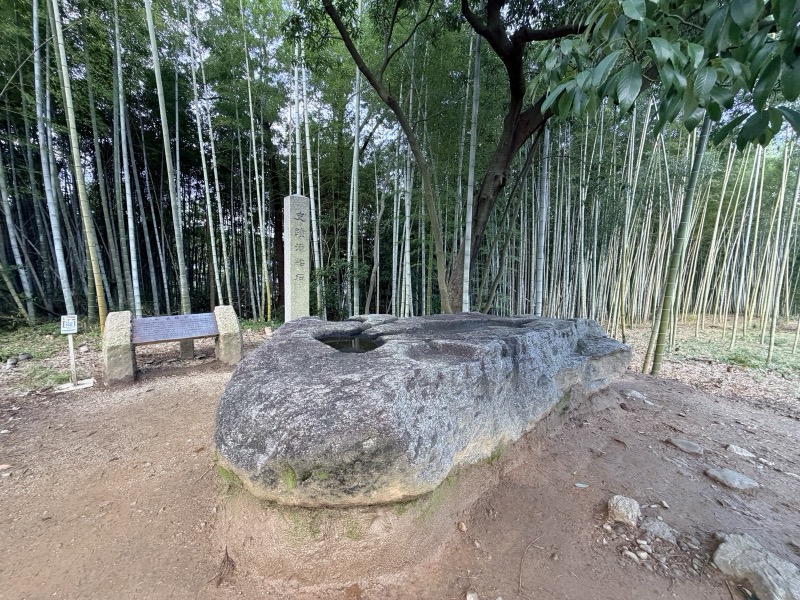
酒船石
A mysterious stone carved with circles and channels, lying in a bamboo grove on top of a hill.
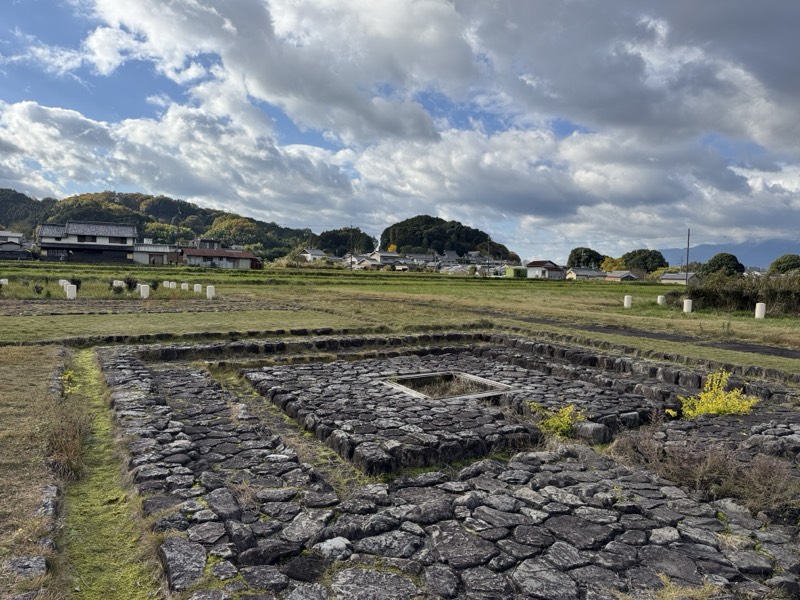
飛鳥宮跡(伝 飛鳥板蓋宮跡)
The political heart of Asuka, where several palaces were built one on top of another.
奈良県立万葉文化館
A centre for ancient culture built around the Man'yōshū.
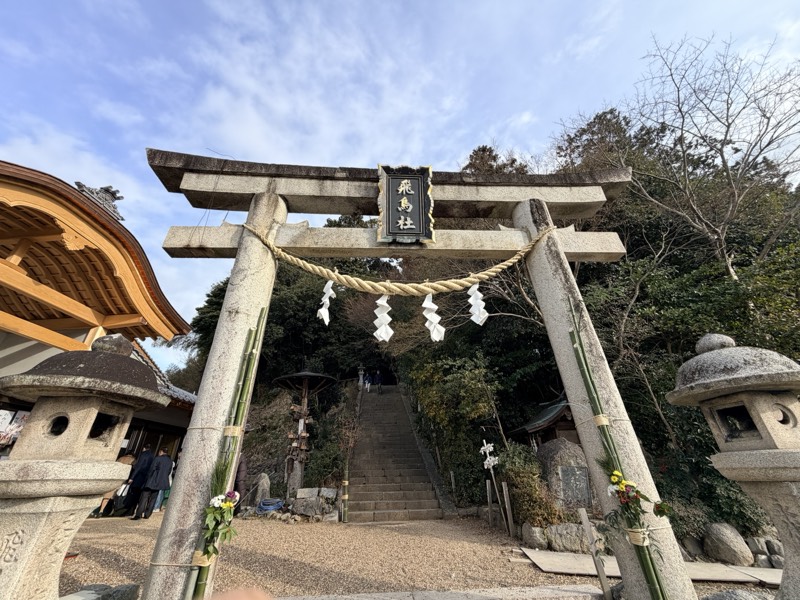
飛鳥坐神社
An ancient Asuka shrine famous for its unusual Onda Festival.
RELATED COLUMN
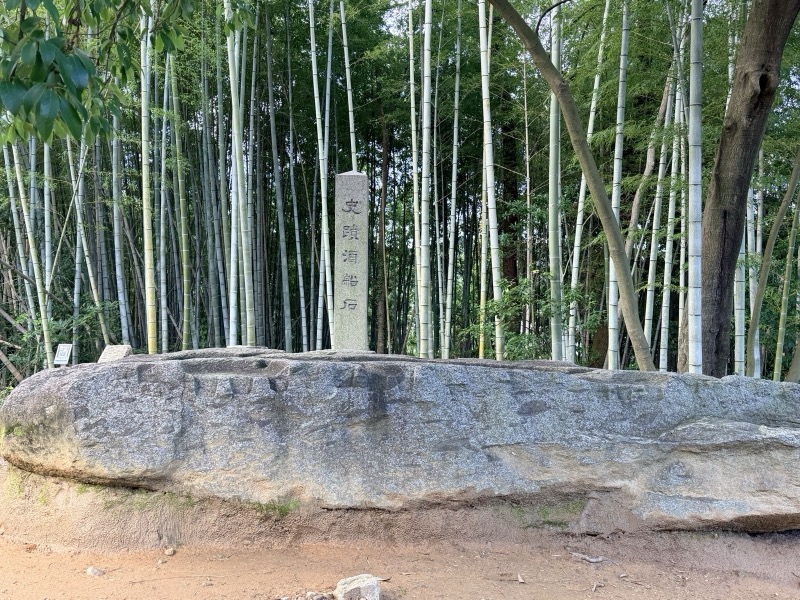 The Stone Wall on the Hill East of the Palace: 700 Metres of Sandstone at the Sakafuneishi SiteIn 1992, work on a walking path turned up a sandstone wall on the Sakafuneishi hill. Was the wall that ran…
 Was Futatsuki-no-miya a Fortress? Unrest After the Isshi Incident and the "Kan" on the MountainFutatsuki-no-miya, which Empress Saimei built on the summit of Tōnomine, has been called a palace of the…Futatsuki-no-miya: The "Heavenly Palace" Built on the Summit of TōnomineEmpress Saimei had a building put up on the summit of a mountain east of Asuka, beside two zelkova trees. It…