
Published
Empress Saimei had a building put up on the summit of a mountain east of Asuka, beside two zelkova trees. It was called Futatsuki-no-miya, or Amatsu-miya, the Heavenly Palace. The record survives; the site has never been found.
Empress Saimei was the consort of Emperor Jomei and the mother of Prince Naka-no-Ōe (later Emperor Tenji), Prince Ōama (later Emperor Tenmu) and Princess Hashihito. She was born in 594.
In 642, after Emperor Jomei died, she took the throne as Empress Kōgyoku. When Soga no Iruka was killed in the Isshi Incident of 645, she handed the throne to her younger brother, Emperor Kōtoku, and the capital moved to Naniwa. Before long she returned to Asuka with Prince Naka-no-Ōe and others, and in 655, the year after Emperor Kōtoku died, she took the throne again at the Asuka Itabuki Palace. It was the first time a ruler who had stepped down had reigned a second time.
That winter the Itabuki Palace burned. She moved for a time to the Asuka Kawara Palace, and in 656 built a new palace at Okamoto: the Later Asuka Okamoto Palace.
Her reign of less than seven years was one building project after another. In the same year, 656, a palace was built at Yoshino as well; in 660 Prince Naka-no-Ōe made a water clock and set it up at Mizuochi in Asuka; and facilities for entertaining the Emishi and foreign envoys were laid out around Ishigami. The Nihon Shoki says the empress "was fond of undertakings". Futatsuki-no-miya was recorded as one of them.

An entry for the same year, 656, contains this passage:
"On Tamu-no-mine she had a wall built around the summit like a crown. And beside the two tsuki trees on the summit she raised a kan, and named it Futatsuki-no-miya. It is also called Amatsu-miya."
The summit was ringed with a wall, and beside the two tsuki trees at the top a kan was built, named Futatsuki-no-miya, "the Palace of the Two Tsuki", or Amatsu-miya, "the Heavenly Palace". A note says the name Tamu-no-mine is read "tamu", and it is taken to be today's Tōnomine. Tsuki is an old name for the zelkova, and great zelkovas were thought to be dwelling places of the gods.
The single character kan (観) is what this short entry has been argued over most.
Kan means a tall building for looking out from, a lofty hall. But in China, Daoist temples are also called kan (Daoist "guan"). The name Amatsu-miya, too, is a Daoist word for the heavenly palace where immortals and the Lord of Heaven live. So the view that Futatsuki-no-miya was a Daoist facility has been put forward for a long time. Empress Saimei's reign also produced stone works that call to mind the land of the immortals, such as the turtle-shaped stone basin and the Shumisen stone.
Other views see it as a Buddhist hall, or as a defensive work on the mountain, that is, a castle. After the defeat at Baekgang in 663, hill forts were built across western Japan. But the entry on Futatsuki-no-miya dates from 656, before that, and nothing in it speaks of defence.
As long as the building itself has not been found, none of these views can be settled.
The hill east of the palace seems to have been seen as a special place even afterwards. An entry for 675 tells of a man who climbed the hill east of the palace, uttered words that misled people, and cut his own throat.
Futatsuki-no-miya was not built and then forgotten.
The Nihon Shoki records that Empress Jitō went to Tōnomine on the 5th day of the 9th month of 693, and to Futatsuki-no-miya on the 3rd day of the 3rd month of 696. The Shoku Nihongi adds that on the 17th day of the 3rd month of 702, the province of Yamato was ordered to repair the "Futatsuki Detached Palace". Nearly half a century after Empress Saimei, the palace was still being used and kept up.
The 9th day of the 9th month was the anniversary of Emperor Tenmu's death. Some see the visit on the 5th as a way of holding a gathering a little earlier and avoiding a day unsuited to feasting, but the entry does not tell us the purpose. The 3rd day of the 3rd month in 696 is the day that later became the Jōshi seasonal festival.

On the hill east of the Asuka Palace site, sandstone walls have been found since 1992, and the area came to be called the Sakafuneishi site. Right after the Futatsuki-no-miya entry, the Nihon Shoki says "stones were piled up to make a wall on the hill east of the palace". Many people see this hill as Futatsuki-no-miya itself.
Those who excavated it are more cautious. The walls on the hill collapsed in the late 7th century and were hardly repaired; they are thought to have fallen in the great earthquake of 684. That does not fit well with a palace an empress visited in 696 and that was repaired in 702. The excavation report's position is that "the stone wall on the hill east of the palace" and "Futatsuki-no-miya on Tamu-no-mine" are better thought of as different places.
So where on Tōnomine was it? Candidates include the area around Tanzan Shrine, Goharetsuyama at the summit, and Nezuki west of Tanzan Shrine, but none has produced remains that can be identified as the palace. Some doubt that a large building could have stood on a steep summit, and some think the area around Tanzan Shrine, where there is more level ground, is the more likely place.
The entry survives, and the visits and the repair are on record, yet the place is unknown. Futatsuki-no-miya is the best-documented "palace not yet found" in Asuka.
RELATED SPOT
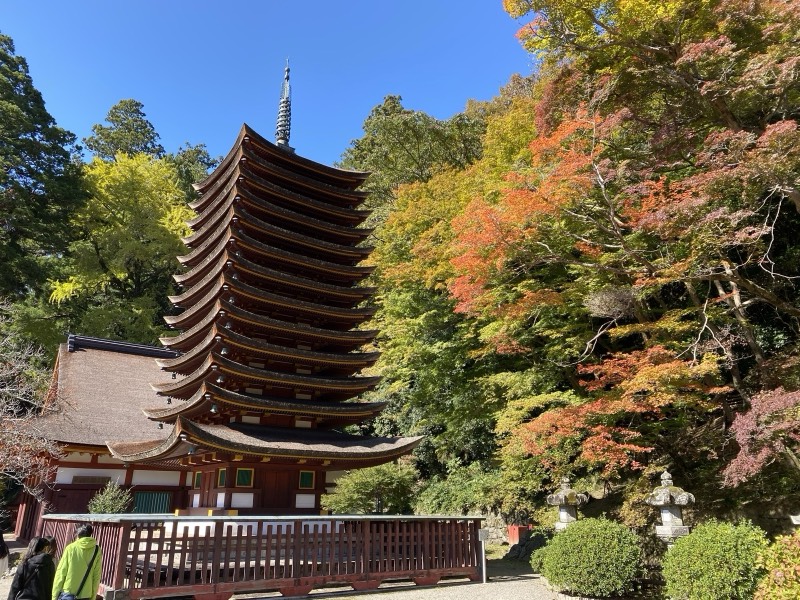
談山神社
A mountain shrine said to be where the plot behind the Taika Reforms was hatched. Its wooden thirteen-storey pagoda is the only one in the world.
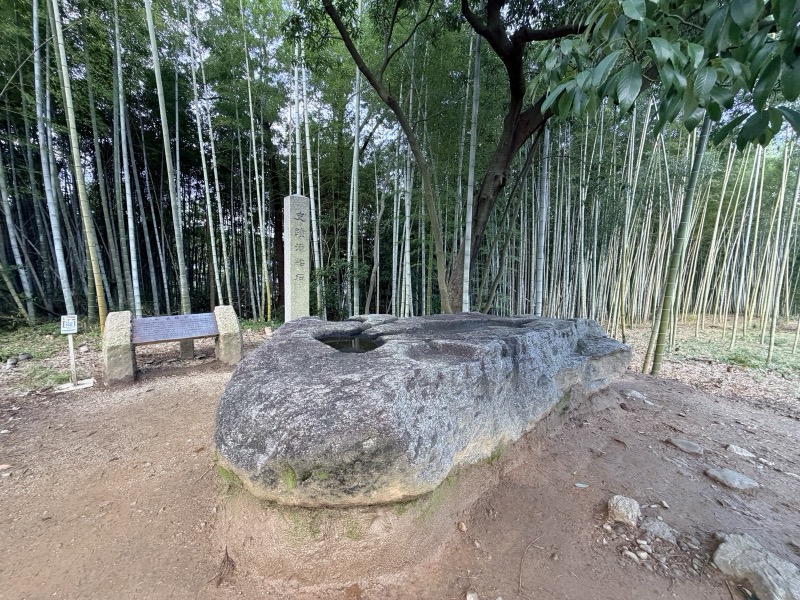
酒船石
A mysterious stone carved with circles and channels, lying in a bamboo grove on top of a hill.
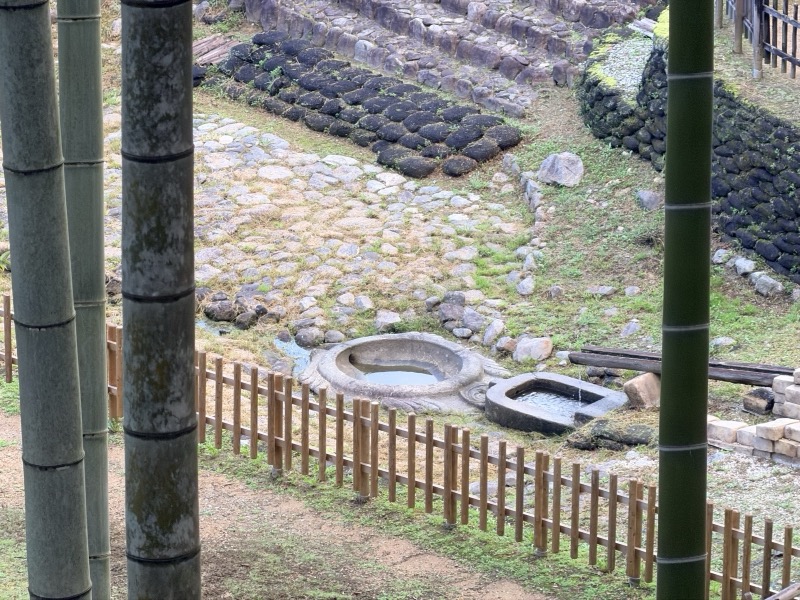
亀形石造物
A ritual site from the reign of Empress Saimei, with stonework designed to channel water.
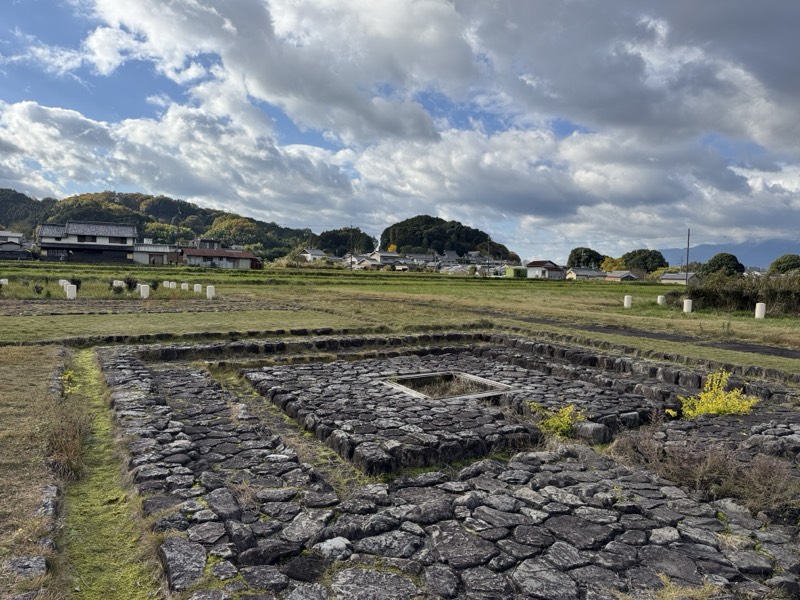
飛鳥宮跡(伝 飛鳥板蓋宮跡)
The political heart of Asuka, where several palaces were built one on top of another.
RELATED COLUMN
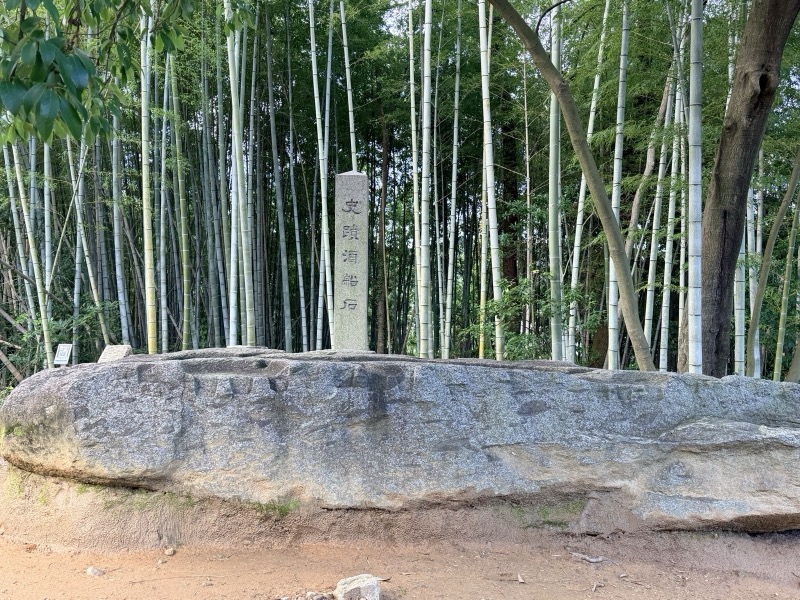 The Stone Wall on the Hill East of the Palace: 700 Metres of Sandstone at the Sakafuneishi SiteIn 1992, work on a walking path turned up a sandstone wall on the Sakafuneishi hill. Was the wall that ran…
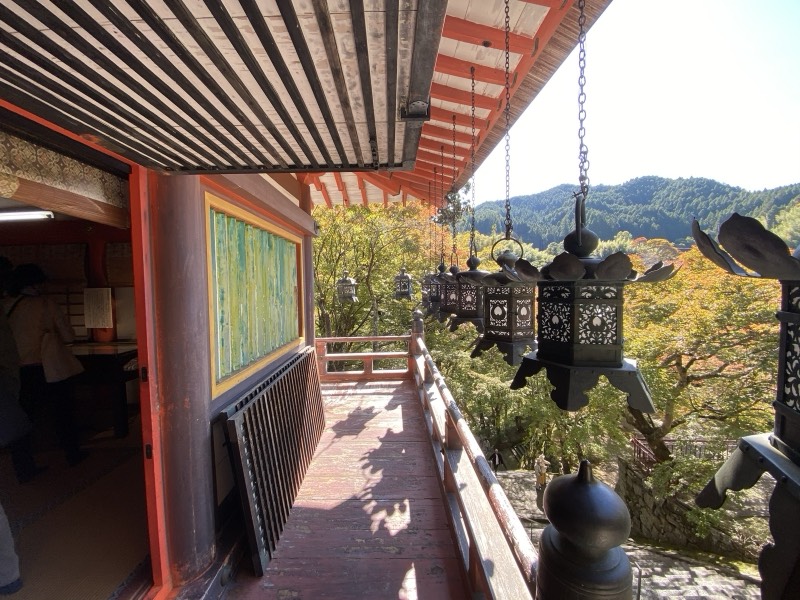 Was Futatsuki-no-miya a Fortress? Unrest After the Isshi Incident and the "Kan" on the MountainFutatsuki-no-miya, which Empress Saimei built on the summit of Tōnomine, has been called a palace of the…
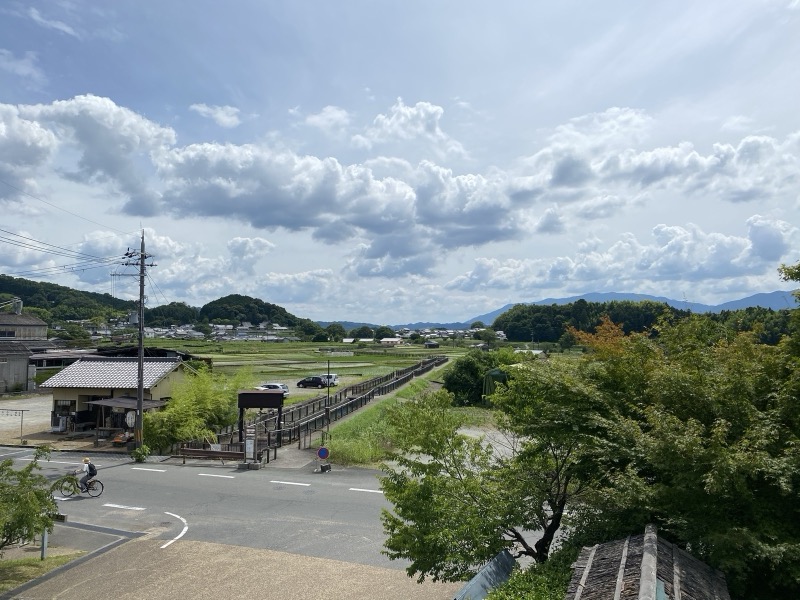 The "Canal of Madness": Two Hundred Boats Bringing Tenri Stone to AsukaEmpress Saimei had a canal dug and brought stone from a mountain in Tenri to Asuka by boat. People mocked it…