
Published
In 684 Emperor Tenmu rearranged the hereditary titles of the great families into eight ranks. Omi and muraji, which had once shared the top of the court, fell to sixth and seventh. Who rose and who was left behind? The traces remain even in the names of poets like Kakinomoto no Hitomaro and Ōtomo no Yakamochi.

In the tenth month of 684, Emperor Tenmu issued an edict rearranging the hereditary titles (kabane) of the great families into eight ranks: mahito, ason, sukune, imiki, michinoshi, omi, muraji and inagi. These are called the Yakusa no Kabane, the eight kabane.
A kabane was a title passed down within a family, showing its position in relation to the sovereign. Until then, omi and muraji had been the two main pillars: the leading omi was the Ōomi, and the leading muraji the Ōmuraji.
In the eight kabane, omi was placed sixth and muraji seventh. The two titles that had once shared the summit of the court now sat nearer the bottom than the top.
The highest title, mahito, was given to thirteen clans on the very day of the edict: the Okinaga, Taima, Tajihi, Mikuni and others. All held the title kimi and were regarded as descendants of emperors.
The word mahito originally comes from Daoism, where it means a person who has mastered the Way. Emperor Tenmu's own Japanese-style posthumous name, Ama-no-Nunahara-Oki-no-Mahito, contains it too. Families of near-imperial blood were given the same word that appeared in the emperor's own name.
In the eleventh month, ason was given to fifty-two clans, centered on powerful former omi families such as the Abe, Kose, Ki and Heguri. The Soga line also received ason, as the Ishikawa no Omi: the name taken by the surviving branch after the main house fell in the Isshi Incident.
But the list was not only former omi. Families such as the Mononobe no Muraji and Nakatomi no Muraji rose from muraji to ason. The Mononobe, once the house of the Ōmuraji, now stood at the same rank as the leading omi families.
Among these fifty-two clans was the Kakinomoto no Omi. That is why the Man'yōshū poet Kakinomoto no Hitomaro appears as Kakinomoto no Ason Hitomaro.
In the twelfth month, sukune was given to fifty clans, nearly all former muraji: the Ōtomo, Saeki, Haji, Inbe, Yuge and others. The families who had served the Great King through their crafts were gathered here.
The Ōtomo, the other family that had produced Ōmuraji, became sukune. Ōtomo no Yakamochi, thought to have compiled the Man'yōshū, appears as Ōtomo no Sukune Yakamochi. So of the two old Ōmuraji houses, the Mononobe became ason and the Ōtomo sukune.
The next year, 685, imiki was given to eleven clans, mainly immigrant-descended families such as the Yamato no Aya and Hata, and families descended from regional governors (kuni no miyatsuko), such as the Ōyamato, Katsuragi and Yamashiro.
There is no record of the fifth title, michinoshi, or the eighth, inagi, ever being given to anyone. They are thought to have been ranks prepared in name only and never used.
Families that received no new title simply stayed omi or muraji. Whether or not a family received one of the top three titles now drew a clear line between grades of family.
The eight kabane were issued while Emperor Tenmu, who had taken the throne by winning the Jinshin War of 672, was rebuilding the structure of the state at the Asuka Kiyomihara Palace.
Omi and muraji had expressed a difference of origin: clans rooted in their land, and families serving the Great King through a craft. The eight kabane laid a single measuring stick across them, closeness to the emperor, and lined them up from the top. Families of imperial blood were placed first, with the powerful clans following below.
In 685 the court ranks granted to imperial family members and officials were also reorganized into forty-eight grades. Kabane for the standing of each family, court rank for each individual: the arrangement by which the emperor fixed both was put in place here.
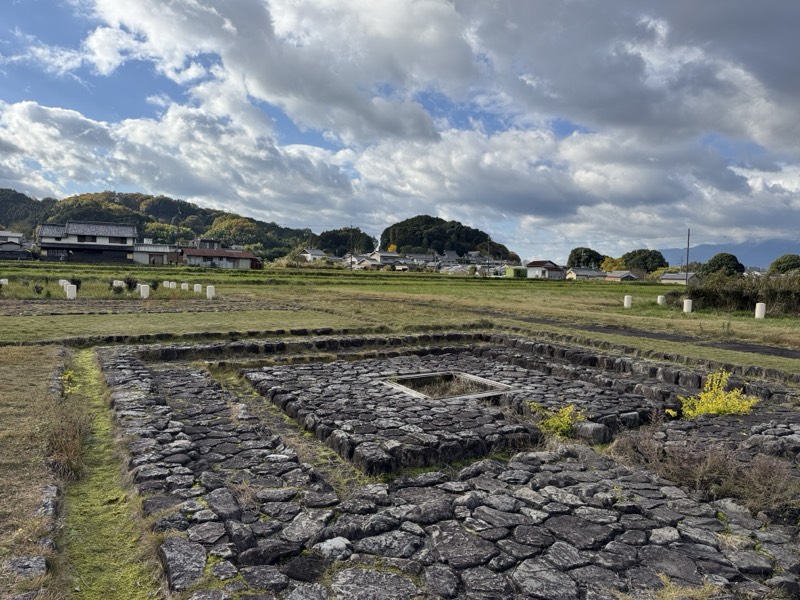 SPOTAsuka Palace Site (traditionally the Asuka Itabuki Palace Site)飛鳥宮跡(伝 飛鳥板蓋宮跡)The political heart of Asuka, where several palaces were built one on top of another.Access: About 5 minutes on foot from the "Oka-hashimoto" stop on the Asuka loop bus from Kintetsu Kashiharajingu-mae StationSee the spot page →
Kabane continued to be inherited, but as time went on more and more families bore the title ason, and its meaning as a ranking faded. Nakatomi no Kamatari's line became Fujiwara no Ason, the Minamoto became Minamoto no Ason, the Taira became Taira no Ason. Later warrior houses also used kabane in formal documents; Tokugawa Ieyasu styled himself Minamoto no Ason Ieyasu.
It was only in 1871, early in the Meiji era, that the use of kabane in official settings was stopped. The family grades fixed in Asuka had survived as part of people's names for some twelve hundred years.
Emperor Tenmu, who established the eight kabane, is buried with his empress, Empress Jitō, in the Tenmu-Jitō Mausoleum at Noguchi in Asuka Village.
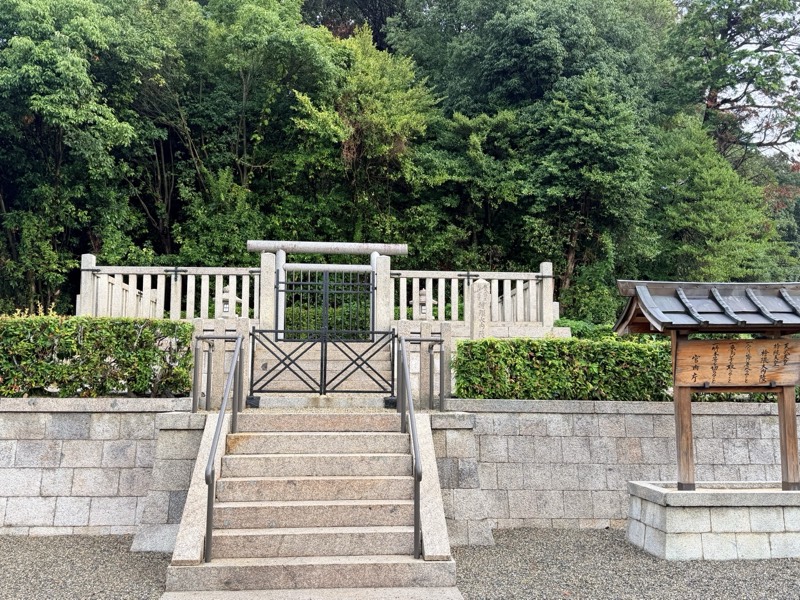 SPOTMausoleum of Emperor Tenmu and Empress Jitō天武・持統天皇陵One of the few octagonal imperial tombs whose occupants can be confirmed from written records.Access: About 10 minutes on foot from Kintetsu Asuka StationSee the spot page →
RELATED SPOT
飛鳥宮跡(伝 飛鳥板蓋宮跡)
The political heart of Asuka, where several palaces were built one on top of another.
天武・持統天皇陵
One of the few octagonal imperial tombs whose occupants can be confirmed from written records.
RELATED COLUMN
 After the Jinshin War: What Emperor Tenmu RebuiltReturning to Asuka after winning the Jinshin War, Emperor Tenmu appointed no ministers and ran the country…
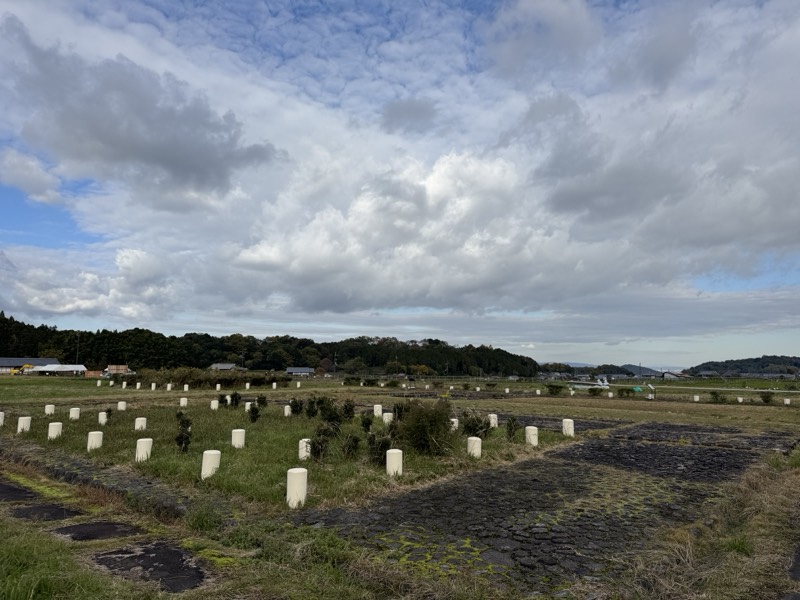 Whose Successor Was Empress Jitō? Tenmu's Empress, and Tenchi's DaughterAs the empress who completed the ritsuryō state (a state governed by law codes), she is usually spoken of in…No Longer from Brother to Brother: Succession through the Direct LineIn ancient Japan the throne often passed from elder brother to younger. One attempt to draw a line from…