
Published
Returning to Asuka after winning the Jinshin War, Emperor Tenmu appointed no ministers and ran the country together with the royal family. He made the clans' people the state's, had the emperor fix the standing of families and individuals, and ordered law and national history to be written. We follow the fourteen years in which the framework of the ritsuryō state came into view.
In 672, having won the Jinshin War, Prince Ōama did not move into the Ōtsu Palace in Ōmi but returned to Asuka. In the second month of 673 he took the throne at the Asuka Kiyomihara Palace as Emperor Tenmu.
The victory also stripped away much of the old clans' power. Soga no Akae, Minister of the Left who had supported the Ōmi court, was exiled, and Nakatomi no Kane, Minister of the Right, was executed. The powerful men who had run the court under Emperor Tenji were on the losing side.
In the fourteen or so years until Emperor Tenmu's death, the structure of the state was rebuilt on a large scale. Laid out as a timeline, it looks like this.
Throughout his reign, Emperor Tenmu never appointed a minister (daijin). This stands in contrast to the days when the Soga stood at the top of the court as Ōomi, and to Emperor Tenji's reign, which had Ministers of the Left and Right.
At the center of government were the emperor himself, his empress Princess Uno no Sarara (later Empress Jitō), and princes such as Kusakabe, Ōtsu and Takechi. Later historians call this "government by the imperial kin." Rather than leaving things to powerful clans, the emperor and his family ran the country directly.
In 675 Emperor Tenmu abolished the kakibe that had been granted to the clans in Emperor Tenji's reign, in 664. Kakibe were people each clan held privately. At the same time, the mountains, forests and ponds that had been given to royals, clans and temples were taken back.
The principle that land and people belong to the state had been proclaimed in the Reform Edict after the Isshi Incident. Emperor Tenmu was the one who actually pushed it through.
In 673 Emperor Tenmu decreed that anyone entering court service for the first time should start as a palace attendant (ōtoneri) close to the emperor, and then be assigned to a post according to his abilities. In 678 rules were also made for rating officials' work every year and promoting them on that basis.
Posts were no longer settled by birth alone; men were observed close to the emperor and rose by their work. The shape of the official as a profession was being set here.
In 684 Emperor Tenmu established the eight kabane, re-ranking the clans' family titles into eight grades according to closeness to the emperor. Mahito, ason and sukune were the top three, and omi and muraji, which had once shared the summit of the court, fell to sixth and seventh. We cover this in detail in a separate column.
In 685 the court ranks given to individuals were also revised: twelve grades for royals, named myō and jō, and forty-eight for officials, named shō, jiki, gon, mu, tsui and shin. Each was divided into greater and broad, and further subdivided by number.
The key point is that royals now came inside the ranking system. Under the twelve-rank system of 603, royals and the Soga, who held the post of Ōomi, had stood outside it. Now only the emperor stood on the side of granting ranks, and everyone else, royals included, was lined up in order beneath him.
Kabane for the standing of families, court ranks for individuals: a system in which the emperor determined both was now complete.
In the second month of 681, Emperor Tenmu gathered the princes and ministers and ordered them to draw up a legal code. The work continued after his death and was put into force in 689, under Empress Jitō, as the Asuka Kiyomihara Code, the foundation for the later Taihō Code.
The next month he ordered twelve people, led by Prince Kawashima, to record and settle the imperial genealogy and the events of ancient times. The state would write its own history. This work led in time to the Kojiki of 712 and the Nihon Shoki of 720.
In 682 the kneeling and crawling forms of courtesy at court were abolished in favor of standing bows. The same year, men and women alike were ordered to tie up their hair. Manners and appearance were modeled on the Tang court.
In 684 he issued an edict declaring that "the essence of government is military affairs," ordering officials to keep weapons and practice riding. They are fitting words for an emperor who won his throne in war.
In the fourth month of 683, Emperor Tenmu issued an edict: "From now on, use copper coins without fail; do not use silver coins." The coin thought to correspond to these copper coins is the Fuhonsen.

In the late 1990s, excavations at the Asukaike workshop site turned up large numbers of Fuhonsen together with molds and casting waste. It was confirmed that coins older than the Wadō Kaichin of 708 had actually been made in Asuka. How far they circulated as money, or whether they were made as charms, is still debated.
The same site also yielded a wooden tablet from Emperor Tenmu's reign bearing the word tennō, "emperor." The prevailing view is that the title tennō began to be used in place of ōkimi, "great king," around the time of Emperor Tenmu.
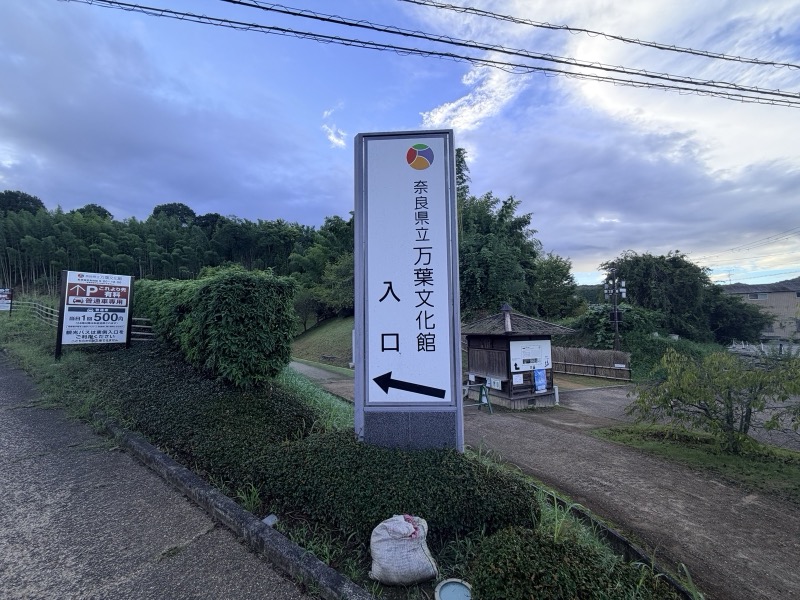 SPOTNara Prefecture Complex of Man'yō Culture奈良県立万葉文化館A centre for ancient culture built around the Man'yōshū.Access: Right by the "Manyō Bunkakan Nishiguchi" stop on the Asuka loop bus from Kintetsu Kashiharajingu-mae StationSee the spot page →
Emperor Tenmu also established temples run by the state. In 673 he built the Takechi Ōdera, later renamed Daikandai-ji. In 680 he vowed to build Yakushi-ji, praying for his empress's recovery from illness. The Daikandai-ji and Moto-Yakushiji sites that remain today in Asuka and Kashihara belong to that line of temples.
And in his last years Emperor Tenmu chose the site for a new capital: the Fujiwara capital, with its grid of streets. But he died in 686 without seeing it completed.
The one who carried on Emperor Tenmu's work was his empress, Empress Jitō. She put the Asuka Kiyomihara Code into force in 689, had a nationwide census register (the Kōin register) compiled in 690, and moved to the Fujiwara capital in 694. Then, in 701, the Taihō Code was completed.
No ministers; the clans' people made the state's; the standing of families and individuals fixed by the emperor; law and history written by the state. It is fair to say that the framework of the ritsuryō state had largely taken shape during Tenmu's fourteen years at the Asuka Kiyomihara Palace.
The Asuka Kiyomihara Palace, where Emperor Tenmu governed, is thought to correspond to the uppermost layer of the Asuka Palace Site. The stone paving and well visible there today belong to the palace of this era.
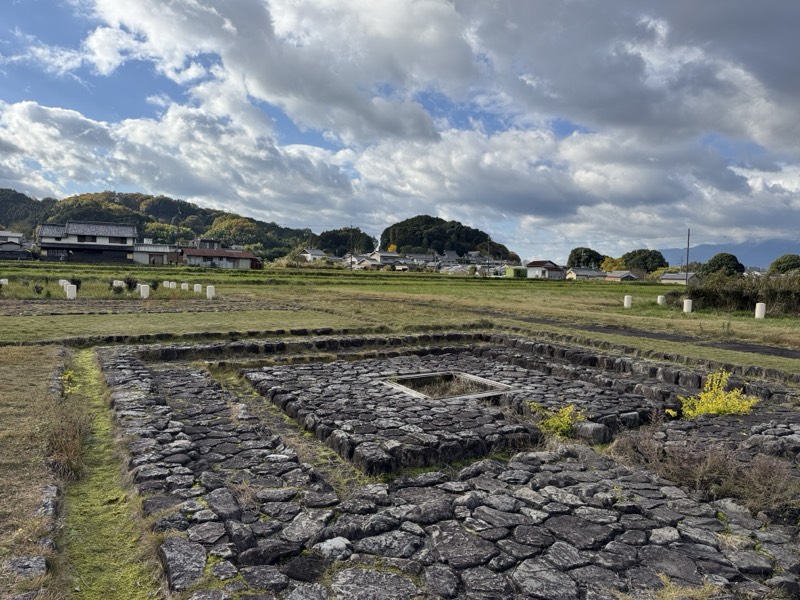 SPOTAsuka Palace Site (traditionally the Asuka Itabuki Palace Site)飛鳥宮跡(伝 飛鳥板蓋宮跡)The political heart of Asuka, where several palaces were built one on top of another.Access: About 5 minutes on foot from the "Oka-hashimoto" stop on the Asuka loop bus from Kintetsu Kashiharajingu-mae StationSee the spot page →
Emperor Tenmu is buried together with Empress Jitō in the Tenmu-Jitō Mausoleum at Noguchi in Asuka Village.
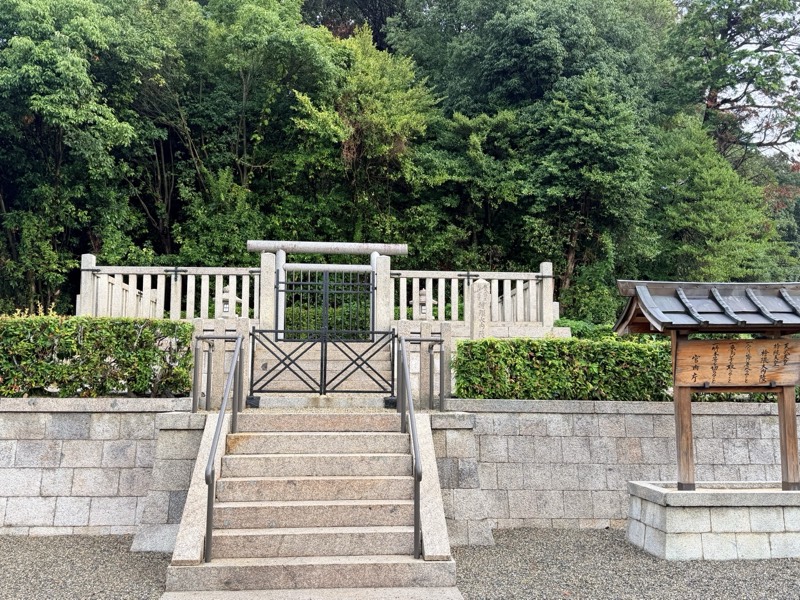 SPOTMausoleum of Emperor Tenmu and Empress Jitō天武・持統天皇陵One of the few octagonal imperial tombs whose occupants can be confirmed from written records.Access: About 10 minutes on foot from Kintetsu Asuka StationSee the spot page →
RELATED SPOT
飛鳥宮跡(伝 飛鳥板蓋宮跡)
The political heart of Asuka, where several palaces were built one on top of another.
奈良県立万葉文化館
A centre for ancient culture built around the Man'yōshū.
天武・持統天皇陵
One of the few octagonal imperial tombs whose occupants can be confirmed from written records.
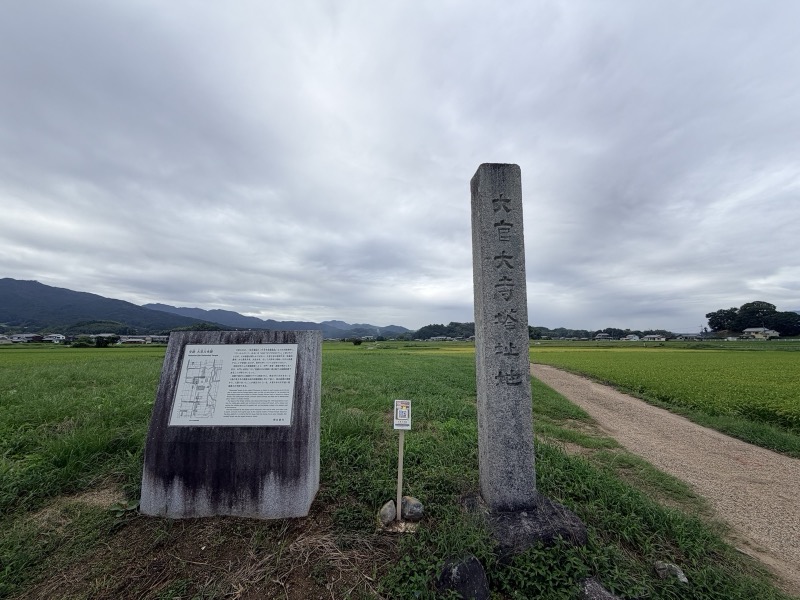
大官大寺跡
The site of the largest state temple of Asuka-Fujiwara, once crowned by a nine-storey pagoda.
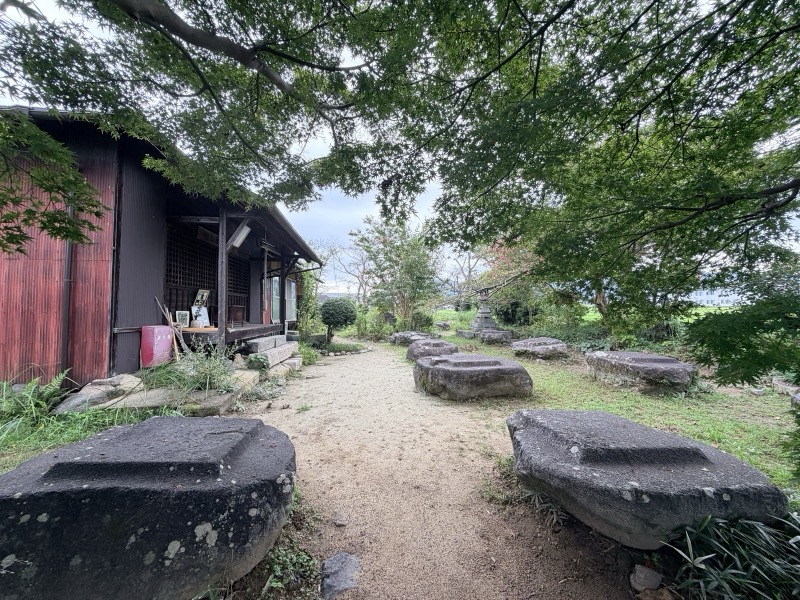
本薬師寺跡
The site of a state temple with twin pagodas, where foundation stones remain in their original positions.
RELATED COLUMN
The Eight Kabane: How Emperor Tenmu Re-Ranked Japan's Great FamiliesIn 684 Emperor Tenmu rearranged the hereditary titles of the great families into eight ranks. Omi and muraji… Whose Successor Was Empress Jitō? Tenmu's Empress, and Tenchi's DaughterAs the empress who completed the ritsuryō state (a state governed by law codes), she is usually spoken of in…No Longer from Brother to Brother: Succession through the Direct LineIn ancient Japan the throne often passed from elder brother to younger. One attempt to draw a line from…