
Home/Columns/Digging Amakashi Hill Today: The Joint Excavations of Asuka Village and Kansai University, and a Wooden Tablet About Rice
Published
Amakashi Hill is where, the Nihon Shoki says, Soga no Emishi and Iruka had their residences. Since 2020 the Asuka Village Board of Education and Kansai University have been excavating around it together. In March 2026 a wooden tablet inscribed with words about receiving and delivering rice was announced. What is emerging is that the hill remained busy after the Soga fell.

At the end of the panel discussion at the symposium marking the World Heritage inscription in November 2026, the moderator mentioned that under the agreement between Asuka Village and Kansai University, excavation is now under way on Amakashi Hill, the low hill west of Asukadera.
The Asuka Village Board of Education began surveys in 2020 to establish the extent of the sites on and around Amakashi Hill. From the 2022 season, the work has been a joint excavation with the Kansai University archaeology laboratory, under the academic and cultural exchange memorandum the village and the university signed in 2020.
The Nihon Shoki says Soga no Emishi and Iruka built houses side by side on Amakashi Hill, calling Emishi's the "upper palace gate" and Iruka's the "valley palace gate." In 2005, 7th-century building remains and burnt soil found at the hill's eastern foot were widely reported as possibly Iruka's residence.
Later study, however, raised doubts: from the size of the buildings, the character of the remains and place-name evidence, some argue the residences were elsewhere. And after the Soga fell in 645, the Nihon Shoki says almost nothing about Amakashi Hill. The village's surveys also address that blank.

The 2022 trench was in a small south-facing valley on the west side of the hill, in the Toyura settlement. It showed that what had been a deep valley was filled with soil cut from the surrounding ridges to create level ground.
On top lay a building with posts set in a full grid, stone-lined enclosures, a smithing hearth and what may be a cooking hearth. Pottery of the late 7th century came from the holes left when the building's posts were pulled out. From the filling of the valley to a 10th-century Heian burial, one trench showed the changing uses of the land.
In March 2026, the Asuka Village Board of Education announced that a wooden tablet from the Amakashi Hill sites bore the words "rice given" and "delivered." It is 25 cm long and 2.7 cm wide, and was found in what appears to be a late 7th-century well.
Rice was given, and delivery was completed: the words record a handover of rice. Building remains have been found nearby, and it has been suggested that there was a facility where officials managed rice, in other words a rice store.
It was also found that a late 7th-century fence discovered in the 2024 season extended further: at least 7.2 m east–west and 15 m north–south so far, turning in an L at its southwest corner and apparently enclosing buildings.
What these finds show is that even after the Soga fell in 645, the area around Amakashi Hill was extensively developed and used for facilities that seem connected with government. The village board describes it as having "clarified part of the active use of the land."
The late 7th century was the age of Tenmu and Jitō, when the palace was at Asuka Kiyomihara, the ritsuryō system was being built, and the move to Fujiwara-kyō approached. The Soga hill may have become a place for handling the state's rice.
The ties between Kansai University and Asuka Village go back to the discovery of the Takamatsuzuka murals in 1972. In the discussion, the speaker on tombs said the agreement gives students an environment where they can study using Asuka as their field. Even in an age when information is easy to obtain, he added, the ability to draw information directly from a site can only be learned in the field.
The Amakashi Hill surveys are still in progress. Where the residences stood, and what facilities spread around the hill, are questions left for future seasons.
The trenches are on private land and have been filled in after excavation, so they cannot be visited. Climb to the lookout on Amakashi Hill to take in Asuka, then walk through the Toyura settlement below, with the Toyura Palace site, Amakashi-ni-imasu Shrine and the Furumiya site, all places linked to the Soga. Under your feet, records of the age after the Soga are slowly being dug up.
RELATED SPOT
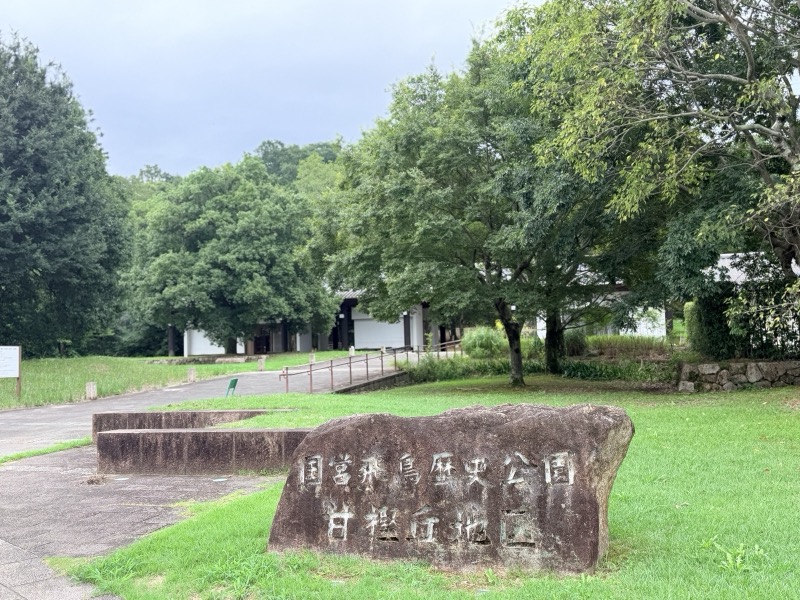
甘樫丘
A hill with views over all of Asuka, said to have been the site of the Soga clan's residences.
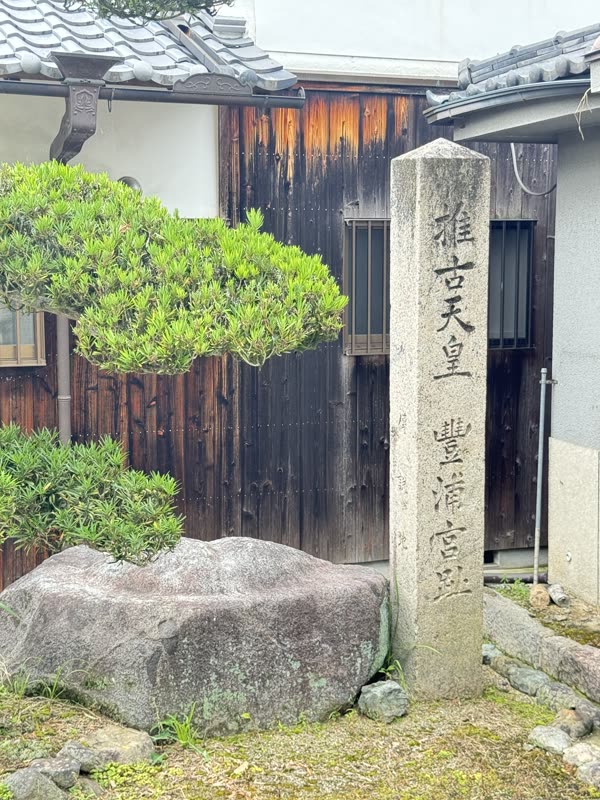
豊浦宮跡
The site of the palace where Empress Suiko took the throne, marking the beginning of the Asuka period.
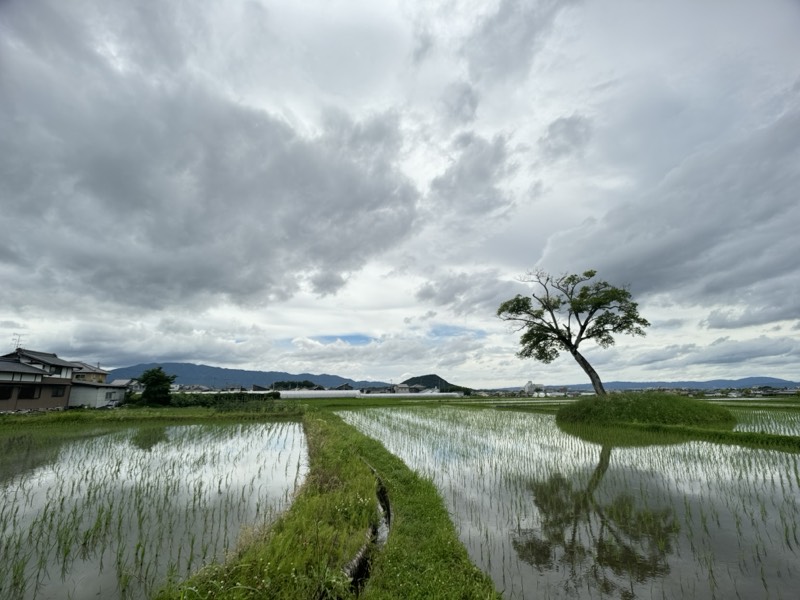
古宮遺跡
The remains of a palace or mansion, where stone-lined channels were found among rice fields.
RELATED COLUMN
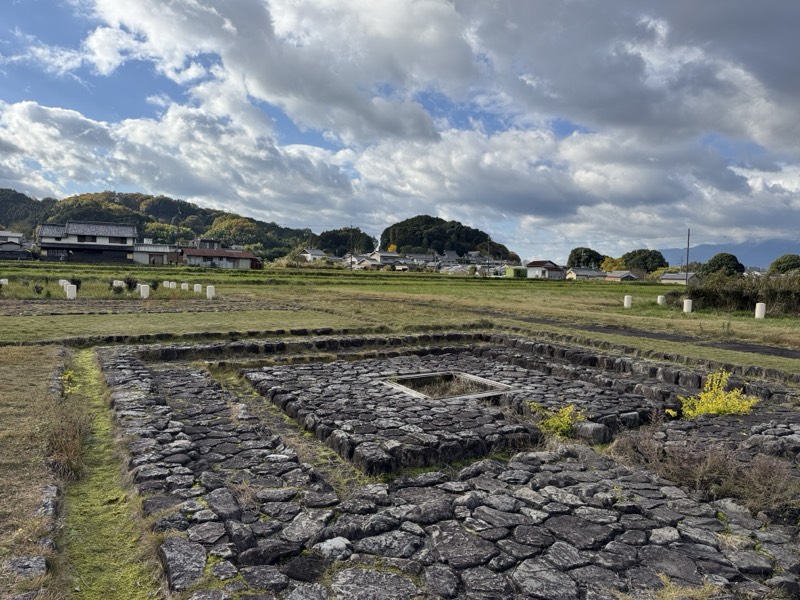 The Pleasure of Not Rebuilding Too Much: Asuka, Where the Ground of 1,400 Years Ago Lies Just BelowAsuka's sites have almost no reconstructed buildings, and people say they are hard to understand. But here…
 Ōomi and Ōmuraji: What Was the Difference Between Omi and Muraji?Soga no Umako was the Ōomi; Mononobe no Moriya was the Ōmuraji. Both stood at the top of the court, but omi…The Asuka Act: this landscape rests on the restrictions its residents live withCross the village boundary and the scenery changes noticeably. The landscape of Asuka has not survived by…