
Published
Soga no Umako was the Ōomi; Mononobe no Moriya was the Ōmuraji. Both stood at the top of the court, but omi and muraji were titles with different origins: clans named after their land, and clans named after their work. We read Asuka politics through that difference.
At the start of the Asuka period, two powerful men stood side by side at the top of the court: Soga no Umako, the Ōomi, and Mononobe no Moriya, the Ōmuraji. The Teibi Rebellion of 587 was the clash between these two.
Both titles carry the prefix ō, "great," and to modern eyes it can look as if there were simply two ministers of equal rank. But omi and muraji were originally titles with entirely different origins.
The powerful families of this era had a clan name (uji), such as Soga or Mononobe, and a hereditary title (kabane), such as omi or muraji. The kabane showed what position the family held in relation to the Great King.
It is thought that the most powerful figure among the omi families became Ōomi, and the most powerful among the muraji families became Ōmuraji.
Families with the omi title included the Katsuragi, Heguri, Kose, Soga and Ki. All of these are place names in the Nara Basin. These families took the name of their home ground as their own.
In other words, the omi were clans who held their own land and people before they ever served the Great King. They are thought to have started out less as servants of the royal house than as allies standing almost shoulder to shoulder with it.
One sign of this is royal marriage. In the fifth century the Katsuragi gave daughter after daughter to the royal house; Iwanohime, empress of Emperor Nintoku, is said to have been a Katsuragi. In the sixth century, daughters of Soga no Iname became consorts of Emperor Kinmei, and three emperors were born of them: Yōmei, Sushun and Suiko.
Most omi families claimed descent from emperors of old in their genealogies. The Katsuragi, Heguri, Kose, Soga and Ki all traced themselves to Takeuchi no Sukune.
The muraji families, on the other hand, included the Ōtomo, Mononobe, Nakatomi, Haji and Inbe. These are not place names.
Ōtomo suggests "leading many attendants"; the Mononobe were connected with weapons, warfare and punishment; the Nakatomi with rituals that mediate between gods and people; the Haji with making pottery and haniwa, and with funerals; the Inbe with ritual implements. The family name itself describes its work under the Great King.
The muraji were families who led groups of people (be) assigned to particular tasks and served the Great King directly. Where the omi drew strength from their own land, the muraji drew theirs from serving the Great King itself. They could be called the king's close retinue of specialist clans.
Their genealogies differ too. Most muraji families claimed descent not from emperors but from gods: the Mononobe from Nigihayahi no Mikoto, the Nakatomi from Ame-no-Koyane no Mikoto.
According to the Nihon Shoki, the post of Ōomi passed from family to family.
In the fifth century, Katsuragi no Tsubura sheltered Prince Mayowa, who had killed Emperor Ankō, and was destroyed by the future Emperor Yūryaku. The next Ōomi, Heguri no Matori, was struck down by Ōtomo no Kanamura in the reign of Emperor Buretsu. Under Emperor Keitai the post went to Kose no Ohito, and from the reign of Emperor Senka to Soga no Iname, after whom it stayed with the Soga for three generations: Iname, Umako and Emishi.
Families with power that nearly rivaled the Great King's were, for that very reason, the ones that clashed with him and fell.
The post of Ōmuraji was held almost entirely by the Ōtomo and the Mononobe, sometimes alternately and sometimes by one of each at the same time.
In the early sixth century, Ōtomo no Kanamura is said to have been the central figure in bringing Emperor Keitai from Echizen, and Mononobe no Arakai led the army that put down the Iwai Rebellion in Kyushu. Both were families that led the Great King's forces.
Kanamura himself was blamed by Mononobe no Okoshi and others for failures of policy on the Korean Peninsula in the reign of Emperor Kinmei, and withdrew. From then on the Mononobe held the post, and the last Ōmuraji was Mononobe no Moriya.
After Moriya was killed in 587, no Ōmuraji was ever appointed again. Only the Soga, as Ōomi, remained at the top of the court.
Most of this account rests on the Nihon Shoki. Some scholars suspect that its entries on fifth-century Ōomi and Ōmuraji project a later system back onto earlier times. Many researchers hold that we can be confident the two posts stood side by side only from the sixth century, in the days of the Soga, the Mononobe and the Ōtomo.
Nor does the distinction between omi and muraji fit every family neatly. Regional clans, such as the Kibi no Omi and Izumo no Omi, also bore the omi title. Take "omi for clans of the land, muraji for clans of a craft" as a broad sketch.
With the fall of Soga no Emishi and Iruka in the Isshi Incident of 645, the age of the Ōomi ended too. In its place came the Minister of the Left and the Minister of the Right. These were not posts inherited by lineage but offices to which the sovereign appointed people.
In 684 Emperor Tenmu established the Yakusa no Kabane, the eight kabane, and rearranged the titles into eight ranks. Omi fell to sixth place and muraji to seventh. Most leading omi families were newly given the second rank, ason, and most leading muraji families the third, sukune. Some families, like the Mononobe and the Nakatomi, rose from muraji to ason.
Clans rooted in the land, and families serving the Great King through their craft: that difference was absorbed into the ranks and offices of the ritsuryō state, and little by little faded from view.

The Soga's base was here in Asuka. Umako built a residence with a garden beside the Asuka River and was called Shima no Ōomi, "the Ōomi of the Island." The nearby Ishibutai Kofun is widely thought to be his tomb.
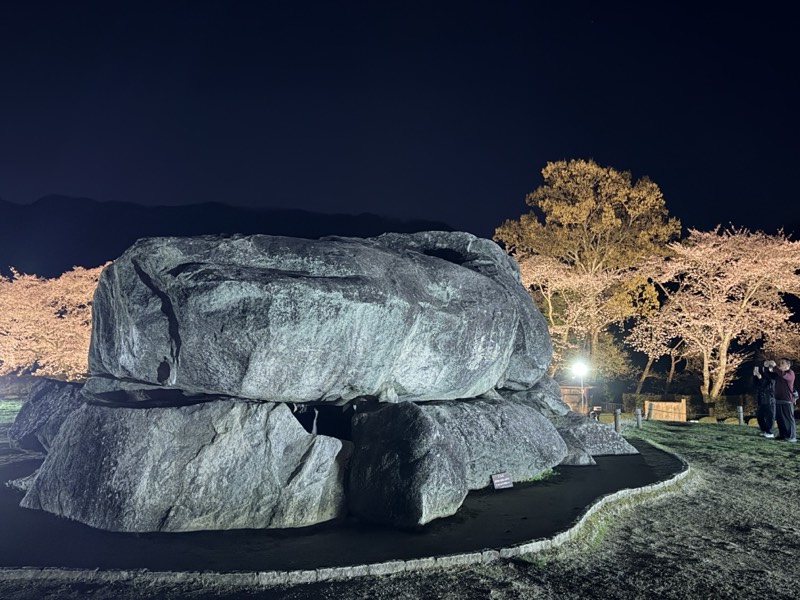 SPOTIshibutai Kofun石舞台古墳One of the largest stone burial chambers in Japan, its giant boulders left bare to the sky. The image most people picture when they think of Asuka.Access: Short walk from the "Ishibutai" stop on the Asuka loop bus from Kintetsu Kashiharajingu-mae StationSee the spot page →
Emishi and Iruka, the Nihon Shoki records, built their houses side by side on Amakashi Hill. The homes of the Ōomi stood on a hill looking down on the heart of Asuka, where the palace stood.
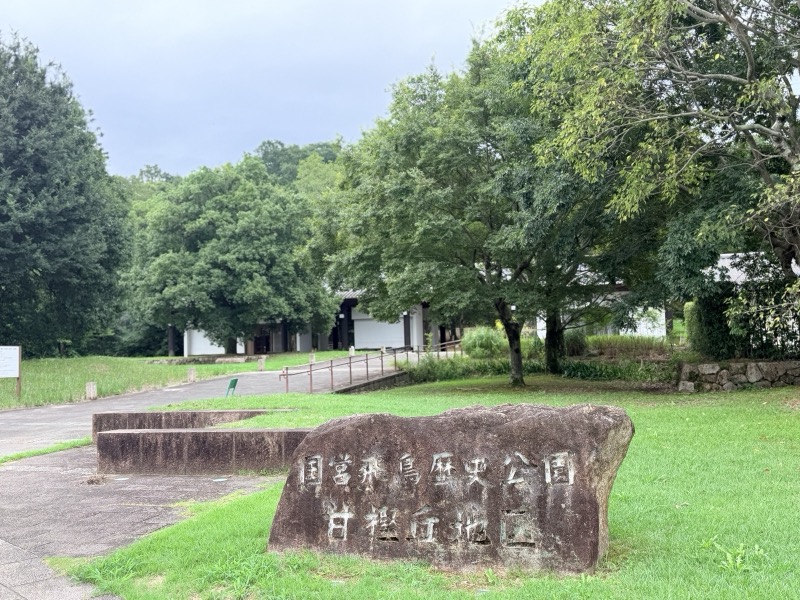 SPOTAmakashi Hill甘樫丘A hill with views over all of Asuka, said to have been the site of the Soga clan's residences.Access: Right by the "Amakashi-no-oka" stop on the Asuka loop bus from Kintetsu Kashiharajingu-mae StationSee the spot page →
The Mononobe, by contrast, were based in Kawachi, and the Ōtomo in Settsu and various parts of Yamato. It is the traces of the land-rooted Ōomi family that remain in Asuka.
RELATED SPOT
石舞台古墳
One of the largest stone burial chambers in Japan, its giant boulders left bare to the sky. The image most people picture when they think of Asuka.
甘樫丘
A hill with views over all of Asuka, said to have been the site of the Soga clan's residences.
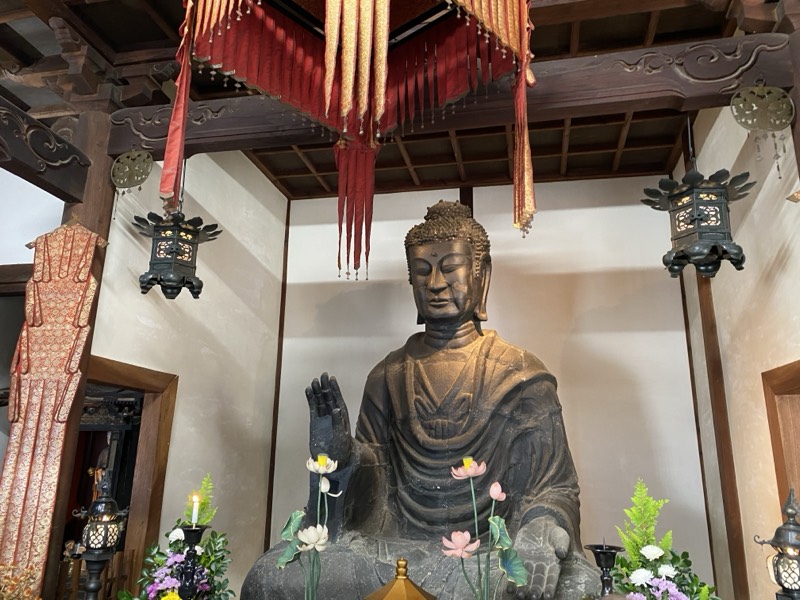
飛鳥寺・蘇我入鹿首塚
Japan's first full-scale Buddhist temple. The Great Buddha of Asuka still sits on the spot where it was made, 1,400 years ago.
RELATED COLUMN
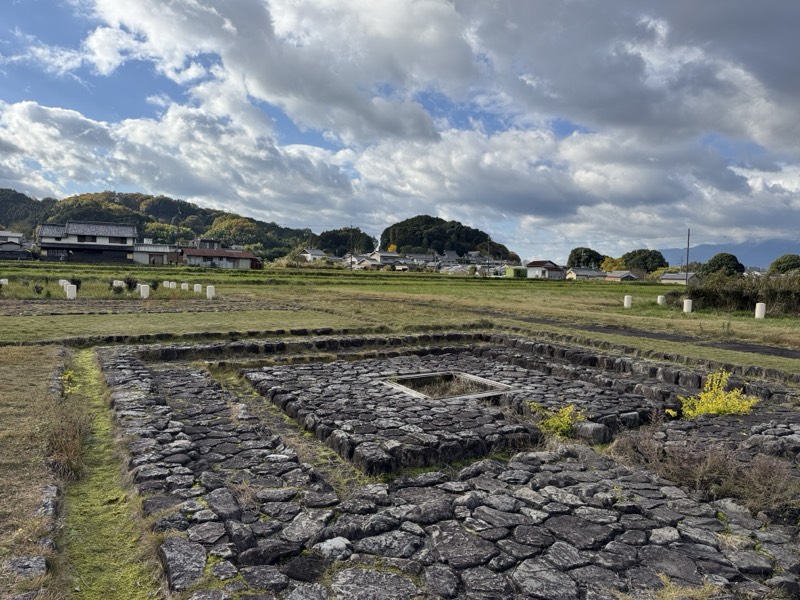 Prince Yamashiro no Ōe: Why Was Prince Shōtoku's Son Destroyed?In 643, Prince Yamashiro no Ōe, son of Prince Shōtoku, was hunted down by Soga no Iruka's soldiers and took…Mononobe no Moriya: The Teibi Rebellion, Read from the Losing SideIn 587, Mononobe no Moriya was attacked by Soga no Umako's army and killed at his home base in Kawachi. He is…Was Prince Shōtoku Really Soga no Umako? Reading the "Prince = Umako" TheoryAlmost every achievement of Prince Shōtoku comes with the name of Soga no Umako beside it. What if the man…