
Published
He declared at a mourning palace that one should serve the living king, forced himself on the late emperor's empress, and was finally struck down by Soga no Umako's soldiers. Prince Anahobe, so poorly regarded in the Nihon Shoki, was a son of Emperor Kinmei and Umako's own nephew, a genuine candidate for the throne. We consider from the record why he was eliminated.

Prince Anahobe has an especially bad reputation in the Nihon Shoki. He openly coveted the throne, forced himself on the late emperor's empress, had a retainer killed, and in the end was struck down by Soga no Umako's soldiers in the sixth month of 587.
Yet he was a son of Emperor Kinmei, of Soga blood as well, and a genuine candidate for the throne. Was he a hothead who grasped too hard at the crown, or a strong candidate who had become inconvenient? We consider this while following the record.
Prince Anahobe's mother was Oanegimi, a daughter of Soga no Iname, which made Anahobe a nephew of Soga no Umako. Born of the same mother were Princess Anahobe no Hashihito, later mother of Prince Shōtoku, and Prince Hatsusebe, later Emperor Sushun.
Another of Iname's daughters had also married Emperor Kinmei: Kitashihime, Oanegimi's elder sister. Her children were Emperor Yōmei and Kashikiya-hime, who became empress to Emperor Bidatsu and later reigned as Empress Suiko.
So among Iname's grandchildren there were two lines: the children of Kitashihime and the children of Oanegimi. This difference would come to shape Anahobe's fate.
The name Anahobe is thought to come from the name of the group that raised the prince. The Nihon Shoki also records other names for him: Prince Amatsukako and Prince Sumito.
In the eighth month of 585, Emperor Bidatsu died. At the mourning palace where his body lay, says the Nihon Shoki, Prince Anahobe said angrily: why serve in the court of a dead king, and not at the side of a living one?
The Nihon Shoki presents this as the words of a man bent on seizing the realm. But the one who took the throne the next month was his half-brother, Emperor Yōmei.
In the fifth month of 586, Prince Anahobe tried to force his way in to Kashikiya-hime, who was secluded at Bidatsu's mourning palace. The Nihon Shoki says he meant to violate her.
Some scholars read this as an attempt to draw closer to the throne by uniting with the late emperor's empress. An empress held a weighty position in the royal house, and taking her as a wife would have been a powerful support in claiming the succession.
The man who barred the gates and kept him out was Miwa no Sakau, a trusted retainer of Bidatsu. Though Anahobe called out seven times, he was not let in. He accused Sakau of insolence before Umako and Mononobe no Moriya, and had Moriya kill Sakau and his sons.
It is also recorded that the prince wanted to go himself, and that Umako admonished him that a royal should not go near a man under sentence. From this time on, the Nihon Shoki says, Kashikiya-hime and Umako both came to resent Prince Anahobe.
With this one affair, Anahobe made enemies at once of Kashikiya-hime, the center of Kitashihime's line, and of his uncle Umako.
In the fourth month of 587, Emperor Yōmei fell ill and asked his ministers about taking refuge in the Buddha's teaching. It is the scene in which Mononobe no Moriya objected and Umako agreed.
At that moment, Prince Anahobe entered the palace bringing a monk named Toyokuni Hōshi. Moriya glared at him in fury, the Nihon Shoki says.
What catches the eye is that Anahobe would soon become the prince Moriya backed. The prince championed by Moriya, supposedly the rejecter of the Buddha, brought a monk to the ailing emperor. The quarrel over Buddhism alone cannot explain this pairing. At the heart of the struggle lay the question of who would be the next emperor.
Emperor Yōmei died that same fourth month. In the fifth month, Moriya moved to put Prince Anahobe on the throne, arranging to make their move under cover of a hunting trip, but the plan leaked.
On the seventh day of the sixth month, Umako, claiming an order from Kashikiya-hime, had Saeki no Nifute and others strike down Prince Anahobe. Surrounded at his palace in the middle of the night, the prince climbed up a tower, but was struck in the shoulder by a soldier and fell, fled into a neighboring building, and was killed there by soldiers who searched with torches held high.
The next day Prince Yakabe, who had been close to Anahobe, was killed as well. A month later Moriya too was destroyed in Kawachi.
In the eighth month of 587, the one who took the throne was Anahobe's full brother, Prince Hatsusebe, as Emperor Sushun. An emperor had come from Oanegimi's line after all.
But in 592 Emperor Sushun was killed by Yamato no Aya no Koma, sent by Umako. The next to take the throne was Kitashihime's daughter Kashikiya-hime, as Empress Suiko.
Both of Oanegimi's sons, then, lost their lives at the hands of their uncle Umako.
From here on, this is interpretation.
At the time, it was normal for the throne to pass from elder brother to younger. With Bidatsu and then Yōmei, sons of Emperor Kinmei, having reigned in turn, Anahobe must have been a strong candidate to be next. Neither his words at the mourning palace nor his approach to Kashikiya-hime are illogical for a man seeking the throne.
In terms of Soga blood, Anahobe was no different from Yōmei or Suiko; to Umako he was just as much a nephew. Yet it was Kashikiya-hime, of Kitashihime's line, with whom Umako joined hands. Once Kashikiya-hime and Umako were allied, perhaps there was no place left for Oanegimi's children outside it.
A later event seems to show that bond. In 612 Empress Suiko reburied her mother Kitashihime in the tomb of her father, Emperor Kinmei, and held a grand funeral ceremony. It was as if to declare that Kitashihime's line was the legitimate one.
 SPOTMausoleum of Emperor Kinmei欽明天皇陵One of the few large keyhole-shaped burial mounds in Asuka Village.Access: About 10 minutes on foot from Kintetsu Asuka StationSee the spot page →
And the Nihon Shoki, which gives us our picture of Anahobe, is also a book that portrays the age of Empress Suiko and Prince Shōtoku in glowing terms. That a prince of the losing side appears as a selfish man in the winners' record is the same as with Moriya. What Anahobe was really like, we cannot know.
The Fujinoki Kofun, just west of Hōryū-ji in Ikaruga, caused a sensation when excavations from 1985 found, in an unlooted stone coffin, gilt bronze horse trappings, a crown, and the bones of two people. It is a round mound of the late sixth century.
Because both are now generally thought to be men, one theory holds that they are Prince Anahobe and Prince Yakabe, killed one after the other in 587. Other theories name Emperor Sushun among others, and the occupants remain undetermined.
Where Prince Anahobe's palace stood is unknown. Kashikiya-hime, his rival, later took the throne at the Toyura Palace in Asuka, regarded as the palace that opened the Asuka period.
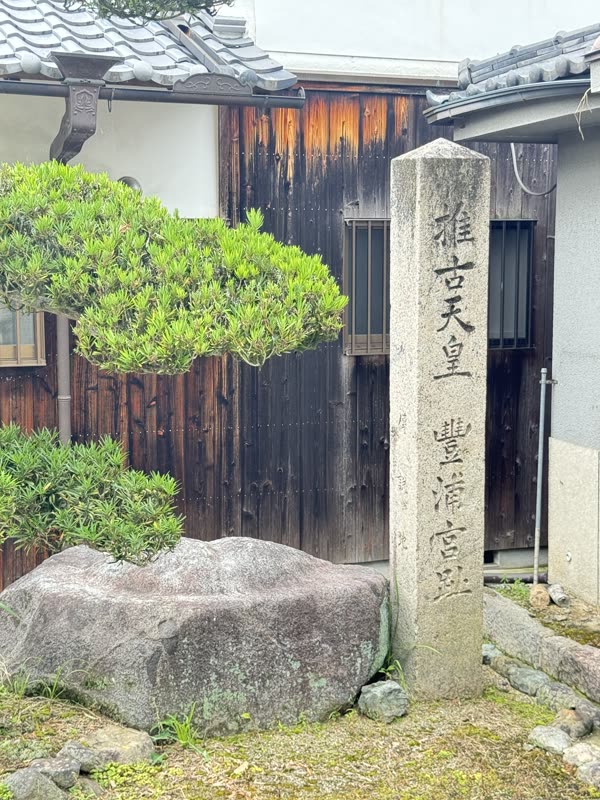 SPOTToyura Palace Site豊浦宮跡The site of the palace where Empress Suiko took the throne, marking the beginning of the Asuka period.Access: Right by the "Toyura" stop on the Asuka loop bus from Kintetsu Kashiharajingu-mae StationSee the spot page →
RELATED SPOT
豊浦宮跡
The site of the palace where Empress Suiko took the throne, marking the beginning of the Asuka period.
欽明天皇陵
One of the few large keyhole-shaped burial mounds in Asuka Village.
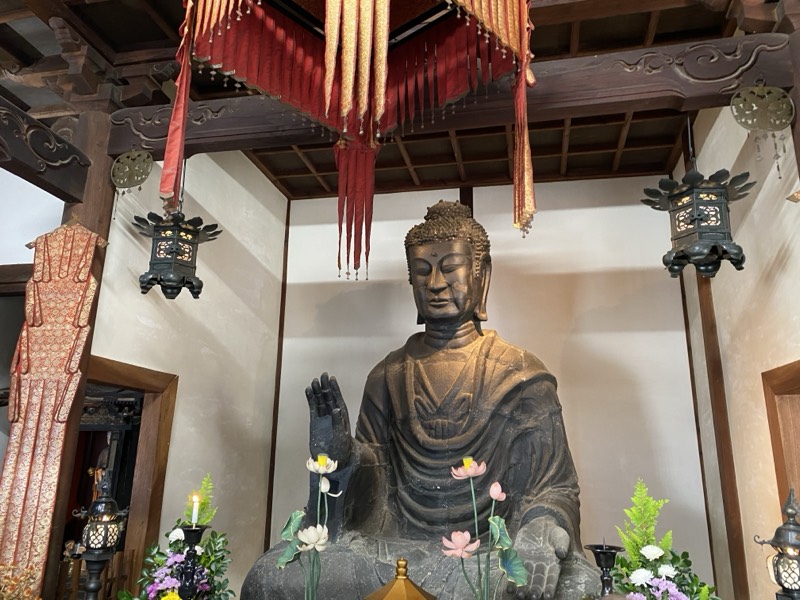
飛鳥寺・蘇我入鹿首塚
Japan's first full-scale Buddhist temple. The Great Buddha of Asuka still sits on the spot where it was made, 1,400 years ago.
RELATED COLUMN
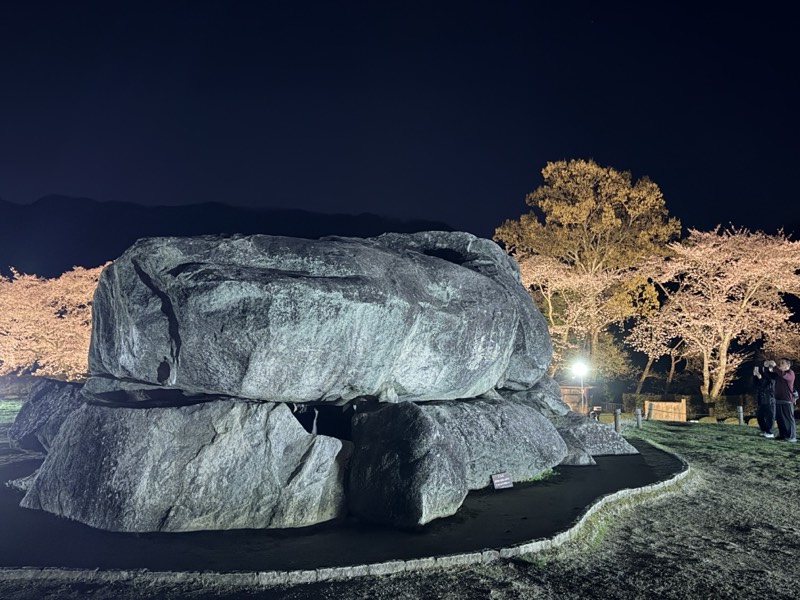 Was Prince Shōtoku Really Soga no Umako? Reading the "Prince = Umako" TheoryAlmost every achievement of Prince Shōtoku comes with the name of Soga no Umako beside it. What if the man…
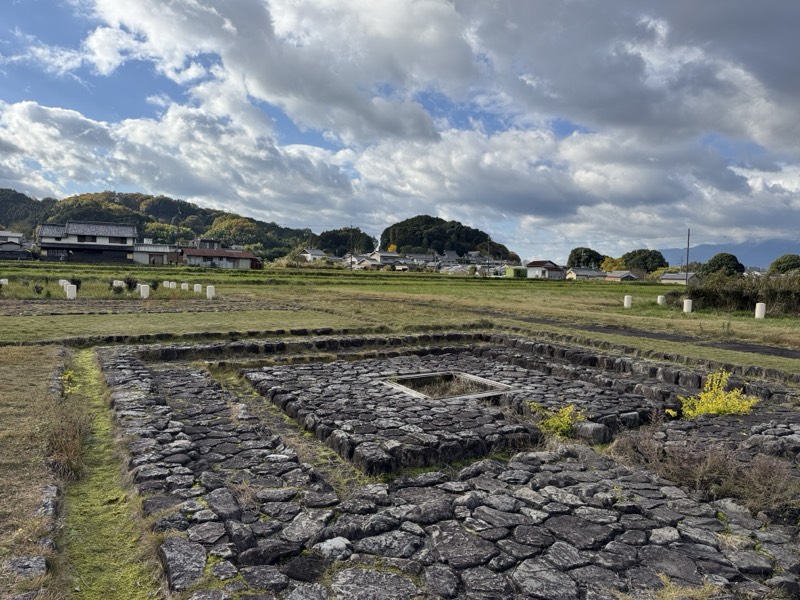 Prince Yamashiro no Ōe: Why Was Prince Shōtoku's Son Destroyed?In 643, Prince Yamashiro no Ōe, son of Prince Shōtoku, was hunted down by Soga no Iruka's soldiers and took…Mononobe no Moriya: The Teibi Rebellion, Read from the Losing SideIn 587, Mononobe no Moriya was attacked by Soga no Umako's army and killed at his home base in Kawachi. He is…