
Published
The whole of Asuka Village is protected by law. Buyeo in Korea is also covered by a special law as an ancient capital. How do you balance protecting the sites with the lives of the people who live on them? Along with what was said at the Asuka Village Open-Air Museum Forum, we compare the two countries' laws.
Asuka Village has a law that applies to it alone in all of Japan: the Act on Special Measures for the Preservation of Historic Natural Features and Improvement of the Living Environment in Asuka Village, promulgated and put into force in 1980 and known as the "Asuka Act."
The entire village is designated for the preservation of its historic landscape, divided into Class 1 and Class 2 zones. Class 1 covers the areas around Ishibutai Kofun, Takamatsuzuka Kofun, Okadera, the Asuka Palace Site and Amakashi Hill, where changes to the land are strictly limited. Class 2 covers the rest, where major changes are restrained.

Before that, Japan already had the 1966 Act on Special Measures for the Preservation of Historic Natural Features in Ancient Cities, the "Ancient Capitals Act," covering Kyoto, Nara, Kamakura and others. Asuka Village is also covered by it.
Because that was not enough to protect the village as a whole, the Asuka Act was made separately. As "improvement of the living environment" in its name suggests, its second pillar, alongside preservation, is supporting residents' lives by building roads, sewers and other services.
The story goes that the push for the law began when an Osaka acupuncturist's plea to save the sites reached Prime Minister Eisaku Satō through one of his patients, Kōnosuke Matsushita.
Korea enacted a special act on the preservation of ancient capitals in 2004. It covers four places: Gyeongju, capital of Silla, and Gongju, Buyeo and Iksan, capitals of Baekje. In 2012 the core of each was designated as "special preservation districts" and "historic and cultural environment districts." The word "promotion" was later added to the act's name, setting the goal of developing the towns, not just preserving them.
According to Buyeo County, it has used this act to carry out projects aimed at preserving the historic environment while improving residents' living conditions and revitalizing the local economy. And in May 2026, a new special act to protect the royal-capital sites of Gongju, Buyeo and Iksan together passed the National Assembly.
Both laws protect sites as areas rather than points. They try to keep not only tombs and temple sites but also the surrounding fields, houses and ridgelines, the whole landscape in which an old capital can still be felt. And both assume that people will go on living there.
In the forum's discussion, the mayor of Asuka Village said frankly that until now, residents had mostly felt the many regulations to be a burden. There are rules for rebuilding a house and for using land.
With World Heritage inscription, he said, residents are beginning to feel that the rules are not only a burden but also lead to local pride and liveliness. Buyeo County's presentation likewise named residents' growing pride as the greatest result of inscription.

The law has protected more than the sites. Asuka's rice terraces and village scenes also survive because development has been held back.
The mayor also said the village is holding meetings to discuss how residents and the World Heritage site can live together. A law draws the minimum line for protection. How to live on top of the sites, beyond that line, is the question Asuka and Buyeo both face.
RELATED SPOT
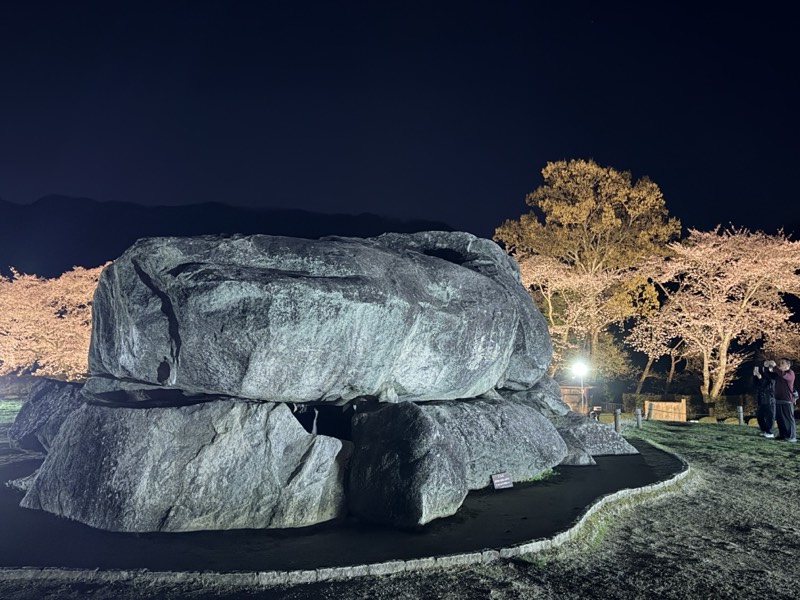
石舞台古墳
One of the largest stone burial chambers in Japan, its giant boulders left bare to the sky. The image most people picture when they think of Asuka.
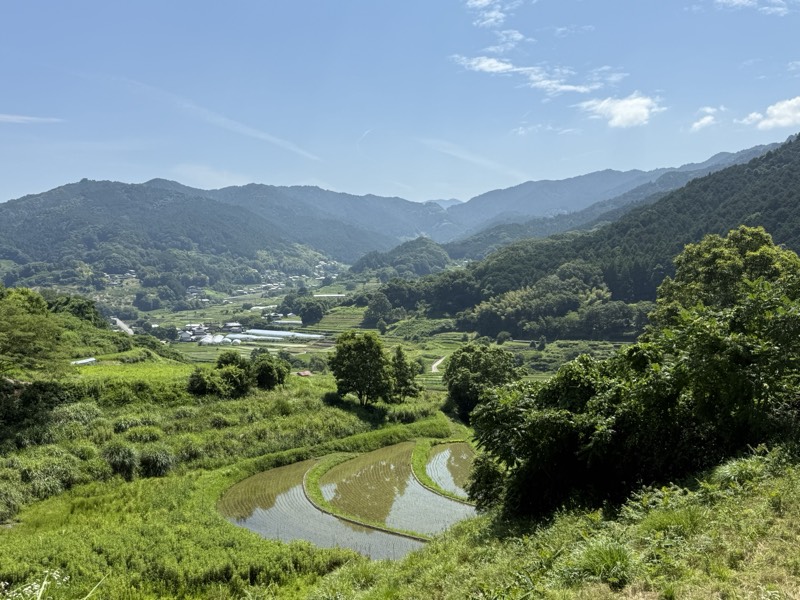
稲渕の棚田
One of Japan's 100 finest terraced rice fields. In autumn, giant scarecrows appear.
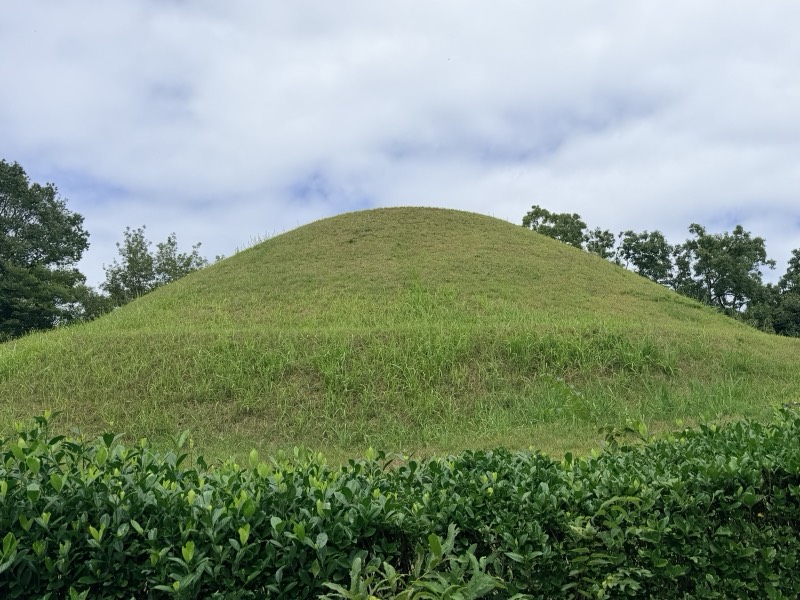
高松塚古墳
A round burial mound where brilliantly coloured paintings of court ladies were found: the defining archaeological discovery of post-war Japan.
RELATED COLUMN
Asuka and Buyeo, 54 Years On: From Sister Cities to a Three-Way Partnership with DazaifuAsuka Village and Buyeo County in Korea became sister cities in 1972. Fifty-four years later, the head of…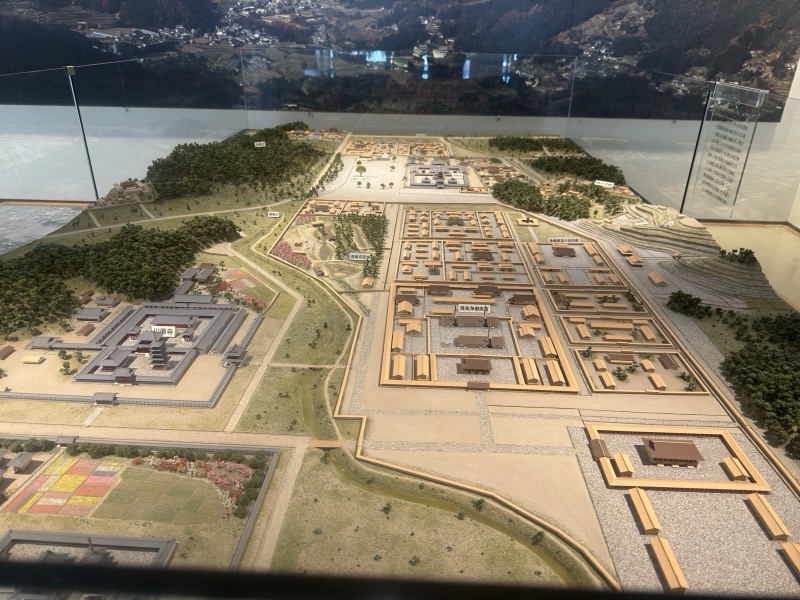 What Buyeo Did After Inscription: A Decade of Baekje World Heritage"Asuka-Fujiwara" has been World Heritage for only four months. What has Buyeo County done since the Baekje…
 Remembered, Not Timed: Running the Asuka Half Marathon Past Ruins and Rice TerracesEvery March, 3,000 runners race past the historic sites and terraced rice fields of Asuka Village. Starting…