
Published
Tang-dynasty Chang'an was enclosed by high walls. Baekje's capital at Buyeo had its Naseong, an outer wall. Yet no wall enclosing the capital has been found at Asuka or Fujiwara-kyō. The difference came up in the panel discussion at the Asuka Village Open-Air Museum Forum.
In the panel discussion at the 30th Asuka Village Open-Air Museum Forum on November 21, 2026, the mayor of Asuka Village posed a question. The Tang capital Chang'an enclosed its whole vast area with high walls, to fight off attack and protect everyone in the city. What about Asuka and Fujiwara-kyō?
Asuka has no clear boundary at all. Fujiwara-kyō was a planned city with a street grid, yet it was not walled. Japan, at the far east of the continent, had a different history of war and of natural disaster. Wasn't that why its capitals took a different shape? That was his question.

Tang Chang'an measured about 9.7 kilometers east to west and 8.6 kilometers north to south, all of it enclosed by rammed-earth walls. Inside, the grid of streets and wards was laid out. For a Chinese capital, the wall was part of the city itself.
For Fujiwara-kyō, the capital moved there in 694, the leading view is that it covered about 5 kilometers square. Even so, no wall enclosing the whole capital has been found. Only the palace was walled.
Baekje's capital Sabi (present-day Buyeo) has the Naseong. It is an earth-and-stone wall about 6.3 kilometers long that links ridges and hills around the north and east of the city. To the west and south flows the Geumgang (Baengmagang) River, which marked the city's outer edge.
In the discussion, the Korean presenter asked the audience not to be misled by the character for "castle" in Naseong. In English it is called not a fortress but an "outer city wall," a wall marking the outside of the capital. The Naseong was a line between inside and outside the city.
To the north of the city is Busosanseong, on the hill directly behind the Gwanbuk-ri site where the royal palace is thought to have stood. It guarded the palace from behind and served as a refuge in emergencies. A palace on the plain, a fortress on the hill behind, and a wall around the outside: Sabi was built from this combination.
The mayor also suggested that the peninsula's kingdoms defended themselves less with walled capitals than with mountain fortresses that used the terrain, and that when they could no longer hold out, they moved the capital. Baekje did move, from Hanseong to Ungjin and from Ungjin to Sabi. Sabi was the capital for about 120 years, until the kingdom fell.
The Korean presenter said the Naseong form did not reach Asuka. Where it did go, he said, was Dazaifu in Kyushu.
In 663, Japan sent troops to the peninsula to restore Baekje and was badly defeated by Tang and Silla forces at Baekgang (Hakusukinoe). According to the Nihon Shoki, the next year, 664, a great embankment was built in Tsukushi to hold water and named Mizuki, the "water fortress." In 665, the exiled Baekje nobles Eokrye Bongnyu and Sabi Bokbu were sent to build the fortresses of Ōno and Ki.
Mizuki, a long earthen rampart blocking the plain, and Ōno Fortress on the mountain behind. The mayor of Dazaifu was in the audience, and the discussion turned to the idea that this defensive layout might be the same as Buyeo's.
The boundary of the Asuka capital is still unclear. Scholars have also disagreed over the extent of Fujiwara-kyō (see "How Large Was Fujiwara-kyō?"). Without a wall, the extent of a capital can only be confirmed bit by bit, from traces of streets and house lots.
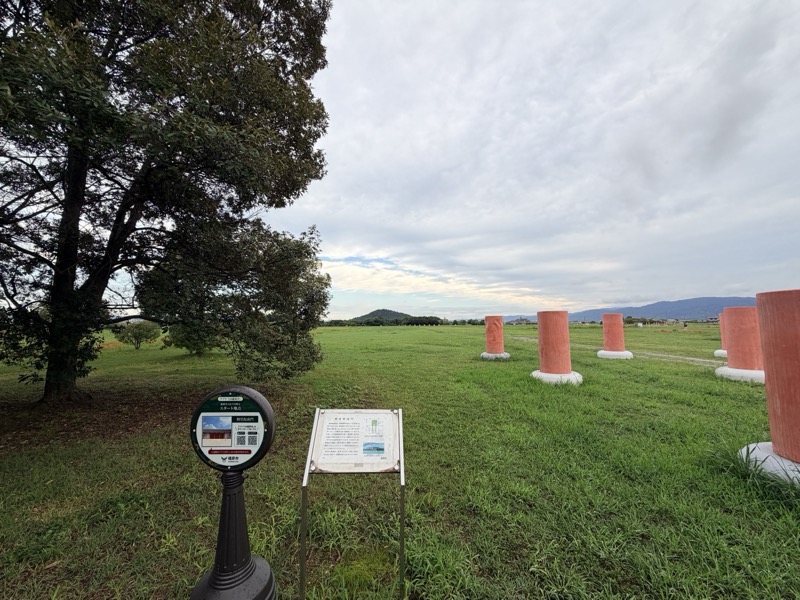
Stand at the Fujiwara Palace Site and you can see a wide plain ringed by the Three Mountains of Yamato. In place of a wall, it is these three mountains that surround the capital.
RELATED SPOT
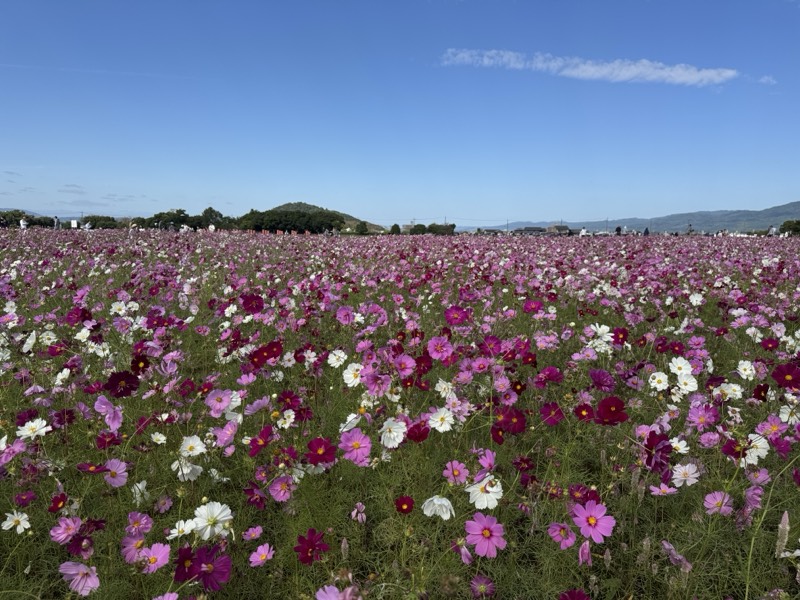
藤原宮跡
The heart of Japan's first full-scale planned capital, also known for its seasonal flower fields.
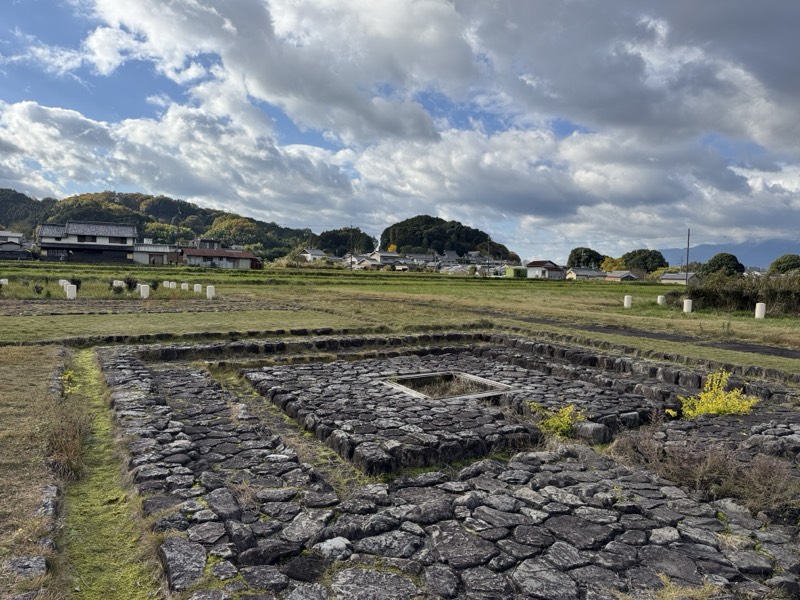
飛鳥宮跡(伝 飛鳥板蓋宮跡)
The political heart of Asuka, where several palaces were built one on top of another.
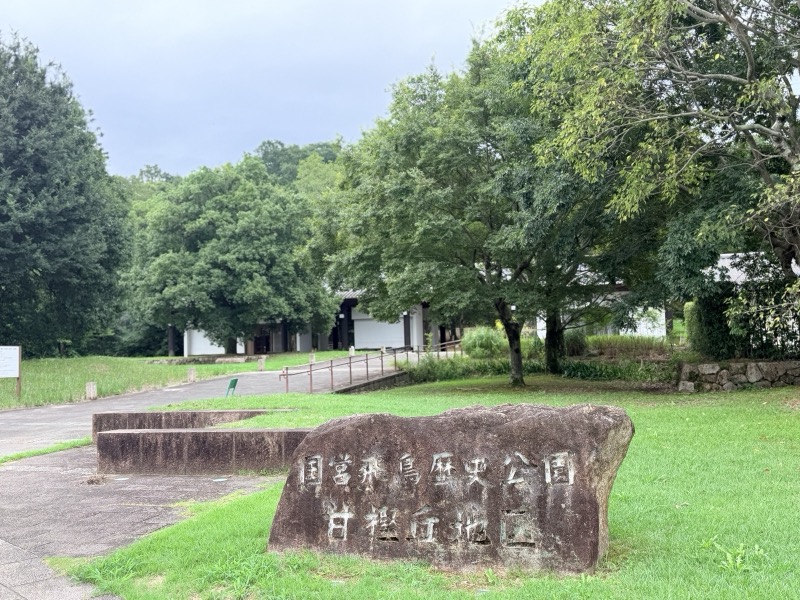
甘樫丘
A hill with views over all of Asuka, said to have been the site of the Soga clan's residences.
RELATED COLUMN
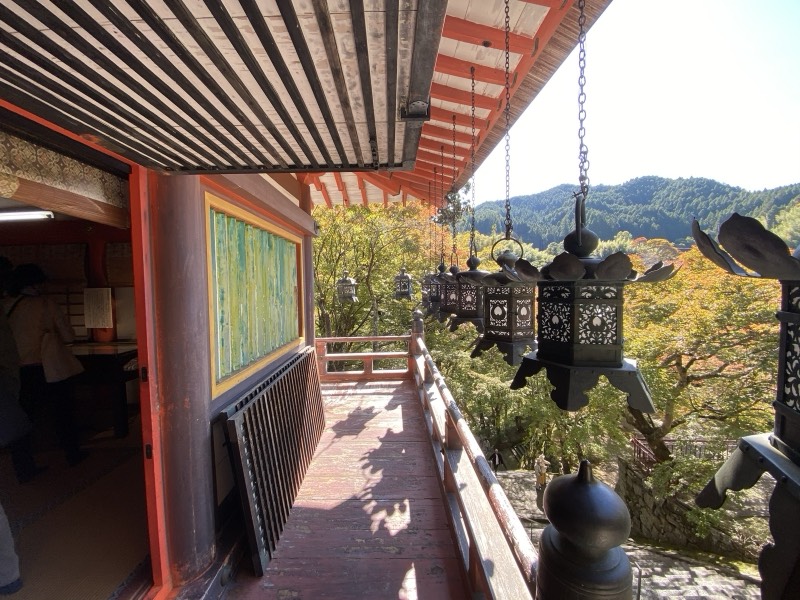 Was Futatsuki-no-miya a Fortress? Unrest After the Isshi Incident and the "Kan" on the MountainFutatsuki-no-miya, which Empress Saimei built on the summit of Tōnomine, has been called a palace of the…
 The City Came Before the Palace: Eighteen Years of Building Fujiwara-kyō in the Nihon Shoki and the GroundThe court moved to Fujiwara-kyō in 694, but work on the capital had begun eighteen years earlier. It stopped…
 Whose Successor Was Empress Jitō? Tenmu's Empress, and Tenchi's DaughterAs the empress who completed the ritsuryō state (a state governed by law codes), she is usually spoken of in…