
Home/Columns/The City Came Before the Palace: Eighteen Years of Building Fujiwara-kyō in the Nihon Shoki and the Ground
Published
The court moved to Fujiwara-kyō in 694, but work on the capital had begun eighteen years earlier. It stopped twice, and each time the plan was reworked. What is more, the site of the palace was decided only after work on the streets had begun.

In the twelfth month of the eighth year of Empress Jitō (694), the empress moved from the Asuka Kiyomihara Palace to Fujiwara Palace. It was the beginning of Fujiwara-kyō, Japan's first full-scale capital city.
But 694 was not when construction began. Following the Nihon Shoki, the work started eighteen years earlier and stopped at least twice.
An entry for the fifth year of Emperor Tenmu (676) records a plan to build a capital at the "new city" (niiki). Within the planned area, fields both public and private were barred from cultivation and all went to waste. Yet in the end, the entry goes on, the capital was not built.
"Niiki" seems to have been not a place name but a word for a new capital to be built. The site is thought to be the flat land north-west of Asuka, stretching west and north of Mt. Kagu.
Asuka is a long, narrow valley between mountains and hills. From Empress Suiko's Toyura Palace to Emperor Tenmu's Asuka Kiyomihara Palace, palaces had been rebuilt almost entirely within this valley.
In the late seventh century, however, the number of officials grew, and the government and ceremonies held at the palace grew larger. In the valley there was no room to enlarge the palace or to house officials nearby.
On the plain that opened to the north beyond Mt. Kagu, a large palace could be built with a grid of streets around it. The making of the capital began with stepping out of the Asuka valley.
In the eleventh year of Emperor Tenmu (682), the emperor sent Prince Mino and others to the new city to survey the land, intending once again to build a capital. Work resumed.
Tenmu was not looking only at Fujiwara during these years. In 683 he issued an edict: "Capitals and palaces should not be in one place only; we must build two or three. First, we will make Naniwa a capital." In the second month of 684 he sent envoys around the Kinai region to look for land suited to a capital, and sent others to survey the terrain of Shinano.
Within this plan for multiple capitals, he settled on a new base on the plain north of Asuka.
Then, in the third month of the thirteenth year of Emperor Tenmu (684), the emperor toured the capital and fixed "the site of the palace."
Read plainly, work on the city began first, and the site of the palace was decided afterwards. It was not a matter of building the palace first and then spreading the town around it.
Excavation has confirmed this order. Beneath the Daigokuden and other buildings of Fujiwara Palace, roads built to the same standard as the city streets have been found. Roads were first laid across the palace site too, then buried before the palace buildings went up. This street grid laid before the palace is called the "preceding grid" (senkō jōbō).
Under the palace, the remains of a canal thought to have carried building materials were also found, along with wooden tablets bearing dates from the last years of Emperor Tenmu's reign.

Moto-Yakushi-ji, which Emperor Tenmu began in 680, is also aligned with the city blocks. By then, the lines of the street grid seem already to have been drawn.
In the first year of Shuchō (686), Emperor Tenmu died, and major work stopped once more.
Empress Jitō, who succeeded him, took up her husband's plan. In the tenth month of the fourth year of her reign (690), Prince Takechi inspected the palace site at Fujiwara, and in the twelfth month the empress went there herself.
In the tenth month of the fifth year of Empress Jitō (691), envoys were sent to perform rites to calm the land of "Aramashi no Miyako" (Shinyaku-kyō), the name the Nihon Shoki uses for Fujiwara-kyō. "Fujiwara-kyō" is a name given later by scholars.
These rites calmed the gods of the land and prayed for the safety of the work, much like a groundbreaking ceremony today. They were performed for the whole city, not just the palace.
In the twelfth month of the same year, house plots were allotted to officials. The empress decided who would receive land where, and how much. The city blocks must by then have been far enough along to hand out plots.
The palace site itself was ritually calmed the following year, 692, and the move came in 694.
Throughout these years Empress Jitō went to Fujiwara again and again to see how the work was going, giving shape with her own eyes to the capital her husband had begun.
Construction at Fujiwara-kyō did not end with the move in 694. Building of facilities around the palace and of temples continued.
On New Year's Day of the first year of Taihō (701), the sovereign appeared in the completed Daigokuden and received New Year greetings from officials and foreign envoys. The Shoku Nihongi records that "the ceremonial of civilisation was now complete": at last the state had a stage fit for its rites. Twenty-five years had passed since work began.
Then, in 710, the capital moved to Heijō-kyō. Fujiwara-kyō served as the capital for sixteen years: eighteen years to build, sixteen years in use.
Eighteen years from the start of work in 676. Each halt brought a review of the plan, and the positions of roads and the extent of the city are thought to have changed.
Fujiwara-kyō may not have been a capital built to a single finished plan drawn at the outset. The roads sleeping beneath Fujiwara Palace show it partway through.
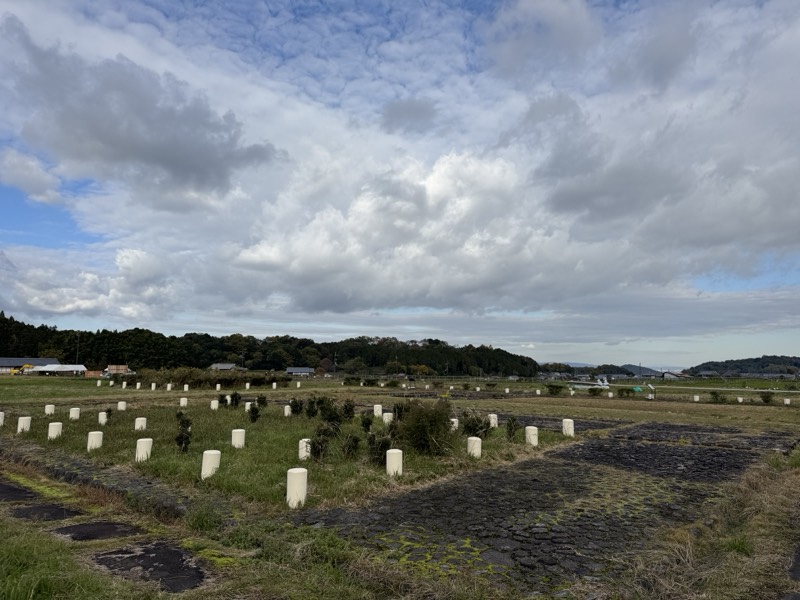
At the Fujiwara Palace site you can see the platform of the Daigokuden and the positions of the gates marked by vermilion pillars. Walk south-west to the Moto-Yakushi-ji site and you get a feel for how a temple sat within the city blocks.
RELATED SPOT
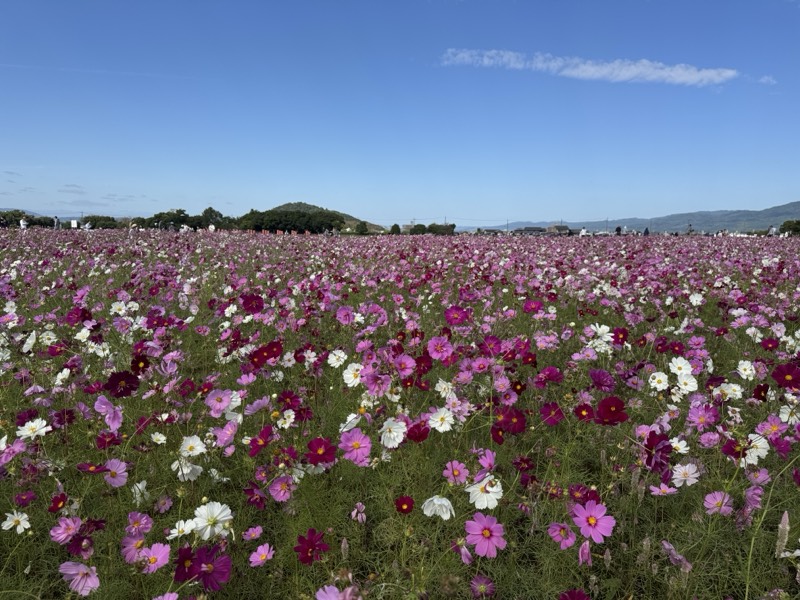
藤原宮跡
The heart of Japan's first full-scale planned capital, also known for its seasonal flower fields.
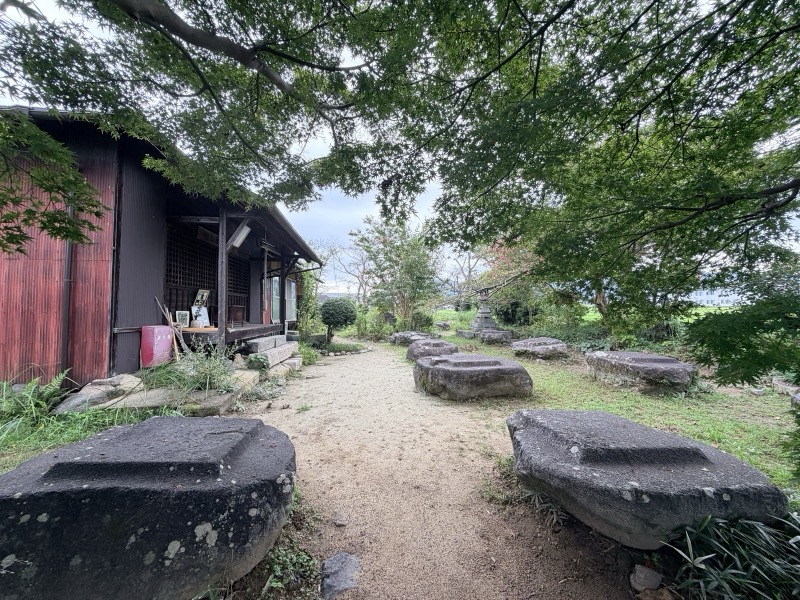
本薬師寺跡
The site of a state temple with twin pagodas, where foundation stones remain in their original positions.
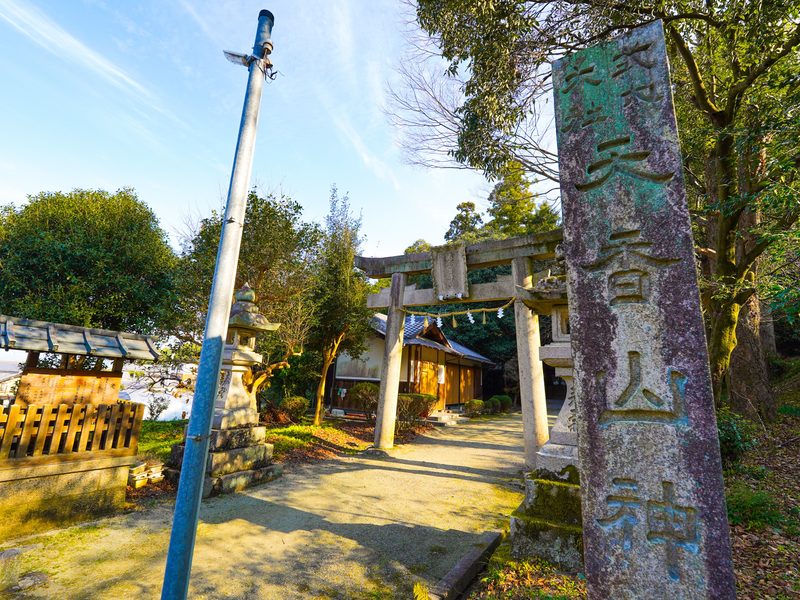
天香山神社
An ancient shrine at the northern foot of Mount Kagu, one of the Three Mountains of Yamato. It honours a god of divination, and brings you close to the mountain of Empress Jitō's poem of white robes drying.
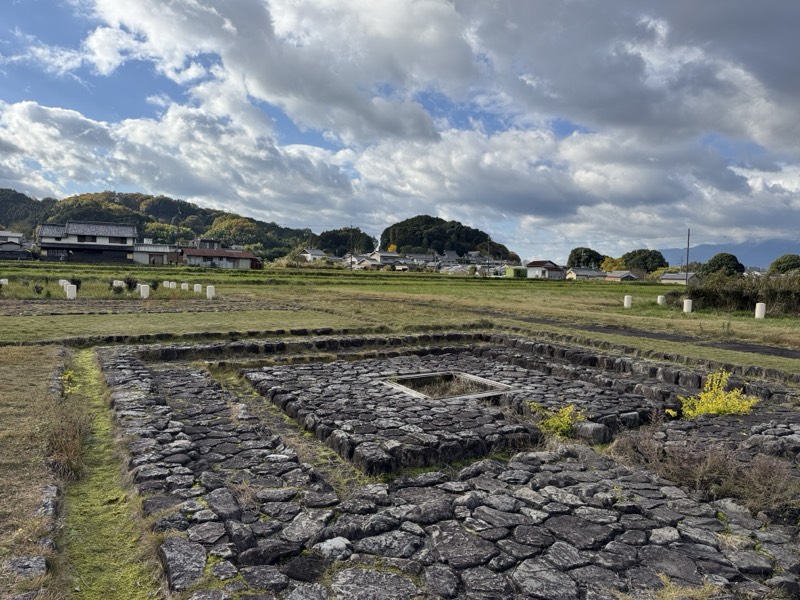
飛鳥宮跡(伝 飛鳥板蓋宮跡)
The political heart of Asuka, where several palaces were built one on top of another.
RELATED COLUMN
 Where You Lived Showed Your Rank: House Plots and the Grid of Fujiwara-kyōIn 691 the empress handed out house plots in the capital to officials: four chō for the Minister of the…
 After the Jinshin War: What Emperor Tenmu RebuiltReturning to Asuka after winning the Jinshin War, Emperor Tenmu appointed no ministers and ran the country…
 Whose Successor Was Empress Jitō? Tenmu's Empress, and Tenchi's DaughterAs the empress who completed the ritsuryō state (a state governed by law codes), she is usually spoken of in…