
Published
In 691 the empress handed out house plots in the capital to officials: four chō for the Minister of the Right, and for those of low rank, plots sized by the number in their household. Who got land where, and how much? The grid of city blocks was also a way of drawing rank on the ground.
The Nihon Shoki, for the twelfth month of the fifth year of Empress Jitō (691), records the following edict.
To the Minister of the Right, house land of four chō. To those of rank Jikikō-ni and above, two chō; to Jikidai-san and below, one chō. From the rank of Gon down to those without rank, according to the size of the household: one chō for an upper household, half a chō for a middle household, a quarter chō for a lower household. Princes likewise.
The chō was a unit of land in the grid; at Fujiwara-kyō one chō was about 130 metres square. The Minister of the Right's four chō was four of these. The Minister of the Right at the time was Tajihi no Shima.
This was three years before the move. The city blocks were already far enough along to hand out plots.
Jikikō-ni and Jikidai-san are names from the system of forty-eight court ranks set in 685. Ranks for princes were separated from those for subjects, and subjects were divided into six grades, Shō, Jiki, Gon, Mu, Tsui and Shin, each finely subdivided. The Jiki ranks roughly matched the later fourth and fifth ranks: the men at the centre of the court. Gon and below were the lower officials who did the practical work.
Upper, middle and lower households were categories based on household size. A large family could receive a big plot even at low rank. The basic rule was size by rank, but the realities of daily life were taken into account.
One chō, about 130 metres square, is about 1.7 hectares, roughly a third of the whole Tokyo Dome building including its field. The Minister of the Right's four chō would be about one and a half Tokyo Domes.
Even the smallest plot, a quarter chō for a lower household, was about 65 metres square, over 4,000 square metres: very large by the standards of a modern house. Within a residence there would have been the main house along with storehouses and servants' quarters, and fields are thought to have been worked there too.
The key point of the allotment of house plots (takuchi hankyū) is that officials did not live wherever they liked, but on land the sovereign assigned.
The larger the plot, the higher the rank. Decide who lives where and how much land each receives, and the order of the court and each person's distance from the sovereign are drawn directly on the ground.

There were other reasons to have people live in the capital.
The number of officials at the seventh-century court kept growing. In 636, under Emperor Jomei, a proposal was made that, since officials had grown lax in attendance, they should come to court at dawn (the start of the hour of the hare) and leave before noon (after the hour of the snake). For officials to reach the palace early every morning, it was best to have them live nearby.
Another reason was to cut powerful clans off from their home bases. Clans that lived on their own lands with their own people were hard for the sovereign to handle. By settling them in the capital as officials who attended the palace, the court drew them away from their local power.
A grid divided by straight streets suits this kind of allotment. Because the blocks are uniform, land can be assigned by number: so many chō. If the population grows, blocks can be added on the outside.
At a lecture we attended on Fujiwara-kyō, the speaker suggested that its grid was chosen not to copy the shape of a particular Chinese capital, but because it was convenient for settling people and allotting land.
In an age without aircraft, no one ever saw the outline of a city several kilometres across. What mattered to the people who lived there, the speaker pointed out, was not the shape of the capital but which block they lived in and how much land they had been given.
At Fujiwara-kyō the palace stood almost at the centre of the capital. Around it lay a wide open space, and it was separated from the city by its great wall and the moats inside and outside it. At the heart of the capital, it still kept its distance from the town.
Beyond lay the house plots of princes and officials, sized by rank. The capital itself could be called a map, drawn on the ground, of an order with the sovereign at its summit.
Excavations at Fujiwara-kyō have also found the remains of large residences covering a chō or more near the palace, with big buildings lined up within the grounds; they are thought to have belonged to people of high rank.
The capital was a place to live, and also a special district governed separately from the provinces and districts.
At Heijō-kyō the city was divided into the Left Capital and the Right Capital, each with its own office, the Sakyōshiki and Ukyōshiki, which managed the residents' registers, land and public order. This system is thought to have been put in place around 701, when the Taihō Code was completed, in the Fujiwara-kyō period.
People who lived in the capital were registered as "kyōko," separately from people in the provinces. Knowing who lived where, block by block: the grid also served as a kind of ledger.
This system was carried over to Heijō-kyō, where large residences covering four chō have been found close to the palace. The residence of Prince Nagaya is one of them.
Beneath the fields around the Fujiwara Palace site lie the plots of one chō or half a chō that were once allotted to someone.
RELATED SPOT
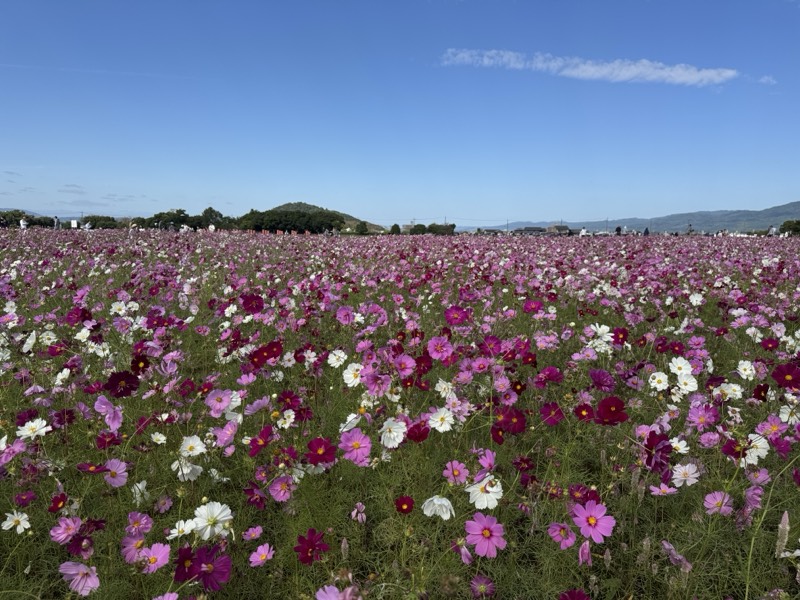
藤原宮跡
The heart of Japan's first full-scale planned capital, also known for its seasonal flower fields.
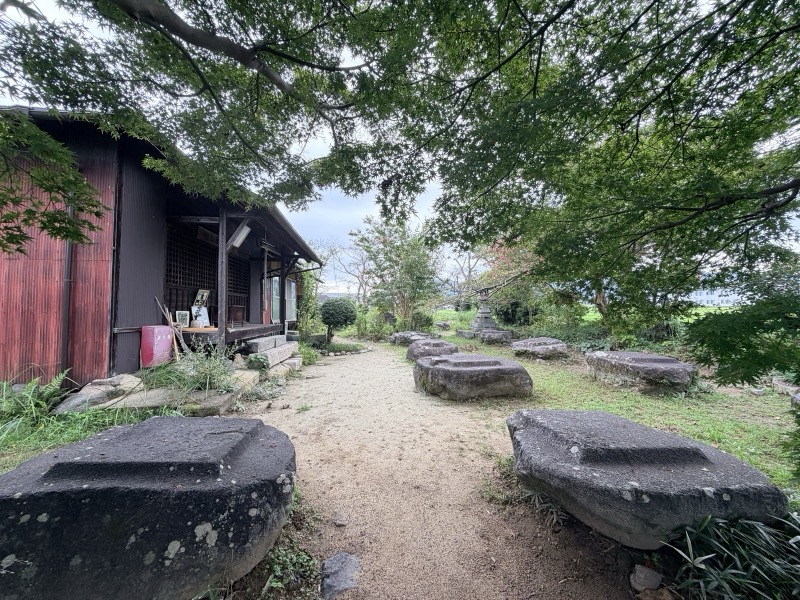
本薬師寺跡
The site of a state temple with twin pagodas, where foundation stones remain in their original positions.
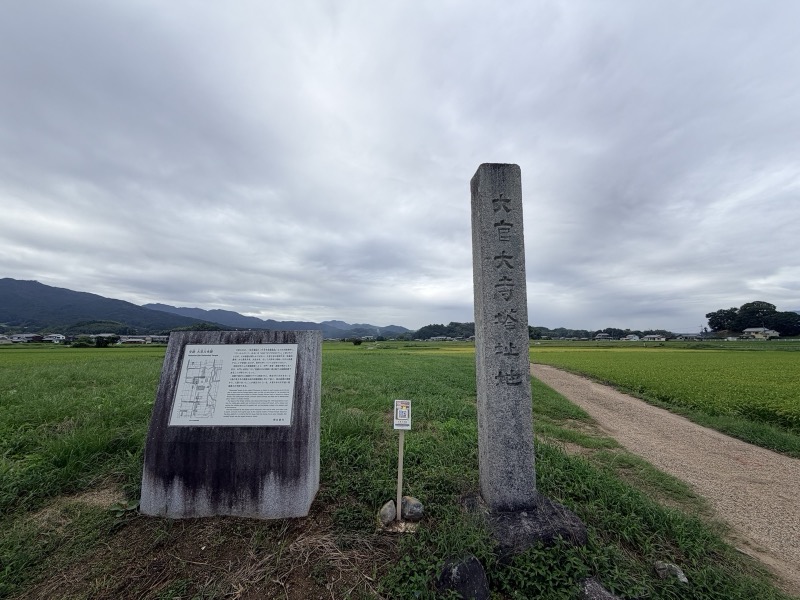
大官大寺跡
The site of the largest state temple of Asuka-Fujiwara, once crowned by a nine-storey pagoda.
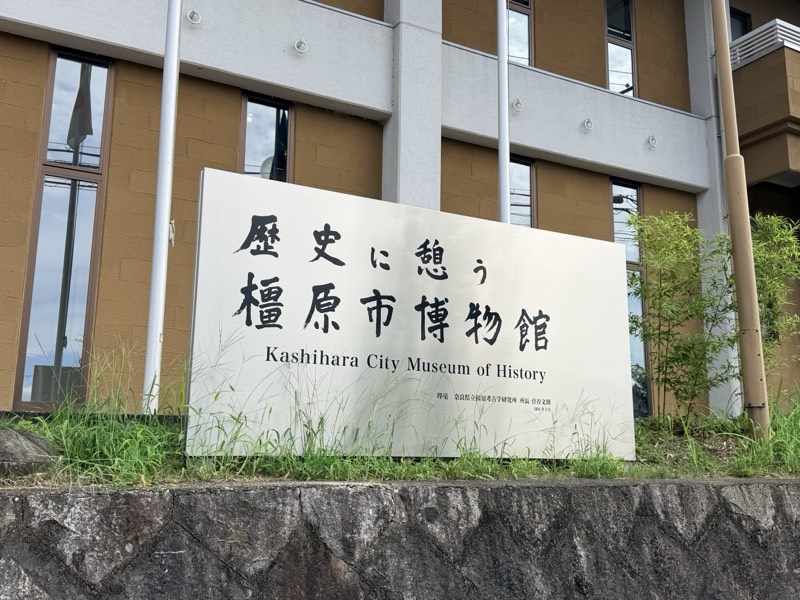
歴史に憩う橿原市博物館
A hands-on history museum right next to the Niizawa Senzuka kofun cluster.
RELATED COLUMN
 The City Came Before the Palace: Eighteen Years of Building Fujiwara-kyō in the Nihon Shoki and the GroundThe court moved to Fujiwara-kyō in 694, but work on the capital had begun eighteen years earlier. It stopped…Was Fujiwara-kyō a Confucian Capital? The City Without an Ancestral Temple or Altar of the LandFujiwara-kyō is widely thought to be a copy of the ideal capital described in the Confucian classic the Rites…
 After the Jinshin War: What Emperor Tenmu RebuiltReturning to Asuka after winning the Jinshin War, Emperor Tenmu appointed no ministers and ran the country…