
Home/Columns/Was Fujiwara-kyō a Confucian Capital? The City Without an Ancestral Temple or Altar of the Land
Published
Fujiwara-kyō is widely thought to be a copy of the ideal capital described in the Confucian classic the Rites of Zhou. Yet the facilities that classic valued most are nowhere to be found there. Here we set the standard view beside a view that challenges it.

Decades of excavation have led to the view that Fujiwara-kyō, the capital from 694, was a square about 5.3 kilometres on each side, with Fujiwara Palace at its centre.
The leading explanation for this shape is the Rites of Zhou (Shūrai) theory. The Kaogongji section of the Rites of Zhou, a Confucian classic of China, describes how a king's capital should be built.
A square nine li on each side, with three gates in each wall. Nine main streets running north–south and nine running east–west. And the royal palace at the centre. Reconstruction maps of Fujiwara-kyō look very much like this description.
The circumstances of the time support the theory too. After the Battle of Baekgang in 663, Japan sent no envoys to Tang China for more than thirty years. If you were building a new capital when no one had seen the real Chang'an, perhaps you would rely on the ideal in a book. Arguments like this made the theory the accepted view.
Our column "The Original Didn't Follow the Classics: Fujiwara-kyō Seen from Chang'an" is also written along the lines of this theory.
But the Rites of Zhou does not stop there. It continues: "ancestors on the left, the land on the right; court in front, market behind." To the left (east) of the palace stands the ancestral temple (sōbyō), to the right (west) the altar of the land and grain (shashoku). The court lies in front of the palace and the market behind it.
For Chinese dynasties, the ancestral temple and the altar of the land stood for the state itself. Dynasties changed and capitals changed shape, but these two were always built. In Beijing's Forbidden City, the Imperial Ancestral Temple still stands east of the main gate, and the Altar of Land and Grain to the west.
At Fujiwara-kyō, however, neither has been found.
At the ancestral temple the emperor himself made offerings to his forebears. At the altar of the land he prayed for the land of the realm and its harvest of the five grains. Honouring the house inherited from one's ancestors and the land one ruled: that was what it meant to be king.
Japan's court had state rituals too, but they took a different form.
Under the Taihō Code of 701, the Department of Divinities (Jingikan), responsible for rites to the gods, was set up alongside the Council of State, which ran the government. At the Toshigoi festival in spring, held to pray for the harvest, offerings were sent to shrines across the country. The imperial ancestors were honoured not at an ancestral temple inside the capital, but far away at the Ise Shrine.
From the Rites of Zhou side, one could argue that Japan borrowed only the shape of the capital from the classic and kept its own way of worship. But if so, the sense in which Fujiwara-kyō "realised the Confucian ideal capital" becomes rather narrow.
At a lecture we attended on Fujiwara-kyō, the speaker, who studies Japanese and Chinese capitals comparatively, raised exactly this question.
If this was a capital built to the Confucian classic, why are its most important facilities missing? Can we call it a Confucian capital simply because its plan, a square with the palace in the middle, looks similar?
According to the speaker, if you check the elements of the classic one by one, Tang Chang'an, which put its palace at the northern edge, actually matches more of them. Chang'an's southern wall, for example, ran about 10 kilometres east to west, yet had only three gates. That can be read as matching the classic's "three gates on each side" even at the cost of convenience.
Following a classic is not a matter of all or nothing. In real city-building, you keep the points you cannot give up and compromise on the rest for practicality. In China, the points that could not be given up were the ancestral temple and the altar of the land.
The speaker also pointed to a difference in the nature of kingship.
In Confucian thought, Heaven entrusts rule to a person of virtue. The emperor governs the world on Heaven's behalf, and if he loses his virtue, another house replaces his. Building the capital by the classic was a way to show that one was that rightful king.
Japan's emperors were placed as descendants of the gods. Their right rested not on a mandate from Heaven but on their bloodline itself.
The reigns of Emperor Tenmu and Empress Jitō were when that idea was given form. The system and rites of the Ise Shrine were organised, compilation of the histories that led to the Kojiki and Nihon Shoki began, and the title "Tennō" and the country name "Nippon" are said to have been fixed around this time.
In the speaker's view, it is hard to believe that, at such a time, the court made the Confucian ideal of kingship the foundation of the state.
Was there no Chinese influence, then? The speaker did not say that.
Roofing the main palace buildings with tiles and setting them on foundation stones; raising vermilion pillars; naming the palace's main hall the Daigokuden; dividing officials into finely graded ranks and fixing the size of their house plots by rank. None of these would have come about without an eye on Tang China and Silla.
What was adopted, the speaker concluded, was not the shape of the capital but systems: ways of making royal power visible, and ways of gathering many officials in one place to govern. The grid of streets, too, was chosen not to copy a diagram from the classic but because it was convenient for settling people and allotting land.
This view is not widely accepted. The speaker acknowledged that this theory has not gained broad support. The Rites of Zhou theory remains the leading one.
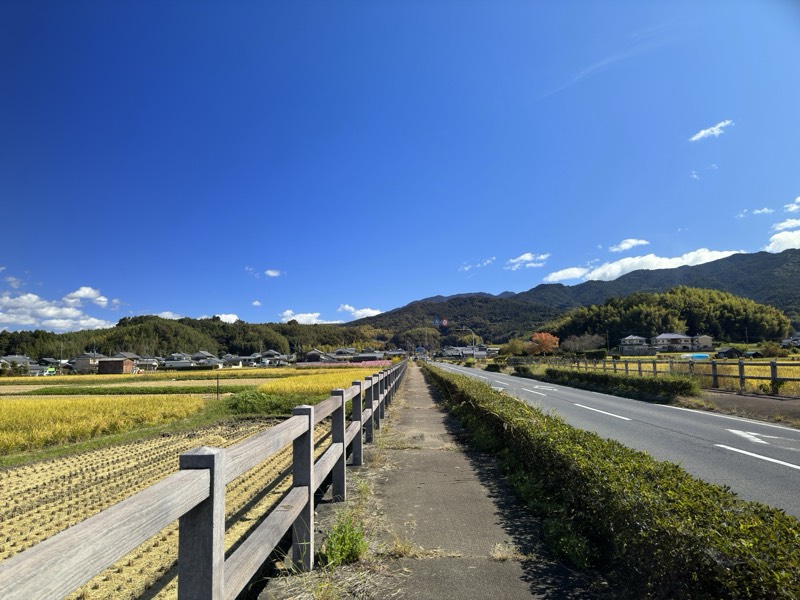
Standing at the Fujiwara Palace site, you are surrounded by flat fields. In a Chinese capital, an ancestral temple would have stood just east of the palace and an altar of the land just west.
That nothing was built there may tell us what the builders of this capital chose, and what they chose not to.
RELATED SPOT
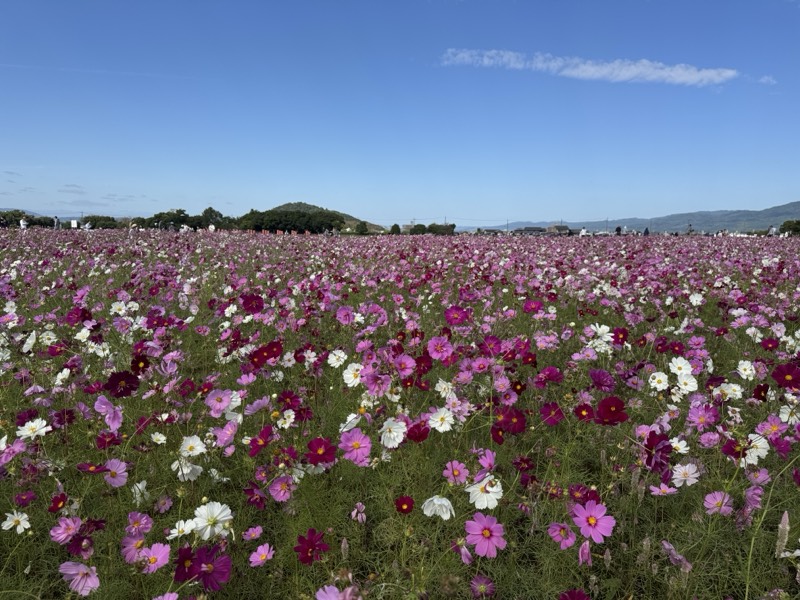
藤原宮跡
The heart of Japan's first full-scale planned capital, also known for its seasonal flower fields.
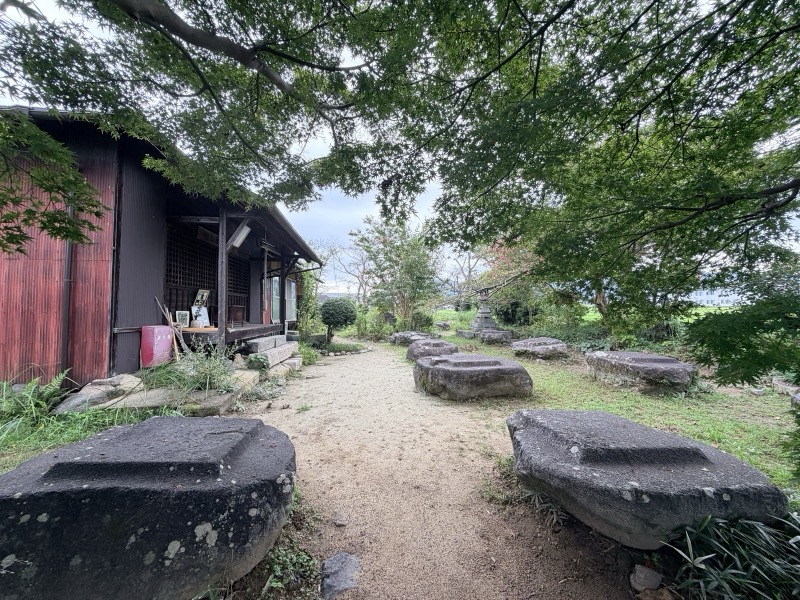
本薬師寺跡
The site of a state temple with twin pagodas, where foundation stones remain in their original positions.
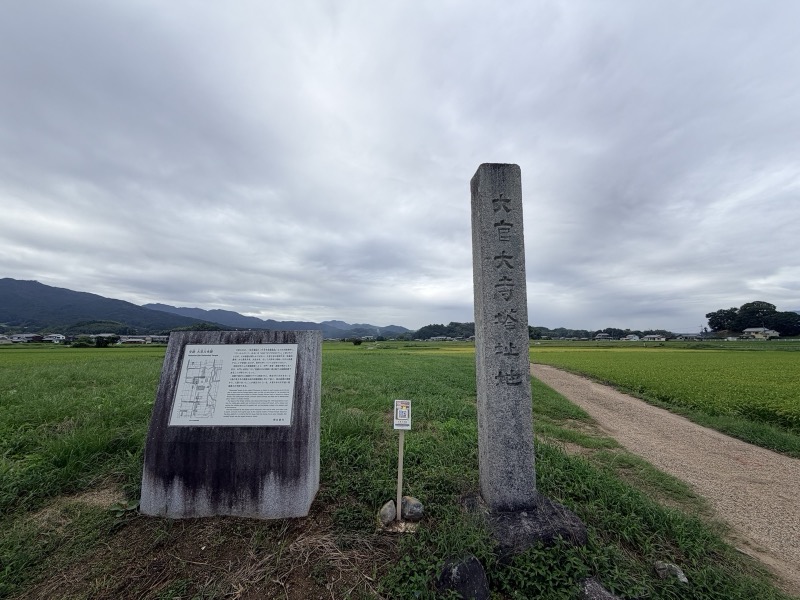
大官大寺跡
The site of the largest state temple of Asuka-Fujiwara, once crowned by a nine-storey pagoda.
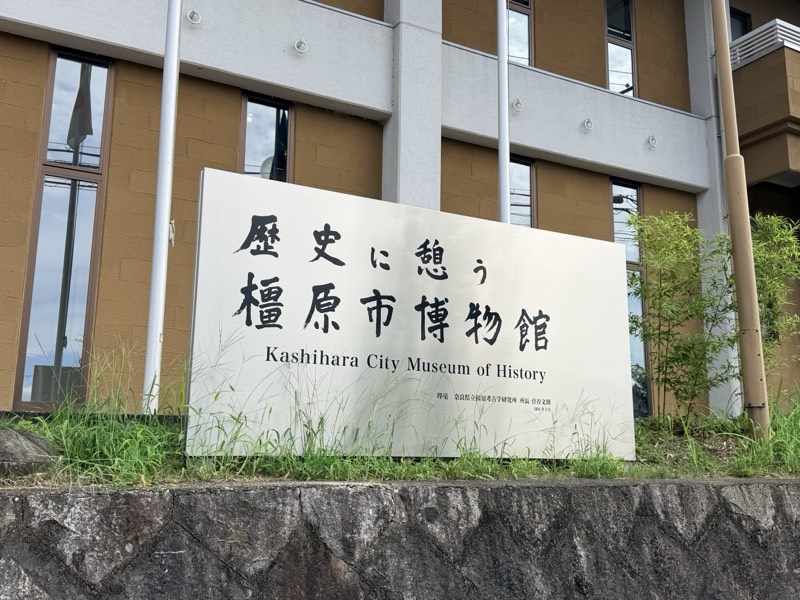
歴史に憩う橿原市博物館
A hands-on history museum right next to the Niizawa Senzuka kofun cluster.
RELATED COLUMN
Why Was Fujiwara-kyō Abandoned After Only Sixteen Years?Japan's first full-scale planned capital was abandoned after just sixteen years. Poor drainage, the position… Where You Lived Showed Your Rank: House Plots and the Grid of Fujiwara-kyōIn 691 the empress handed out house plots in the capital to officials: four chō for the Minister of the…
 How Big Was Fujiwara-kyō? From Kishi's Rectangle to "Greater Fujiwara-kyō"The size of Fujiwara-kyō is still not settled. From a rectangle framed by ancient roads to a square 5.3…