
Published
For a long time, glass was something that came from across the sea. At the end of the Asuka period, the Asukaike workshop in Asuka Village began to make it from raw materials, the first primary glass production in Japan. Where did the skill come from, and what was the glass used for? We follow the excavated finds.

Glass reached Japan around the 3rd century BCE, in the Yayoi period. For a long time after that, glass was either obtained ready-made from abroad, or imported glass was melted down and reshaped into beads. Primary production, making glass itself from stone and minerals, did not take place in Japan.
From around the start of the 7th century, glass rich in lead began to circulate again. Unlike the lead glass of the Yayoi period, it contains no barium, and its raw materials came from a different source. Analysis of lead isotope ratios, which differ from one source to another, suggests it was made in Baekje on the Korean Peninsula.
At the Wanggung-ri site in Iksan, where Baekje had its capital, raw materials for glass, tools such as crucibles, lids and molds, and fragments and finished pieces have been found together. Their composition largely matches the glass used in Japan at the same time, so the site is thought to be one of the suppliers.
Small beads of this period were mostly made by winding molten glass around a core. This replaced the method common until the late 6th century, in which glass drawn into a tube was cut into pieces. Pottery coated with a green glaze, which uses the same raw materials as glass, also became more common at this time.

The Ishigami Site, northwest of Asuka-dera, is thought to be the remains of a facility for entertaining foreign envoys. A layer laid down to level the ground in the early 7th century yielded molds for small glass beads, along with quartz, feldspar, rock crystal, amber and tortoiseshell. A bead workshop seems to have been working nearby before Asukaike.
Two pieces of green-glazed Chinese pottery were also found here. They are thought to imitate metal or glass vessels, and offer a clue to how glass vessels were traded at the time.
In 660 Baekje was destroyed by the allied armies of Silla and Tang China. Around that time, members of the royal family and many others fled to Wa, as Japan was then known. Descendants of the royal family later served the court as the Kudara no Konikishi clan, and craftsmen put their skills to work in many places. The craft of glassmaking is thought to have reached Asuka with these people.
The Asukaike site lies just southeast of Asuka-dera, where the Nara Prefecture Complex of Man'yō Culture now stands. It was identified in 1991 in an excavation before Asukaike, an Edo-period irrigation pond, was filled in, and turned out to be a workshop of the late 7th to 8th centuries. It is now a national historic site.
The workshops were concentrated in the southern part of the site and produced a wide range of goods: gold, silver, copper and iron, glass, rock crystal, amber, tortoiseshell, woodwork, lacquerware and lead-glazed pottery. Glass was one of them, and here lead glass was made from raw materials for the first time in Japan.

The minerals found were quartz, feldspar and galena, an ore of lead. This combination shows that lead glass was being made. The lead ore was mined at the Naganobori copper mine in Yamaguchi Prefecture, which appears to have been opened in the early 7th century. Where the quartz, feldspar and coloring agents came from is not yet known.
The shell-shaped crucibles and lids closely resemble tools from Wanggung-ri in Baekje, yet they were made with techniques native to Japan. It suggests craftsmen from Baekje and local artisans working side by side in the same workshop.
Small beads, and round beads with no hole for a string, were made by pouring glass into molds. An unusual find is the so-called stamped glass: small oval pieces with a raised center, thought to have been made by pressing beads into a mold.
About a thousand years after glass first arrived in the 3rd century BCE, it was here at Asukaike that glass could finally be made from raw materials.

The Kengoshizuka Kofun, which became part of the World Heritage site "Asuka-Fujiwara" in 2026, has also yielded objects made with glass. Among the fittings attached to the coffin are hexagonal ornaments decorated in cloisonné.
Each has a flower-shaped partition set on a hexagonal metal base like a tortoise shell, with glass coloring both inside and outside the flower. They are the oldest cloisonné objects in Japan and an Important Cultural Property. Analysis shows the glass was made with lead from the Korean Peninsula.
So at roughly the same time as Asukaike began making domestic lead glass, the coffin in a tomb thought to be an imperial one was adorned with glass made from Korean lead.
Later, glass objects came to be made in many places, centered on the capitals of Fujiwara-kyō and Heijō-kyō. Glass from abroad did not stop coming either: in the Nara period, domestic glass, imported glass and pieces handed down from the Kofun period were all in use. Such glass still survives among the treasures of the Shōsōin.
The green-glaze technique, too, led on to Nara sansai ware and the green-glazed pottery of the Heian period.
The Nara Prefecture Complex of Man'yō Culture stands on the Asukaike workshop site, and parts of the remains can be seen inside and outside the building. The Ishigami Site and the Kengoshizuka Kofun are also in the village and can be visited on the same walk.
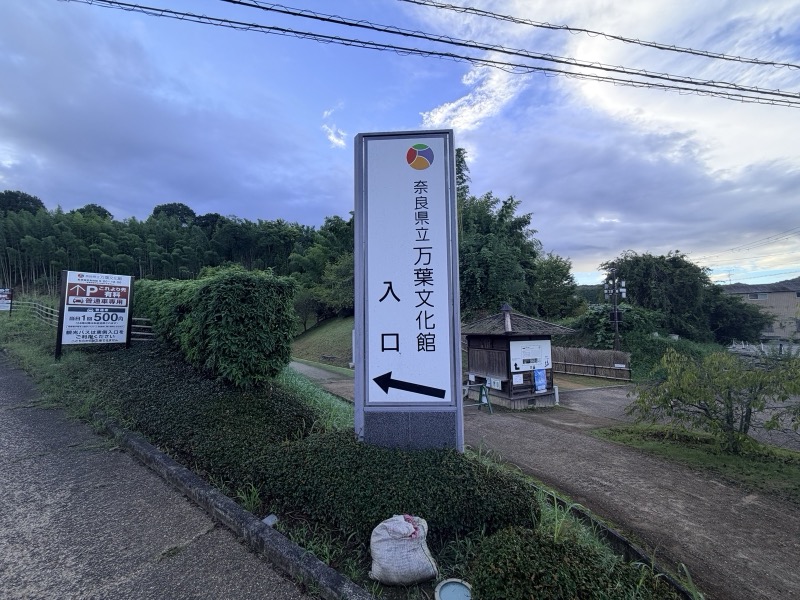 SPOTNara Prefecture Complex of Man'yō Culture奈良県立万葉文化館A centre for ancient culture built around the Man'yōshū.Access: Right by the "Manyō Bunkakan Nishiguchi" stop on the Asuka loop bus from Kintetsu Kashiharajingu-mae StationSee the spot page →
RELATED SPOT
奈良県立万葉文化館
A centre for ancient culture built around the Man'yōshū.
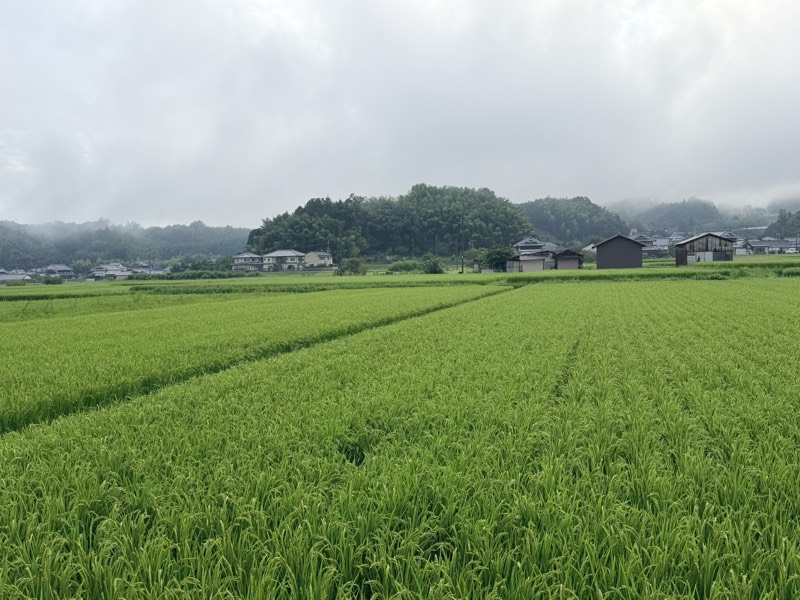
石神遺跡
Empress Saimei's banquet grounds, where the Shumisen Stone was unearthed.
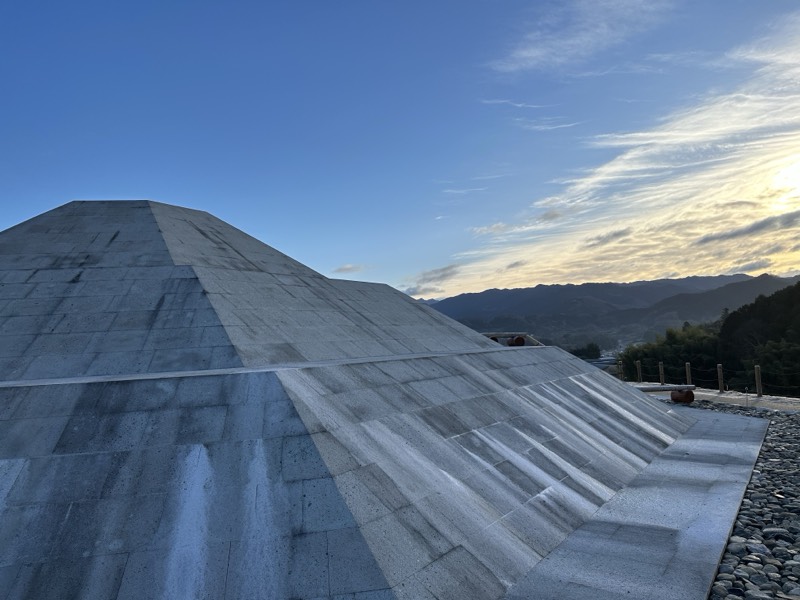
牽牛子塚古墳
An octagonal burial mound, now widely thought to be the tomb of Empress Saimei.
RELATED COLUMN
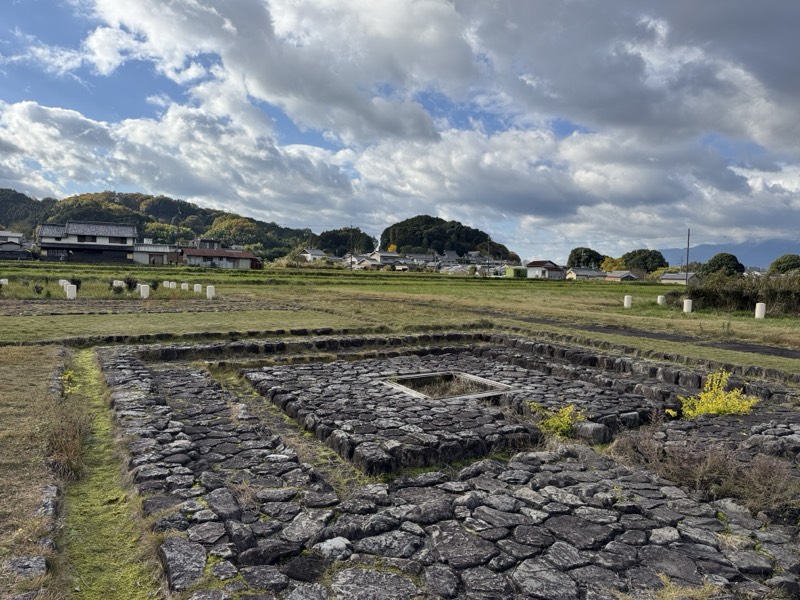 Asuka-Fujiwara World Heritage: All 19 Component Sites and How to Visit Them, with Half-Day, One-Day and Two-Day Routes"Asuka-Fujiwara" was inscribed on the World Heritage List in 2026. We list all 19 component sites with their…
 Why Did People Stop Building Kofun?For more than three hundred years, burial mounds kept growing larger. During the 7th century they shrank, and…Where Japan as a State Began: The 19 Sites of the Asuka-Fujiwara World Heritage PropertyIt was inscribed on 26 July 2026. All that was chosen were the remains of palaces, temples and tombs, and…