
Home/Columns/Temples Across the Land: The Reigns of Tenmu and Jitō and the Spread of Kawaradera-Style Tiles
Published
By Empress Jitō's reign, there were said to be 545 temples in the land, where a century earlier there had been none. An edict of Emperor Tenmu, and roof tiles with the same design as Kawaradera's turning up at temples in the provinces: here we trace how Buddhism was built into the workings of the state.
Construction of Asukadera, the first full-scale temple in the country, began in 588. About a century later, the Heian-period chronicle Fusō Ryakki records under the year 692, in Empress Jitō's reign, that there were 545 temples in the land.
How far the figure itself can be trusted is uncertain. But excavated temple sites around the country increase sharply in the late 7th century. It was the period when temple building spread rapidly from the Asuka area into the provinces.

According to the Nihon Shoki, in the third month of 685, Emperor Tenmu issued an edict: "In every province, let each house make a Buddhist shrine, place in it a Buddhist image and sutras, and worship and make offerings."
Whether "house" meant ordinary households or the houses of officials and local magnates is read differently. Either way, worship of the Buddha was now required of the provinces by order of the state.
At the centre were the great temples of Asuka. In 673 the copying of the entire Buddhist canon began at Kawaradera, and in 680 offerings were made to twenty-four temples in the capital. The building of the imperial temples Daikandaiji and Yakushiji also advanced in this period.
In the panel discussion at the symposium marking the World Heritage inscription in November 2026, a historian of Buddhism said that what matters is less that Buddhism "arrived" than how those who received it positioned it.
In the age of the kofun, local chiefs held both political and ritual power and bound their regions together by worshipping the local gods; keyhole tombs were part of that system. For the Yamato court to rule the whole archipelago, it had to go beyond these self-contained regional systems and show that it was the rightful ruler. On this view, the history-making of the Kojiki and Nihon Shoki, and the incorporation of Buddhism into the state's system of values, were both part of that effort.
The spread of temples to the provinces is recorded in roof tiles.
Kawaradera's round eave tiles bear an eight-petalled lotus with double petals, framed by a saw-tooth border. Tiles of the same family have been found not only in the Kinai region but at ancient temple sites on the east shore of Lake Biwa and in Mino and Owari. They are called Kawaradera-style tiles.
Building a temple required the skill to fire tiles and moulds for their designs. Tiles of the same family show that skills and moulds travelled from Asuka's great temples to the provinces.
The distribution is intriguing. Ōmi, Mino and Owari overlap with the areas that Prince Ōama (later Emperor Tenmu) passed through and drew troops from in the Jinshin War of 672. Hence the theory that Kawaradera tiles, associated with Tenmu, went to the temples of provincial magnates who had served him in the war.
However, no tile made from the very same mould as Kawaradera's own has yet been found in Mino; the resemblance is in the composition of the design. The link to the temples of loyal retainers is attractive but remains conjecture.
Temples began with Asukadera, built by the Soga for their own clan. By the late 7th century they were becoming temples built and ordered by the state, with the state's techniques spreading to the provinces. It is the line that leads to the provincial temples (kokubunji) of the Nara period.
The temple sites scattered across the country record the spread of Buddhism, and at the same time the reach of the state into every corner of the archipelago.
In Asuka you can walk in one day to temple sites of very different character: Kawaradera, Asukadera, Yamadadera and Daikandaiji. Standing by the foundation stones of Kawaradera, imagine tiles of the same design on temple roofs far away in Mino and Owari.
RELATED SPOT
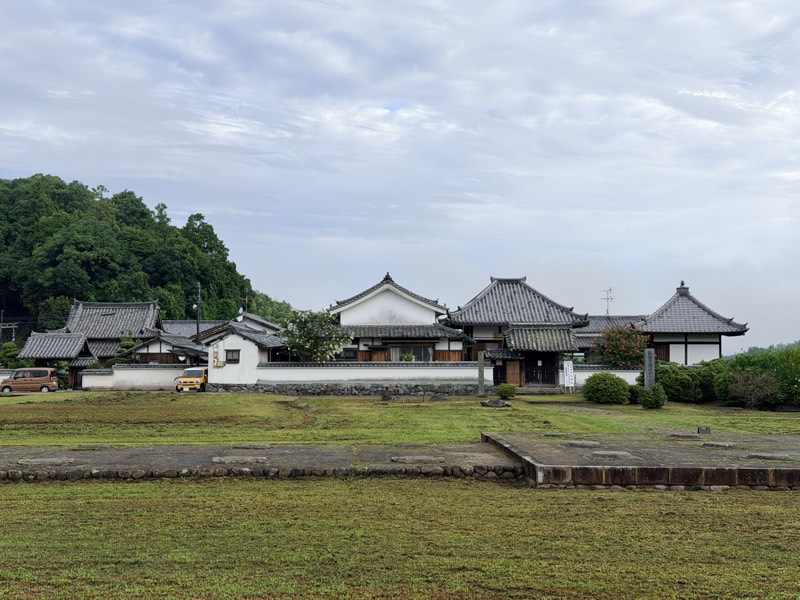
川原寺跡(弘福寺)
One of the four great temples of Asuka. Its foundation stones still show how large its halls once were.
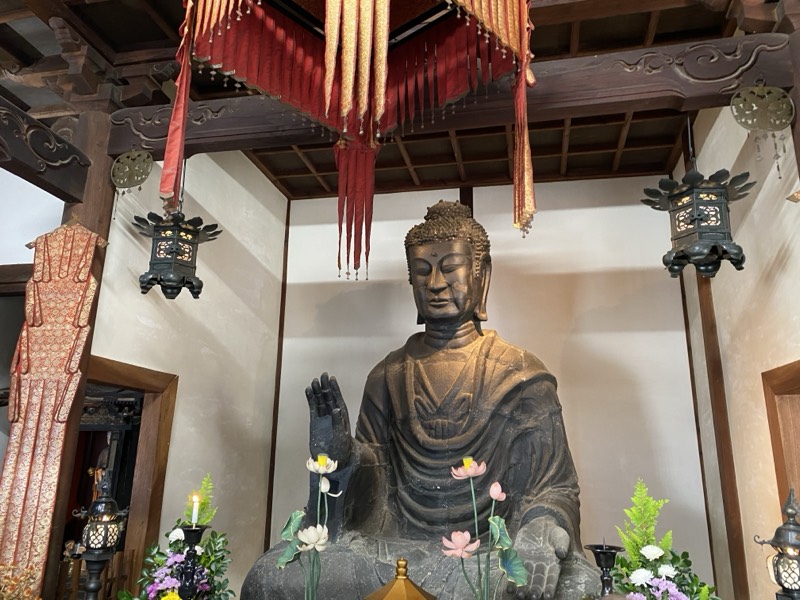
飛鳥寺・蘇我入鹿首塚
Japan's first full-scale Buddhist temple. The Great Buddha of Asuka still sits on the spot where it was made, 1,400 years ago.
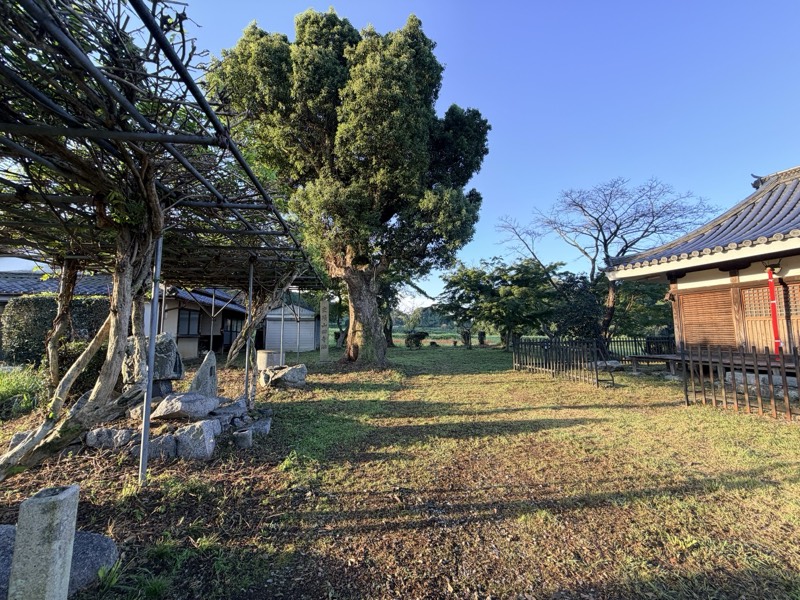
山田寺跡
A temple site where a corridor was excavated just as it had collapsed and been buried.
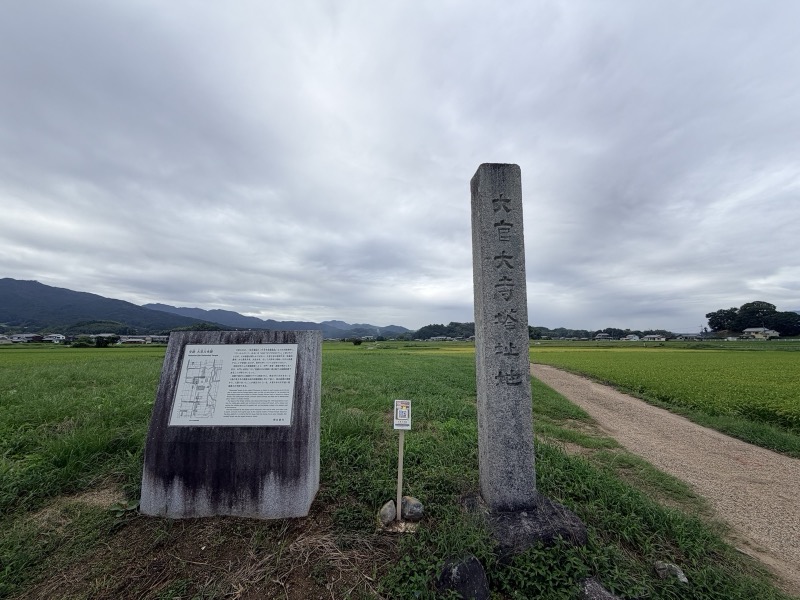
大官大寺跡
The site of the largest state temple of Asuka-Fujiwara, once crowned by a nine-storey pagoda.
RELATED COLUMN
Clan temples and state temples: telling apart the temples of AsukaAsuka-dera, Toyura-dera, Yamada-dera, Kawahara-dera, Daikandai-ji, Moto-Yakushi-ji. Who built them, and for…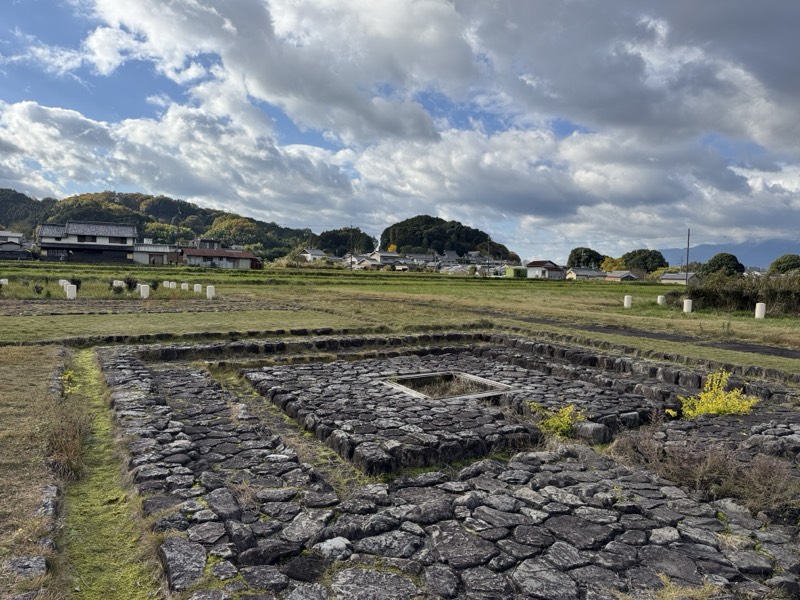 Asuka-Fujiwara World Heritage: All 19 Component Sites and How to Visit Them, with Half-Day, One-Day and Two-Day Routes"Asuka-Fujiwara" was inscribed on the World Heritage List in 2026. We list all 19 component sites with their…
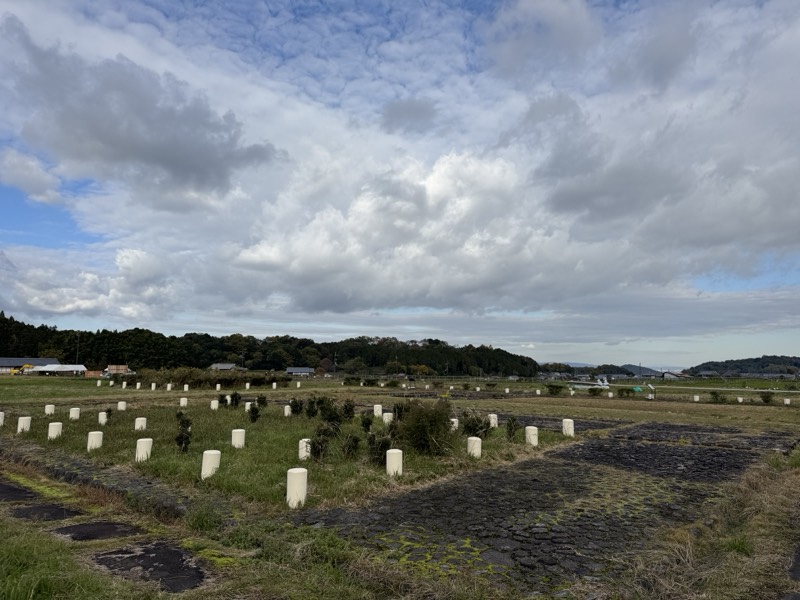 Bury the Pillar or Set It on Stone: The Two Ways of Building That Divided Asuka's Palaces and TemplesWalk the sites of Asuka and you will find places with rows of big stones, and places with nothing but white…