
Home/Columns/Bury the Pillar or Set It on Stone: The Two Ways of Building That Divided Asuka's Palaces and Temples
Published
Walk the sites of Asuka and you will find places with rows of big stones, and places with nothing but white posts. The difference is a difference in how the buildings were made: earth-fast pillars buried in the ground, or pillars set on foundation stones under tiled roofs. Here we look at the two methods and the buildings that represent each.

Hottate-bashira, or earth-fast pillar construction, means digging a hole in the ground and burying the foot of the pillar directly in it. It had been the most basic way of building in this country since the Jōmon period.
Because no foundation is needed, buildings go up quickly. Roofs were light, covered with thatch, cypress bark (hiwada) or boards.
The weakness is that the foot of the pillar rots in the damp soil. Such buildings are said to have needed rebuilding every twenty to thirty years.
The other method, building on foundation stones, starts with a raised platform (kidan) of rammed earth. Flat foundation stones (soseki) are set on it, and the pillars simply stand on top of the stones. Since the pillars never touch the soil, they rot far less, and the building can last for centuries.
The roof is covered with fired tiles. Tiles are heavy, and that weight presses down on the pillars and steadies the building. Platform, foundation stones and tiles formed a single package of technology; none of them could be adopted on its own.

This method arrived with the building of Asuka-dera Temple. According to the Nihon Shoki, in 588 the Korean kingdom of Baekje sent temple carpenters, a master of casting pagoda finials, masters of tile-making and painters.
Asuka-dera was the first building in the country to be roofed with tiles. Some tiles from that time are still on the roofs of Gangō-ji in Nara City, where the temple moved after the capital shifted to Heijō-kyō.

Curiously, for a long time this new method was used only for temples. The palaces where the sovereign lived and governed went on being built with earth-fast pillars for nearly another hundred years.
Why is not clear. One view is that, since the palace moved with each new reign, there was no need for buildings that lasted. Another is that tiles and foundation stones were a foreign style meant for the Buddha, while a palace called for the traditional way of building.
The difference shows plainly in the sites today. Temple sites keep their foundation stones. At the Central Golden Hall of Kawahara-dera, white marble foundation stones still sit where they were laid.
When the pillars of an earth-fast building rot away, only the holes remain. That is why palace sites use white posts or planted shrubs to show where the pillars stood.
The Asuka Palace site is where palaces were rebuilt again and again on the same spot. One of them was the Asuka Itabuki Palace, which Empress Kōgyoku moved into in 643.
The name "Itabuki" (board-roofed) is thought to have been given because a board roof was unusual; palaces of the time were normally roofed with thatch or cypress bark. The buildings stood on earth-fast pillars, with stone paving around them.
The stone-paved square and the well you can see today date from the latest phase, the Asuka Kiyomihara Palace. Even the palace of Emperor Tenmu and Empress Jitō still stood on earth-fast pillars.
Other sites of earth-fast buildings include the Asuka Inabuchi Palace site in Inabuchi and the Ishigami site.
The clearest picture of a foundation-stone building comes from the east corridor of Yamada-dera. In a 1982 excavation it was found in the ground just as it had fallen. Even the pillars and the window lattices (renji) survived, making these the oldest surviving members of any wooden building.
The corridor, reassembled from its original members, is on display at the Asuka Historical Museum of the Nara National Research Institute for Cultural Properties. There you can see the whole package of platform, foundation stones, pillars and tiled roof in the real thing.

At Fujiwara Palace, occupied from 694, palace buildings were for the first time set on foundation stones and roofed with tiles. These were the buildings for ceremonies and government, such as the Great Audience Hall (Daigokuden) and the Chōdōin halls of state. The tiles used are said to have numbered as many as two million.
The Dairi, where the sovereign lived, kept its earth-fast pillars. The buildings that were the face of the state used the continental style, while the living quarters kept the traditional way of building.
The vermilion pillars standing at the Fujiwara Palace site today are reconstructions showing where the pillars were.
The earth-fast tradition lives on in the shrine buildings of Ise Jingū. Their pillars are buried in the ground, and they are rebuilt every twenty years in the Shikinen Sengū; the first rebuilding is said to have taken place in the reign of Empress Jitō.
Foundation stones and tiles for temples, earth-fast pillars for the shrines of the gods. The two ways of building that parted in Asuka still continue side by side, 1,300 years later.
Sites with foundation stones: Asuka-dera, Kawahara-dera, Yamada-dera, Moto-Yakushi-ji and Daikandai-ji.
Sites where posts or shrubs mark the pillar positions: the Asuka Palace site, the Asuka Inabuchi Palace site and the Ishigami site.
A site with both: the Fujiwara Palace site.
Is there a stone at your feet, or a post? That alone tells you whether the place was a building for the Buddha, or somewhere people lived and governed.
RELATED SPOT
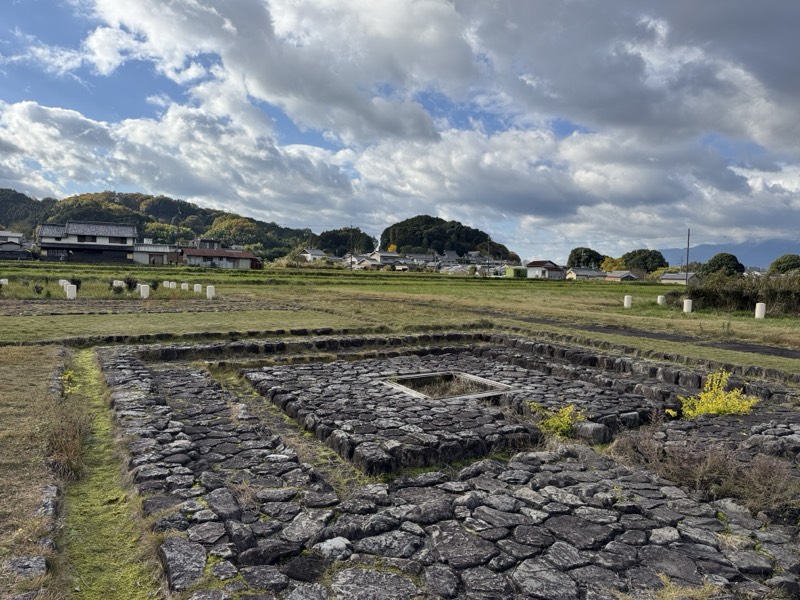
飛鳥宮跡(伝 飛鳥板蓋宮跡)
The political heart of Asuka, where several palaces were built one on top of another.
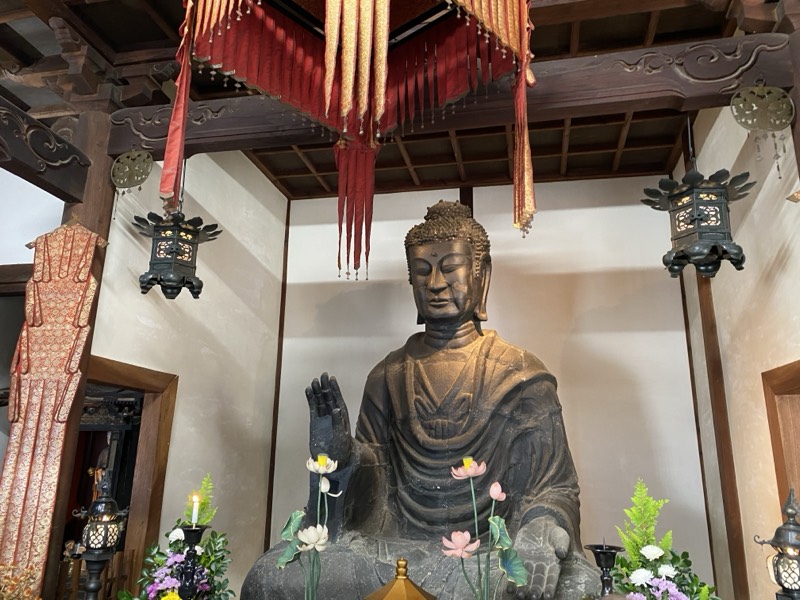
飛鳥寺・蘇我入鹿首塚
Japan's first full-scale Buddhist temple. The Great Buddha of Asuka still sits on the spot where it was made, 1,400 years ago.
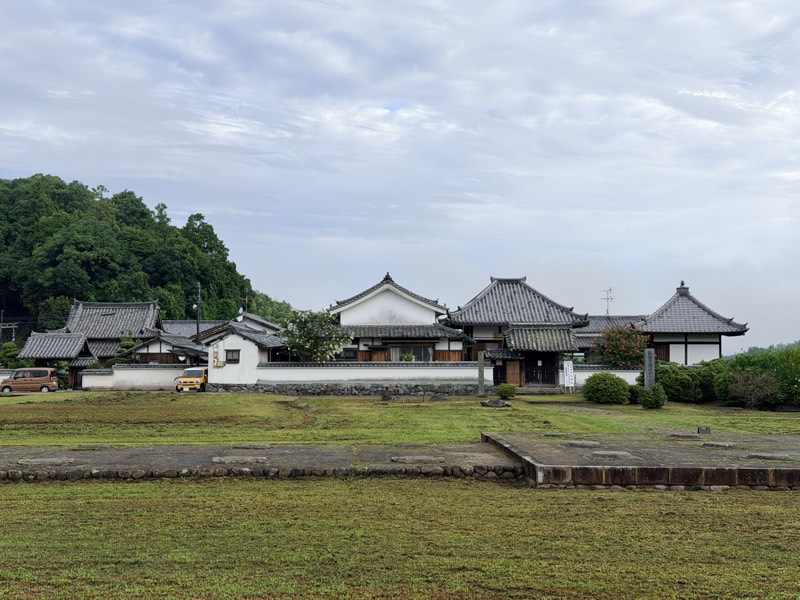
川原寺跡(弘福寺)
One of the four great temples of Asuka. Its foundation stones still show how large its halls once were.
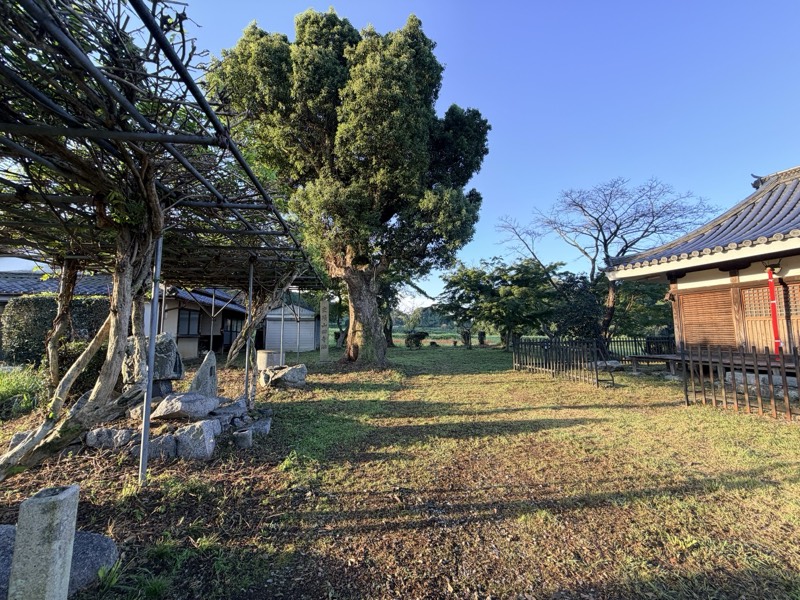
山田寺跡
A temple site where a corridor was excavated just as it had collapsed and been buried.
藤原宮跡
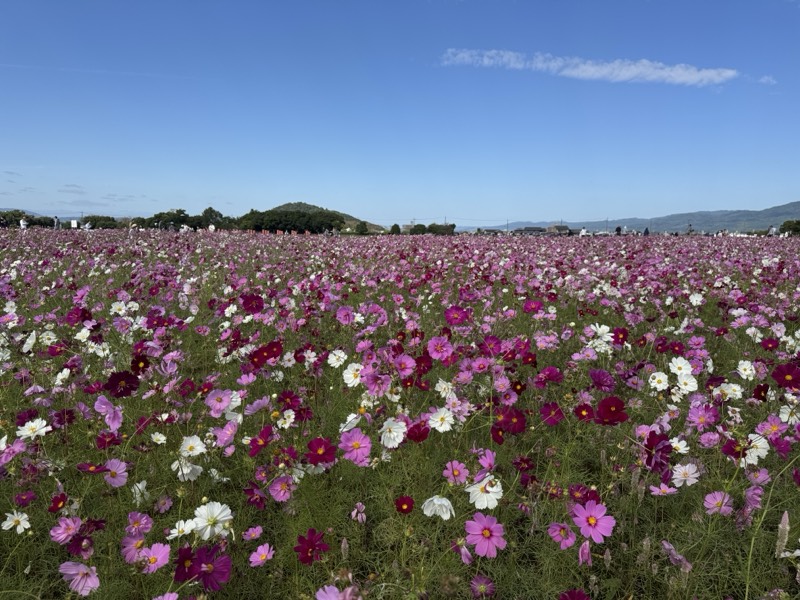
The heart of Japan's first full-scale planned capital, also known for its seasonal flower fields.
RELATED COLUMN
Asuka-Fujiwara World Heritage: All 19 Component Sites and How to Visit Them, with Half-Day, One-Day and Two-Day Routes"Asuka-Fujiwara" was inscribed on the World Heritage List in 2026. We list all 19 component sites with their…Where Japan as a State Began: The 19 Sites of the Asuka-Fujiwara World Heritage PropertyIt was inscribed on 26 July 2026. All that was chosen were the remains of palaces, temples and tombs, and…Clan temples and state temples: telling apart the temples of AsukaAsuka-dera, Toyura-dera, Yamada-dera, Kawahara-dera, Daikandai-ji, Moto-Yakushi-ji. Who built them, and for…