
Published
A kofun has two parts: the mound everyone can see, and the chamber no one sees. Looking at Asuka-period tombs this way helps explain why Takamatsuzuka, with its famous paintings, is so small, and how imperial funerals passed from the hands of the family to the hands of officials.
Kofun were built in the Japanese archipelago from the late 3rd century, and there are said to be some 160,000 of them. But a kofun was not something anyone could build as they liked. It took the power to mobilise many people, and the shape you could build was tied to your standing within the Yamato polity.
At a symposium marking the World Heritage inscription in November 2026, a specialist from the Asuka Village Board of Education proposed reading Asuka-period tombs by separating the mound from the burial facility inside. This column takes that view as its guide.

The mound is what everyone sees. When keyhole-shaped tombs ceased to be built at the end of the 6th century, mounds came to be square, round, or, for sovereigns alone, octagonal.
Which shape and how large: on this view, that expressed the deceased's public rank and was decided within an order set by the ruling power. The mound was a device that kept displaying, after death, the social hierarchy of life.
The chamber and coffin, on the other hand, were seen by no one once the burial was over. Whether to stack giant boulders or fit cut stone, whether to use a stone sarcophagus or a lacquered coffin, whether to paint the walls: these inner choices may have reflected the wishes of close relatives and the clan.
The giant-stone chamber of Ishibutai, the precisely cut stone chamber of Iwayayama, the small stone coffins of Takamatsuzuka and Kitora: differences in the kind and amount of stone and the fineness of the work are clues to the standing and thinking of those who built them.

Takamatsuzuka is 23 m across at its lower tier, Kitora about 13.8 m. Both are round and far smaller than Ishibutai or the octagonal imperial tombs. Yet inside their stone coffins were brilliantly coloured paintings.
With paintings like that, one wants to think, the person must have been of very high rank. On this view, not necessarily. The size of the mound was set by public rank, while painting the walls may have been chosen for reasons of the deceased's origins or ideas about how they should be buried. The outer form and the inner decoration may have been decided for different reasons.
The ancient Chinese Book of Rites says that "the hun soul returns to heaven, and the bodily po soul returns to earth." When a person dies, the hun rises to heaven while the po, which stays with the body, returns to the earth.
At the symposium, the interpretation was also offered that a kofun was rather a place where soul and body were not separated, where the dead went on living. To enter the chamber was to enter the space where the dead person was.

Who ran an emperor's funeral? Here too we can see change.
When Emperor Tenmu died in 686, a mogari (temporary enshrinement) lasted more than two years. According to the Nihon Shoki, in the tenth month of 687 Crown Prince Kusakabe led the nobles, officials, provincial governors and chieftains, and common men and women in beginning to build the tomb. Building an emperor's tomb was still the role of a close blood relative.
Retired Empress Jitō died on the 22nd day of the twelfth month of 702. Her last instruction, recorded in the Shoku Nihongi, was that "funeral matters should be as frugal as possible." The next day Prince Hozumi and others were appointed to build the mogari palace.
In the tenth month of 703, temporary funeral offices (gosōshi) were formally appointed: a director of funeral arrangements, and a director for building the cremation hearth. In the twelfth month Jitō was cremated on a hill in Asuka and interred with her husband in Tenmu's tomb. It was the first cremation of a Japanese sovereign.
The symposium offered the view that this change marked a shift in who ran funerals, from blood relatives to officials acting within an institutional framework. Funeral offices were then appointed for each imperial funeral, from Emperor Monmu down to Emperor Kōkō in the Heian period.
Keyhole tombs disappeared, mound shapes came to be set by rank, the system of court ranks was put in place, cremation arrived, and officials took over funerals. The end of the kofun did not come all at once; these changes accumulated over roughly a hundred years.
The age when clans raised great mounds to display their power gave way to an age of tombs made within the institutions of the state. That transition runs alongside the completion of the ritsuryō state and the settling of the shape of the country called "Nihon."
At Ishibutai and Iwayayama you can go inside the chambers and compare stacked boulders with fitted cut stone for yourself. At Takamatsuzuka and Kitora, look at how small the mounds are, then see the paintings at the mural hall and the Shijin (Four Beasts) Museum. The gap between outside and inside becomes tangible. Finish at the Tomb of Tenmu and Jitō, where the husband lies in his coffin and the wife in an urn, in the same octagonal mound.
RELATED SPOT
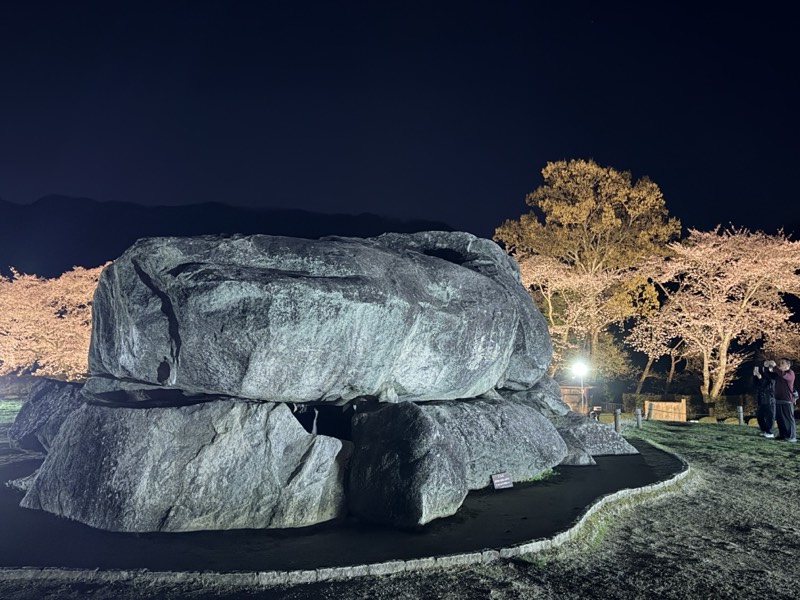
石舞台古墳
One of the largest stone burial chambers in Japan, its giant boulders left bare to the sky. The image most people picture when they think of Asuka.
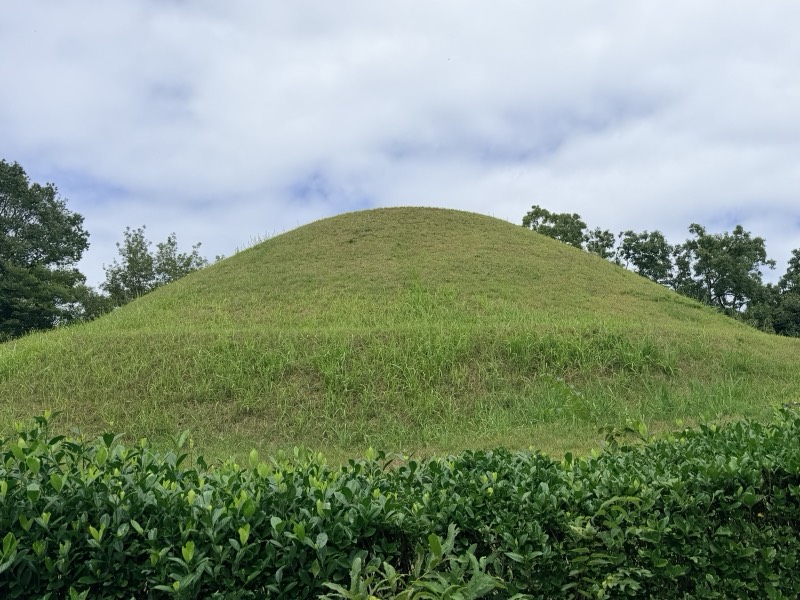
高松塚古墳
A round burial mound where brilliantly coloured paintings of court ladies were found: the defining archaeological discovery of post-war Japan.
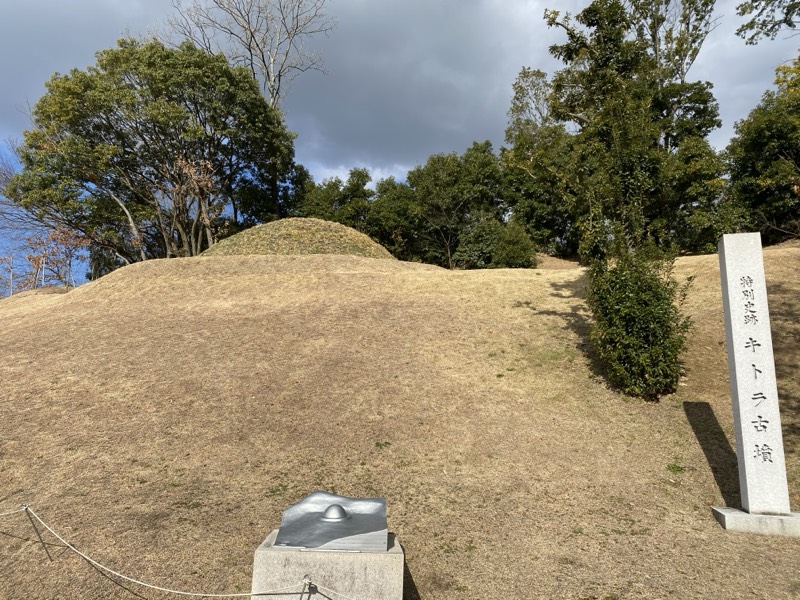
キトラ古墳
A two-tiered round burial mound famous for its chamber painted with the Four Gods and a map of the stars.
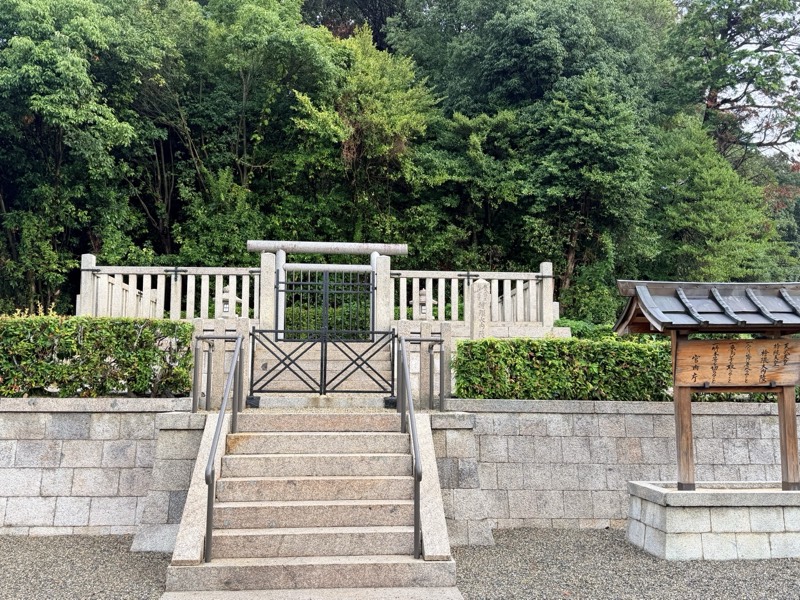
天武・持統天皇陵
One of the few octagonal imperial tombs whose occupants can be confirmed from written records.
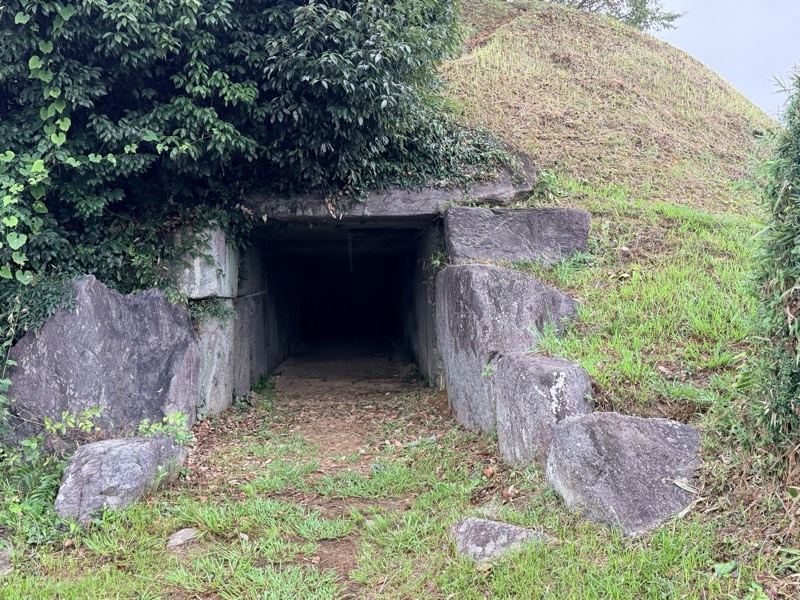
岩屋山古墳
Five minutes from the station: walk straight into a burial chamber built of tightly fitted cut stone.
RELATED COLUMN
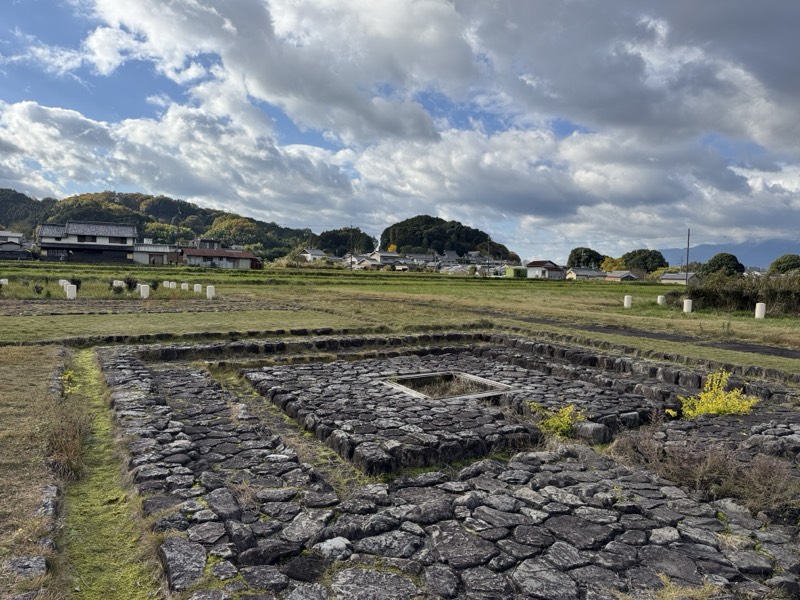 Asuka-Fujiwara World Heritage: All 19 Component Sites and How to Visit Them, with Half-Day, One-Day and Two-Day Routes"Asuka-Fujiwara" was inscribed on the World Heritage List in 2026. We list all 19 component sites with their…
 Asuka's Valley of the Kings: imperial tombs within walking distance of the stationAround Kintetsu Asuka Station, in Hirata, Noguchi and Koshi, a number of kofun said to be the tombs of…The record of a robbery that saved a tomb: the Mausoleum of Emperor Tenmu and Empress JitōVery few imperial tombs can be attributed to their occupants with near certainty. This one can because the…