
Published
In 2015, eight sites of the Baekje kingdom in Gongju, Buyeo and Iksan, Korea, were inscribed as the "Baekje Historic Areas." Like "Asuka-Fujiwara," inscribed in 2026, they show the shape of a state through palaces, temples and tombs. Drawing on the presentation by Buyeo County at the Asuka Village Open-Air Museum Forum, we set the two side by side.
The theme of the 30th Asuka Village Open-Air Museum Forum on November 21, 2026 was two World Heritage sites: Asuka Village's, and that of its sister city, Buyeo County in Korea. Buyeo County's presentation began by introducing its own World Heritage site, the "Baekje Historic Areas."
The Baekje Historic Areas were inscribed in July 2015 at the 39th session of the World Heritage Committee in Bonn, Germany. "Asuka-Fujiwara" was inscribed in July 2026, so Baekje is eleven years ahead.

In 475, Baekje lost its capital Hanseong (present-day Seoul) to an attack by Goguryeo and moved south to Ungjin (present-day Gongju). In 538 it moved again, to Sabi (present-day Buyeo), which remained the capital until Tang China and Silla destroyed the kingdom in 660. In the 7th century, under King Mu, a palace was also built farther south, at Iksan.
The eight World Heritage sites belong to these three capitals of Baekje's last 190 years or so.
Gongju: Gongsanseong Fortress; the Royal Tombs in Songsan-ri, including the tomb of King Muryeong
Buyeo: the Archaeological Site in Gwanbuk-ri and Busosanseong Fortress; the Jeongnimsa Temple Site; the Royal Tombs in Neungsan-ri; the Naseong City Wall
Iksan: the Archaeological Site in Wanggung-ri; the Mireuksa Temple Site
The tomb of King Muryeong in Songsan-ri was found undisturbed in 1971. An epitaph stone was found with it, making it one of the few royal tombs whose occupant is known for certain.
The nineteen Asuka-Fujiwara sites consist of only three types: palaces and government offices, temples, and tombs. Baekje's eight sites also rest on palace sites, temple sites and royal tombs. So far, the two are very alike.
The difference is that Baekje's list includes fortifications. Gongsanseong and Busosanseong are hilltop fortresses, and the Naseong wall is an earth-and-stone wall about 6.3 kilometers long enclosing the north and east of the capital. Among the nineteen Asuka-Fujiwara sites there is not a single fortress or wall. This difference became a major topic in the forum's panel discussion (see "Walling a Capital, or Not").
At the Jeongnimsa Temple Site in Buyeo, a five-story stone pagoda from the Baekje period still stands. The temple placed its gate, pagoda, main hall and lecture hall in a straight line from south to north.
The Mireuksa Temple Site in Iksan is among the largest temple sites in East Asia. It set three pagoda-and-hall pairs side by side, a plan found nowhere else. In 2009, during the dismantling and repair of the western stone pagoda, a gold plate was found recording the temple's founding in the gihae year, 639.
Asukadera surrounded a single pagoda with three golden halls, and Motoyakushiji in Fujiwara-kyō had twin pagodas. Even in the same era, layouts differed by country and by temple.
The Baekje Historic Areas meet two criteria. One is that they show the exchange of building technology and Buddhism among China, the kingdoms of the Korean Peninsula and Japan from the 5th to 7th centuries. The other is that Baekje's architecture, religion and art are exceptional testimony to the culture of a lost kingdom.
Buyeo County's presentation said that Baekje passed the culture it perfected to Gaya and Silla, and across the sea to Japan, raising the cultural level of ancient East Asia.
Asuka-Fujiwara, for its part, is described as showing how the first centralized state in the Japanese archipelago was born and completed through close exchange with the Chinese mainland and the Korean Peninsula. If Baekje's heritage is evidence of the side that gave, Asuka-Fujiwara may be evidence of the side that received and remade.
Like Asuka, Buyeo is a town where people live on top of a royal capital. According to the discussion, only about 12 percent of the site area in Buyeo has been excavated, and it is not yet confirmed whether it had a grid of streets like Fujiwara-kyō.
Walk Asukadera and the Asuka Palace Site, then visit Jeongnimsa and Busosanseong in Buyeo, and another capital of the same age, across the sea, comes into view.
RELATED SPOT
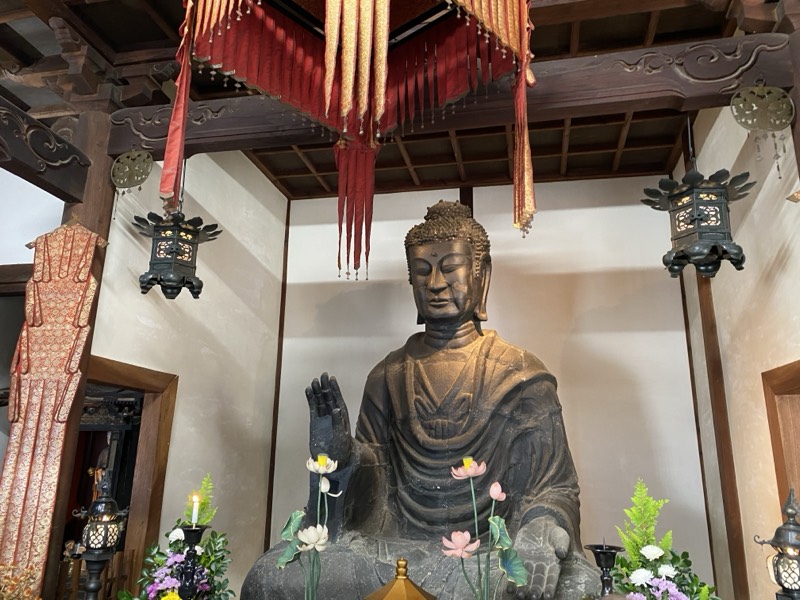
飛鳥寺・蘇我入鹿首塚
Japan's first full-scale Buddhist temple. The Great Buddha of Asuka still sits on the spot where it was made, 1,400 years ago.
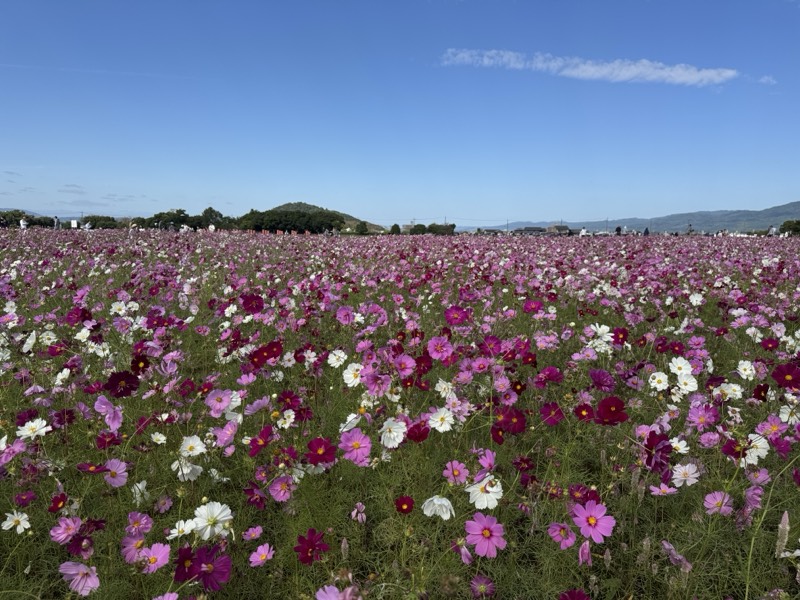
藤原宮跡
The heart of Japan's first full-scale planned capital, also known for its seasonal flower fields.
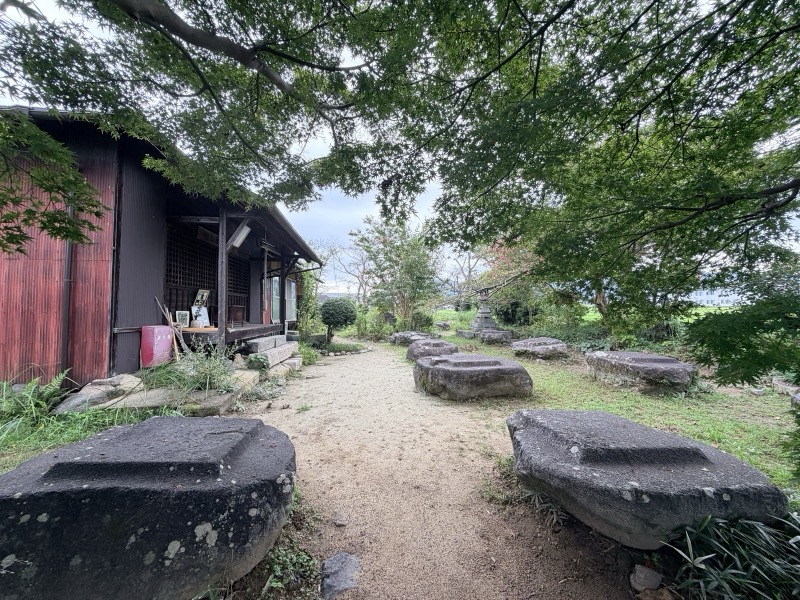
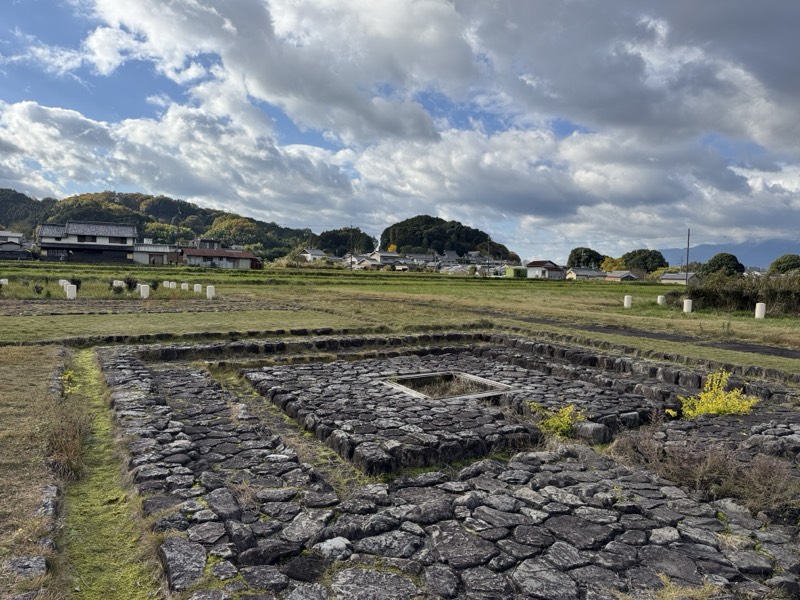
本薬師寺跡
The site of a state temple with twin pagodas, where foundation stones remain in their original positions.
RELATED COLUMN
 Asuka-Fujiwara World Heritage: All 19 Component Sites and How to Visit Them, with Half-Day, One-Day and Two-Day Routes"Asuka-Fujiwara" was inscribed on the World Heritage List in 2026. We list all 19 component sites with their…
 Bury the Pillar or Set It on Stone: The Two Ways of Building That Divided Asuka's Palaces and TemplesWalk the sites of Asuka and you will find places with rows of big stones, and places with nothing but white…Where Japan as a State Began: The 19 Sites of the Asuka-Fujiwara World Heritage PropertyIt was inscribed on 26 July 2026. All that was chosen were the remains of palaces, temples and tombs, and…