
Published
Emperor Wu of Han set up statues of immortals on bronze columns to catch the dew that fell from heaven. Was the "Heavenly Palace" built beside two zelkova trees a Japanese version of the same idea? That is one bold view.
Futatsuki-no-miya, which Empress Saimei built in 656 beside two zelkova trees on the summit of Tōnomine, was also called Amatsu-miya, the Heavenly Palace. A palace on a mountaintop, bearing the name of heaven. From this name, some researchers think it may have been a facility for drawing near to heaven and the immortals.

Empress Saimei's reign suited such ideas. She built a palace at Yoshino and set the turtle-shaped stone basin on the hill east of Asuka. In China the turtle was a favoured motif as the creature that carries Mt. Penglai, home of the immortals, on its back.
The clues lie in ancient China. Emperor Wu of Han, in the 2nd century BC, was devoted to the cult of the immortals in search of eternal life. Immortals were thought to like high places, and he had one tall terrace and building after another put up: the Boliang Terrace, the Tongtian Terrace, the Shenming Terrace. Their heights are recorded as dozens of zhang, though these figures probably include exaggeration.
Best known of all is the dew-catching plate. A statue of an immortal stood on a bronze column with palms turned upward, holding a plate to collect the dew that came down from heaven; mixed with powdered jade and drunk, it was believed to give long life. The site of the Shenming Terrace in the Jianzhang Palace still has an earthen platform outside Xi'an. In Beihai Park in Beijing stands a dew-catching immortal made much later, in the Qing dynasty, but that is only one later form of the idea.
Emperor Wu's dew plates were held up toward heaven by bronze columns. Futatsuki-no-miya was built beside two zelkova trees.
Could the two great trees have been treated as columns, with a building set between them? A mountaintop close to heaven, the name Heavenly Palace, two columns: the hypothesis is that a Chinese device for reaching heaven was translated into Japanese trees and a wooden building.
It is an original view, and the person who proposed it says plainly that it is speculation. A Han palace and a Japanese mountaintop building differ completely in scale and structure. With neither the building of Futatsuki-no-miya nor the stone or timber used for it found, there is no way to test it.
There is another argument from a different angle.
Under the Tang statutes, worshipping heaven was the emperor's own task. At the winter solstice and other times, the emperor worshipped heaven at the round altar south of the capital. In Xi'an the remains of the Sui and Tang round altar survive as a round, stepped mound.
Japan's Taihō Code, however, opens its Code of Deities by stating that the deities of heaven and earth are to be worshipped by the Department of Divinities according to the established rules. The Tang pattern of the ruler personally worshipping heaven was not brought over as it was. The rites the Japanese ruler did perform in person were harvest rites such as the Niiname-sai and the Daijō-sai, held once after an accession: quite different in character from the Chinese emperor's rites.
Before the Taihō Code, perhaps a pattern was tried in which the ruler went in person to places close to heaven to perform rites, before things settled into a system in which the Department of Divinities performed them. Perhaps Futatsuki-no-miya was one such place for the ruler's rites. Some researchers see it that way. That Empress Jitō went to Futatsuki-no-miya in 696, and that the Futatsuki Detached Palace was repaired in 702, the year after the Taihō Code was completed, are interesting records from this point of view too. But no source shows it directly.
Views on the nature of Futatsuki-no-miya have included a Daoist temple, a Buddhist hall and a hill fort. Comparing it with the tall buildings of the cult of immortals is a new addition to that list.
Whether it is right cannot be known until the remains of a building are found on Tōnomine. If they are, the pottery, tiles and the sources of the stone should tell us when it was built and what it looked like. Until then, we can take three phrases, two zelkovas, the name Heavenly Palace, and the mountaintop, and read them again against the background of East Asia. It is precisely because the entry is so short that there is room for readings like this.
Seen against East Asia, the entry also shows how eagerly Asuka in Empress Saimei's day was trying to take in ideas and techniques from across the sea. Envoys came and went to Tang China, and people crossed over from Baekje and Goguryeo. Futatsuki-no-miya was built in that atmosphere.
RELATED SPOT
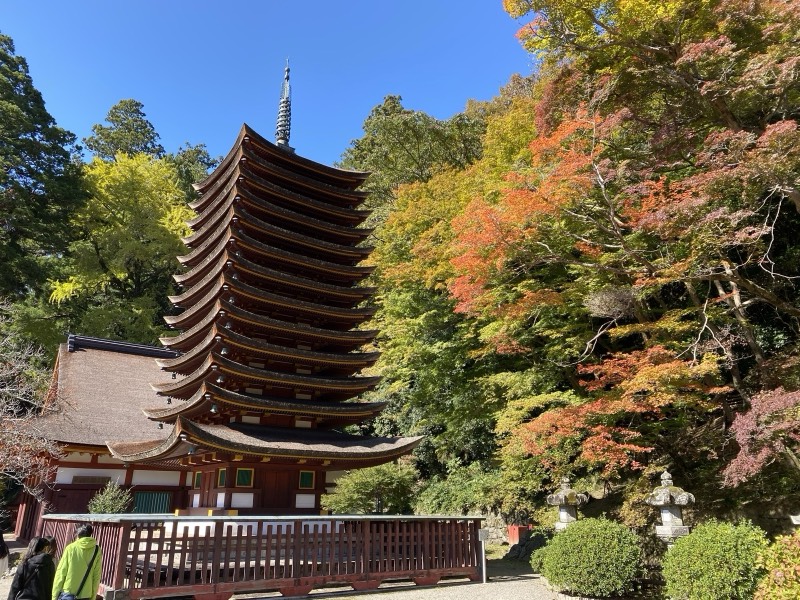
談山神社
A mountain shrine said to be where the plot behind the Taika Reforms was hatched. Its wooden thirteen-storey pagoda is the only one in the world.
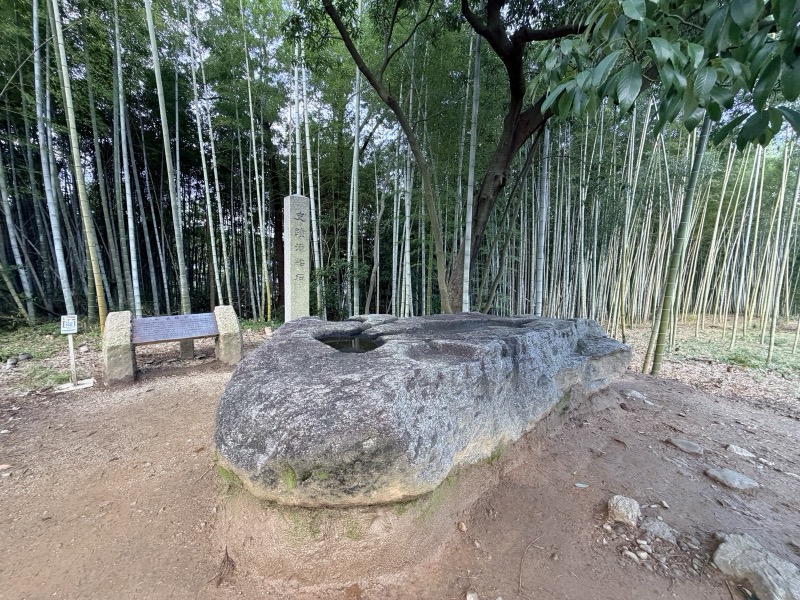
酒船石
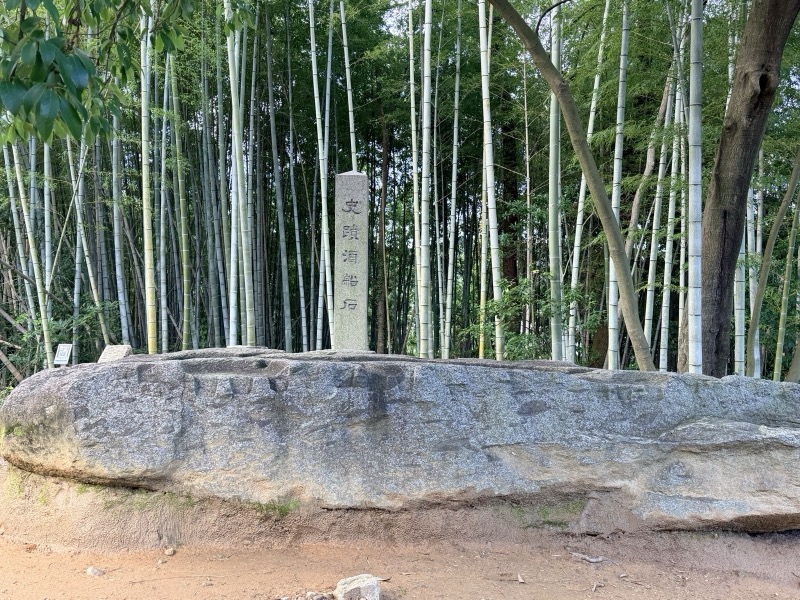
A mysterious stone carved with circles and channels, lying in a bamboo grove on top of a hill.
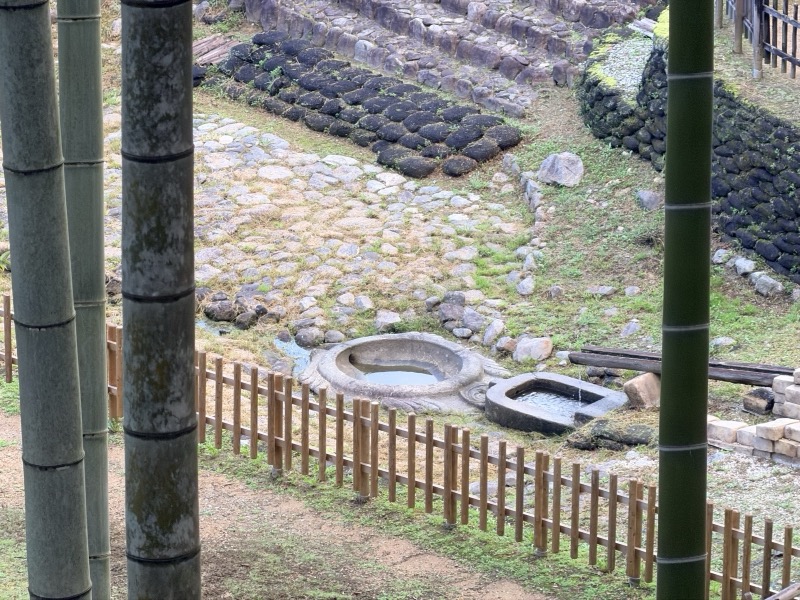
亀形石造物
A ritual site from the reign of Empress Saimei, with stonework designed to channel water.
RELATED COLUMN
 Futatsuki-no-miya: The "Heavenly Palace" Built on the Summit of TōnomineEmpress Saimei had a building put up on the summit of a mountain east of Asuka, beside two zelkova trees. It…
 The Stone Wall on the Hill East of the Palace: 700 Metres of Sandstone at the Sakafuneishi SiteIn 1992, work on a walking path turned up a sandstone wall on the Sakafuneishi hill. Was the wall that ran…Was Futatsuki-no-miya a Fortress? Unrest After the Isshi Incident and the "Kan" on the MountainFutatsuki-no-miya, which Empress Saimei built on the summit of Tōnomine, has been called a palace of the…